
Nauru
Nauru , officially the Republic of Naoero (pronounced NOW-air-oh ), is a small island in the South Pacific Ocean south of the Marshall Islands . It is the world's smallest independent republic and third-smallest…
At a glance
Useful facts for planning
In this guide
Why go
Overview
Nauru , officially the Republic of Naoero (pronounced NOW-air-oh ), is a small island in the South Pacific Ocean south of the Marshall Islands . It is the world's smallest independent republic and third-smallest country by area; only Monaco and the Vatican City are smaller. An off-the-beaten-track destination if there ever was one, Nauru is also one of the least visited countries in the world, with about only 200 tourists a year. The remoteness and the fact that much of the island is a charmless open phosphate mine are two strong reasons for this.
In the local language, the island is known as Naoero , though the name is of unknown origin. Nauru is a simplification of the name by British colonisers , which was officially changed to Naoero in English in July 2026; Nauru remains the most common name in English. The island has also been known by the names Pleasant Island, Nawodo, and Onawero.
Nauru was first settled around 3,000 years ago by twelve Micronesian and Polynesian peoples. Those twelve tribes divided the island into twelve parts; today this is symbolised by the twelve-pointed star in Nauru's national flag (the yellow line represents the Equator and the blue space the Pacific Ocean). The original inhabitants lived on fishing and even turned the lagoon in the middle of the island into a fish farm. The people of the country are known as dei-Naoero .
The first European to set foot on the island was the British commander John Fearn in 1798. The natives had a good relationship with the European ships whom they traded. Occasionally, deserting sailors settled on Nauru. The island was devastated by a civil war between 1878 and 1888, after which it was annexed by the Germans. During the three-decade period as part of the German Pacific Territory, a king was appointed to rule the island, and the first missionaries arrived.
Sights and landscapes
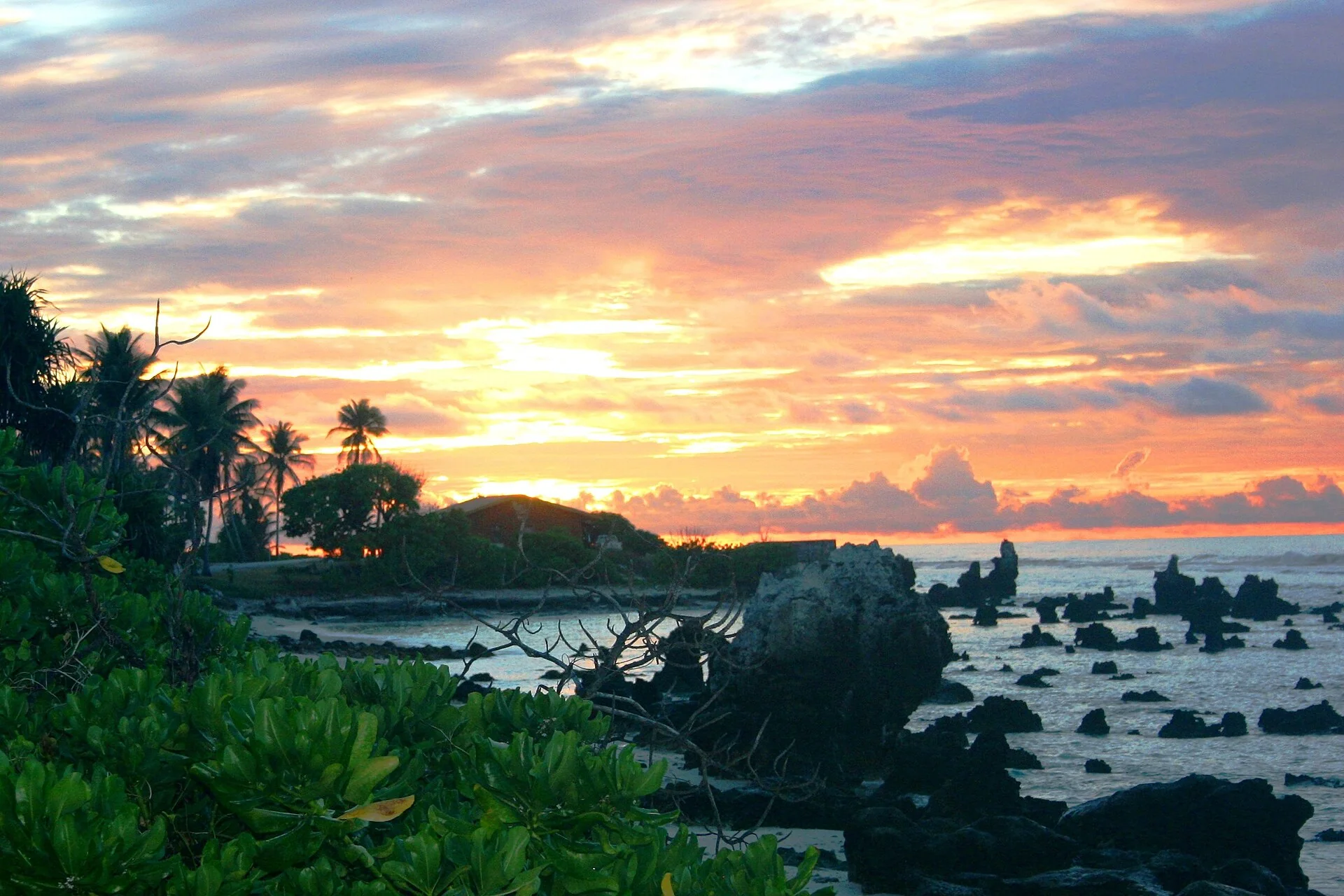
The Nauru experience is pretty much the exact opposite of all the typical South Pacific island clichés. If you're looking for sandy beaches, cool ocean breezes, and pristine blue waters, you'll find precious little of the sort. In fact, if you're looking for pretty much anything that can be described as flashy or tourist-oriented, you're out of luck. But don't write Nauru off just yet: its subtle and offbeat charms are waiting for anyone who's willing to take the time to seek them out — and that goes double for World War II history buffs, urbexers, and anyone who's just looking for a slow-paced, low-key, off-the-beaten-path getaway.
Experiences
Nauru is one of the few countries in the world you can walk around the whole perimeter of in a reasonable time. A sealed road goes all the way around the island and driving takes about 25 minutes non-stop. A bicycle ride takes 2-3 hours, and a walk maybe 6 hours. There is lots of nice scenery if not much to do and, going from either hotel, Capelle & Partner department store at the top of the island in Ewa district makes for a welcome break at halfway around.
If you're into sports, you can watch the local teams battle it out at an Australian rules football match. The national game is played all through Saturday at the sports field.
Many beaches on Nauru are shallow, rocky and not very suitable for swimming. Your best bet would be Anibare Bay (listed in #See above) which also is a great place for seeing the fishermen bringing in the day's catch to Anibare Harbour. If you want to try some fishing yourself, there's one company you can consult:
Culture and food
Most food is imported from Australia and arrives by ship or air, usually once every six to eight weeks. You can find western and Asian (primarily Chinese) food. Because of the tropical climate dishes might not be as heavy and hearty as the original versions. As not all ingredients may be available, dishes are often rather simple.
Since Nauru is an island nation, seafood is very popular in its restaurants. Cooked and smoked hams are also very popular, as meat is one of their main dishes.
Planning your route
Every year, there are on average 200 tourists in Nauru, so it has the honour of being the least touristed country in the world. Crowds aren't a problem at all. There's hardly any public transportation, so your best bet to get around would be in a rented vehicle; car, scooter or bike. Other alternatives are by foot (not very pleasant in the tropical heat and humidity) or hitchhiking, which is quite common on the island.
There is a community or island bus which travels around the island every hour or so during the day. It costs 50 cents per trip around the island. Also, locals sometimes cling to the cars of the goods train between Aiwo and the inland mining area.
Travel guide text compiled and adapted from Wikivoyage article (contributors). Sections were selected and reordered for this guide. Text is shared under CC BY-SA 4.0. Check current arrangements with your travel consultant.
Plan the full journey
Useful for this trip
This country’s visa guidance has not been fully verified against current official requirements. Confirm the application route for your passport, residence and purpose before making travel commitments.
Review details
Nauru: Official pages were retrieved, but the complete imported guidance has not been corroborated claim by claim for Kenyan ordinary passports. Still to confirm: passport validity, tourist and business eligibility, application route, any exemptions and published processing guidance. Residents using other passports require a separate nationality check.