
Luxembourg
The Grand Duchy of Luxembourg ( Luxembourgish : Groussherzogtum Lëtzebuerg , French : Grand-Duché de Luxembourg , German : Großherzogtum Luxemburg ), is a landlocked Benelux country at the crossroads of Germanic and Latin…
At a glance
Useful facts for planning
In this guide
Why go
Overview
The Grand Duchy of Luxembourg ( Luxembourgish : Groussherzogtum Lëtzebuerg , French : Grand-Duché de Luxembourg , German : Großherzogtum Luxemburg ), is a landlocked Benelux country at the crossroads of Germanic and Latin cultures.
With successful steel, finance and high technology industries, a strategic location at the heart of Western Europe, more natural beauty than you might expect given its size, and as one of the top three richest countries in the world, Luxembourg enjoys a very high standard of living and has prices to match!
The city of Luxembourg proper was founded in 963, and its strategic position soon promised it a great future. Luxembourg was at the crossroads of Western Europe and became heavily fortified. You can still see the extensive city walls and towers which form its distinctive cityscape. Due to its key position, Luxembourg became a duchy that once included a much larger territory stretching into present-day Belgium, Netherlands, Germany and France. The powerful Habsburg family kept its hand on it until the late Renaissance times.
After the Napoleonic Wars , the Duchy of Luxembourg was granted to the Netherlands. It had a special status as a member of the German confederacy and the citadel was armed with a Prussian garrison. Luxembourg was still a strategic location that everybody sought to control. It was granted the title "Grand Duchy" in 1815 but lost some territories to France and Germany.
Sights and landscapes
You may not expect it from one of the smallest countries in Europe , but The Grand Duchy of Luxembourg is a diverse land, full of beautiful nature and gorgeous historic monuments. Its turbulent history is filled with stories of emperors and counts with the surviving Luxembourg monarchy as well as many battles and disputes. Today, the almost fairy-tale like castles and fortresses are a faint but impressive reminder of those days, and amidst their lovely natural setting, they make some superb and picturesque sights.
Most of the country's population lives in rural areas and apart from the delightful historic City of Luxembourg , the country's capital, settlements are mostly small. That said, the capital is a place not to be missed. It has a splendid location high on a cliff, overlooking the deep and narrow valleys of the Alzette and Pétrusse rivers. Several parts of the old town are listed as UNESCO World Heritage Sites, and the most interesting places include the Gothic Cathedral of Notre Dame , the town fortifications , and of course the Grand Ducal Palace , which is surrounded by charming cobblestoned lanes. However, there's far more to see, such as the Bock casemates, Neumünster Abbey and the Place d'Armes . There are several World War II memorial sites and a number of high-end museums, but just wandering through the old centre, taking in the beautiful views from the Chemin de la Corniche and crossing bridges to the nearest plateaus is at least as great a way to discover the city.
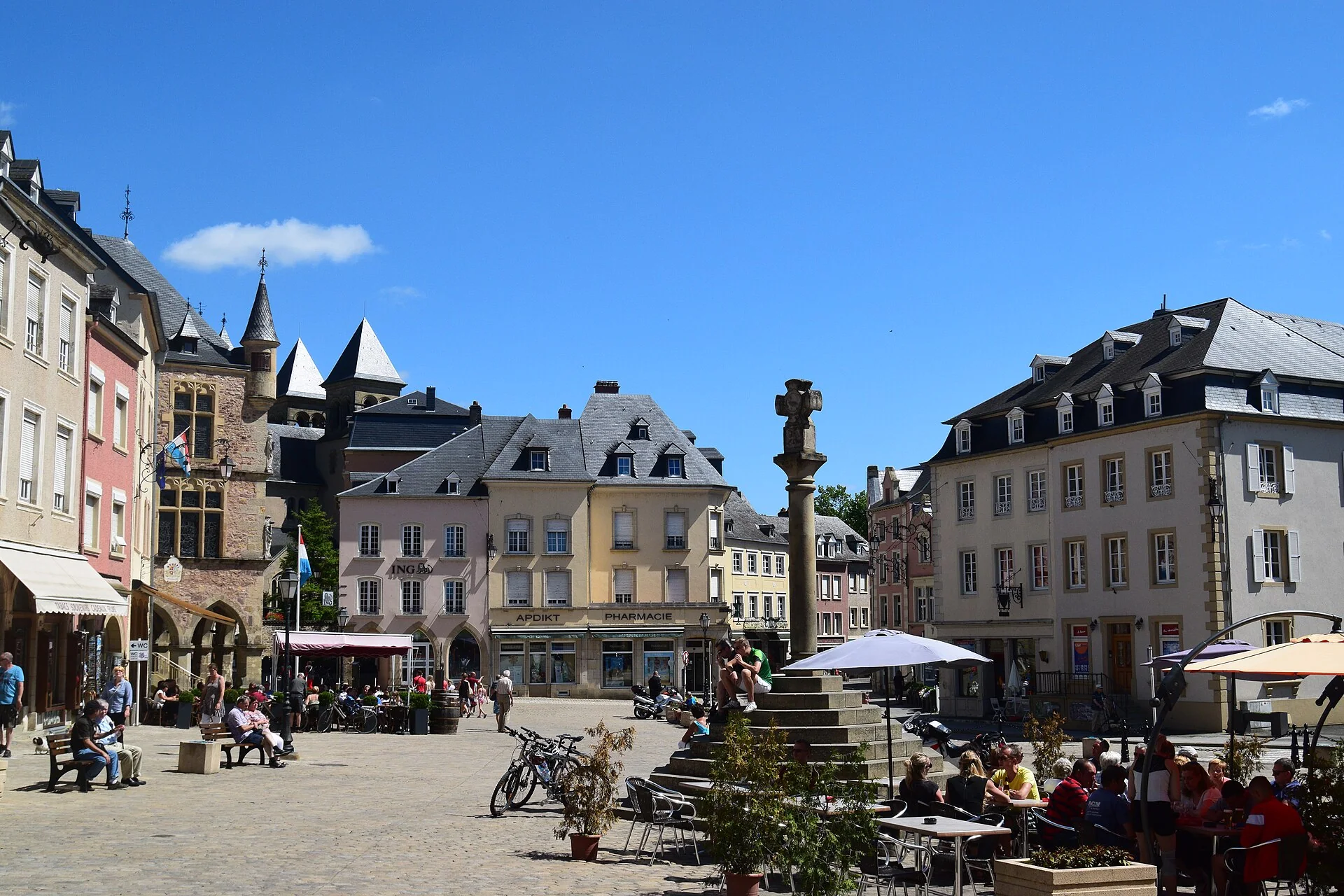
The lively town of Echternach is the oldest city in Luxembourg. It boasts the country's most prominent religious structure, the basilica of the Abbey of Echternach where the country's patron St Willibrord is buried. The annual Whit Tuesday celebrations in his honour involve lots of dancers in the old town centre and are a popular tourist attraction. Apart from its own sights, Echternach makes a great base to explore the beautiful Müllerthal , better known as "Little Switzerland". Hike or bike through its dense forests with myriad streams and even some caves.
Experiences
Fédération Luxembourgeoise de Teqball has a list of public places for playing teqball, a sport invented in the 2010s by three Hungarians, that is a combination of table tennis and football (or soccer) played with a special curved table.
Culture and food
Traditional dishes are largely based on pork and potatoes and the influence of German cooking is undeniable. The unofficial national dish is judd mat gaardebounen , or smoked neck of pork served with boiled broad beans. A must to try if you do get the opportunity are gromperekichelchen (literally, potato biscuits) which are a type of fried shredded potato cake containing onions, shallots and parsley. Typically found served at outdoor events such as markets or funfairs they are absolutely delicious and a particularly nice snack on a cold winter's day.
In most restaurants, however, the typical local food would be French cuisine coming in bigger portions. Italian food has been popular since the 1960s. Home cooking has been greatly influenced by the recipes of Ketty Thull, apparently the best-selling cooking and baking book in Luxembourg since WWII.
You can also taste the "Bamkuch" (literally tree cake), which is eaten mainly during celebrations such as weddings and baptisms. This cake is traditionally made on a spit and presented as a tree trunk composed of several layers, visible when it is cut, and that represent the tree rings.
The Luxembourg white wines from the Moselle valley to the east of Luxembourg include Riesling, Auxerrois, Pinot Gris, Pinot Blanc, Rivaner and Elbling, and are good. In autumn, many villages along the Moselle river organise wine-tasting village festivals.
Planning your route
Luxembourg is a compact country, making it easy to reach nearly any town in the country in an hour or less by public transport. The Mobilitéit agency coordinates the country's trains and buses; their website and mobile app are both very useful for planning journeys throughout Luxembourg.
Travel guide text compiled and adapted from Wikivoyage article (contributors). Sections were selected and reordered for this guide. Text is shared under CC BY-SA 4.0. Check current arrangements with your travel consultant.
Plan the full journey
Useful for this trip
This country’s visa guidance has not been fully verified against current official requirements. Confirm the application route for your passport, residence and purpose before making travel commitments.
Review details
Luxembourg: Official pages were retrieved, but the complete imported guidance has not been corroborated claim by claim for Kenyan ordinary passports. 1 source link(s) could not be retrieved successfully; see the source log. Still to confirm: passport validity, tourist and business eligibility, application route, any exemptions and published processing guidance. Residents using other passports require a separate nationality check.