
Ireland
Gaelic culture is alive and well; one way to experience it is to go to a pub which has a traditional music session on. The Irish language has declined and English is now the…
At a glance
Useful facts for planning
In this guide
Why go
Overview
Gaelic culture is alive and well; one way to experience it is to go to a pub which has a traditional music session on. The Irish language has declined and English is now the most common language, though there are still certain areas where Irish is frequently spoken. It can be worth your while to dig a little deeper before visiting Ireland to discover something about the older world that lies beneath. It is still living, though not always visible.
Culture and food
Food is expensive in Ireland, although quality has improved enormously in the last ten years. Most small towns will have a supermarket and many have a weekly farmers' market. The cheapest option for eating out is either fast food or pubs. Many pubs offer a carvery lunch consisting of roasted meat, vegetables and the ubiquitous potatoes, which is usually good value. Selection for vegetarians is limited outside the main cities. The small town of Kinsale near Cork has become internationally famous for its many excellent restaurants, especially fish restaurants. In the northwest of the country Donegal Town is fast becoming the seafood capital of Ireland.
Traditional Irish cuisine could charitably be described as hearty : many traditional meals involved meat (beef, lamb, and pork), potatoes, and cabbage. Long cooking times were the norm in the past, and spices were limited to salt and pepper. The Irish diet has broadened remarkably in the past fifty years and dining is now very cosmopolitan.
Ireland's culture comprises elements of the culture of ancient peoples, later immigrant and broadcast cultural influences (chiefly Gaelic culture, Anglicisation , Americanisation and aspects of broader European culture ). In broad terms, Ireland is regarded as one of the Celtic nations of Europe, alongside Scotland, Wales, Cornwall, Isle of Man and Brittany. This combination of cultural influences is visible in the intricate designs termed Irish interlace or Celtic knotwork . These can be seen in the ornamentation of medieval religious and secular works. The style is still popular today in jewellery and graphic art, as is the distinctive style of traditional Irish music and dance, and has become indicative of modern "Celtic" culture in general.
Religion has played a significant role in the cultural life of the island since ancient times (and since the 17th century plantations, has been the focus of political identity and divisions on the island). Ireland's pre-Christian heritage fused with the Celtic Church following the missions of Saint Patrick in the fifth century. The Hiberno-Scottish missions, begun by the Irish monk Saint Columba, spread the Irish vision of Christianity to pagan England and the Frankish Empire. These missions brought written language to an illiterate population of Europe during the Dark Ages that followed the fall of Rome , earning Ireland the sobriquet, "the island of saints and scholars".
Planning your route
Think: do you need one? If you'll be primarily in the cities, probably not, and you should actively avoid using a car in Dublin. To see the city then tour the country, ride into Dublin on the bus then return to the airport later to pick up a car. But out in the countryside there's limited public transport and lashings of rain, so yes you do need one, especially with small children or piles of sports gear.
Many visitors bring their own car by ferry. For rental, the airports have the best selection – book ahead for the best deals and to ensure availability of their limited fleets. There's healthy price competition, but one-way rentals are expensive. You also need to check their rental requirements: these are typically to hold a full licence for at least 2 years, and to have no current "red flag" endorsements. There is no minimum age but the weasel words are "eligibility to hold a licence" for at least 8 years, and drivers over 75 face additional checks.
Sights and landscapes
Ireland is located in the north-west of Europe , between latitudes 51° and 56° N , and longitudes 11° and 5° W . The island is separated from Great Britain by the Irish Sea and the North Channel , which has a width of 23 kilometres (14 mi) at its narrowest point. To the west is the northern Atlantic Ocean and to the south is the Celtic Sea , which lies between Ireland and Brittany , in France. Ireland has a total area of 84,421 km 2 (32,595 mi 2 ), of which the Republic of Ireland occupies 83 percent. Ireland and Great Britain, together with many nearby smaller islands, are known collectively as the British Isles . As the term British Isles can be controversial in relation to Ireland, the alternate term Britain and Ireland is sometimes used as a neutral term for the islands.
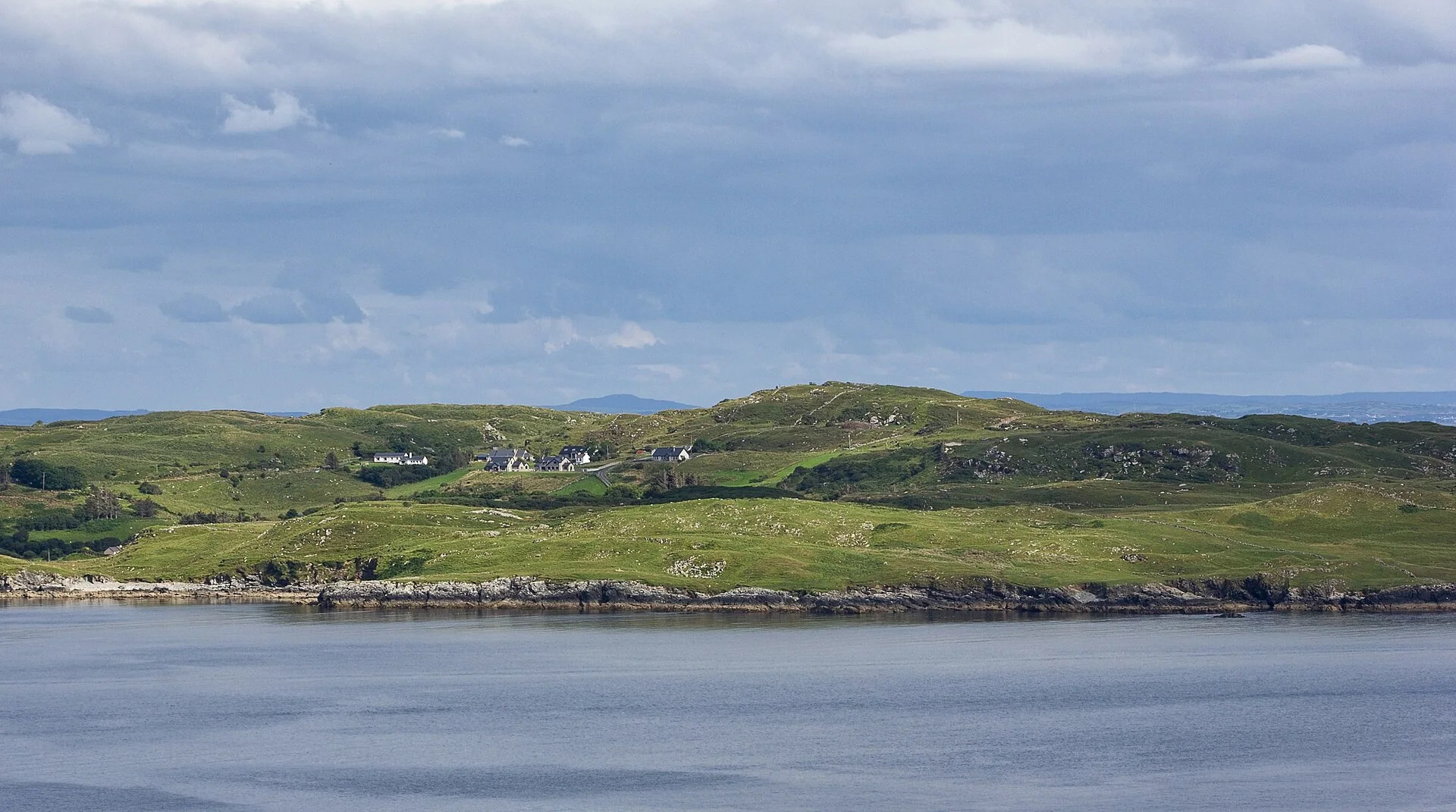
A ring of coastal mountains surrounds low plains at the centre of the island. The highest of these is Carrauntoohil ( Irish : Corrán Tuathail ) in County Kerry , which rises to 1,039 m (3,409 ft) above sea level. The most arable land lies in the province of Leinster . Western areas are mainly mountainous and rocky with green panoramic vistas. River Shannon , the island's longest river at 360.5 km (224 mi) long, rises in County Cavan in the north-west and flows through Limerick in the midwest.
Travel guide text compiled and adapted from Wikivoyage article (contributors) and Wikipedia article (contributors). Sections were selected and reordered for this guide. Text is shared under CC BY-SA 4.0. Check current arrangements with your travel consultant.
Plan the full journey
Useful for this trip
This country’s visa guidance has not been fully verified against current official requirements. Confirm the application route for your passport, residence and purpose before making travel commitments.
Review details
Ireland: Official pages were retrieved, but the complete imported guidance has not been corroborated claim by claim for Kenyan ordinary passports. Still to confirm: passport validity, tourist and business eligibility, application route, any exemptions and published processing guidance. Residents using other passports require a separate nationality check.