
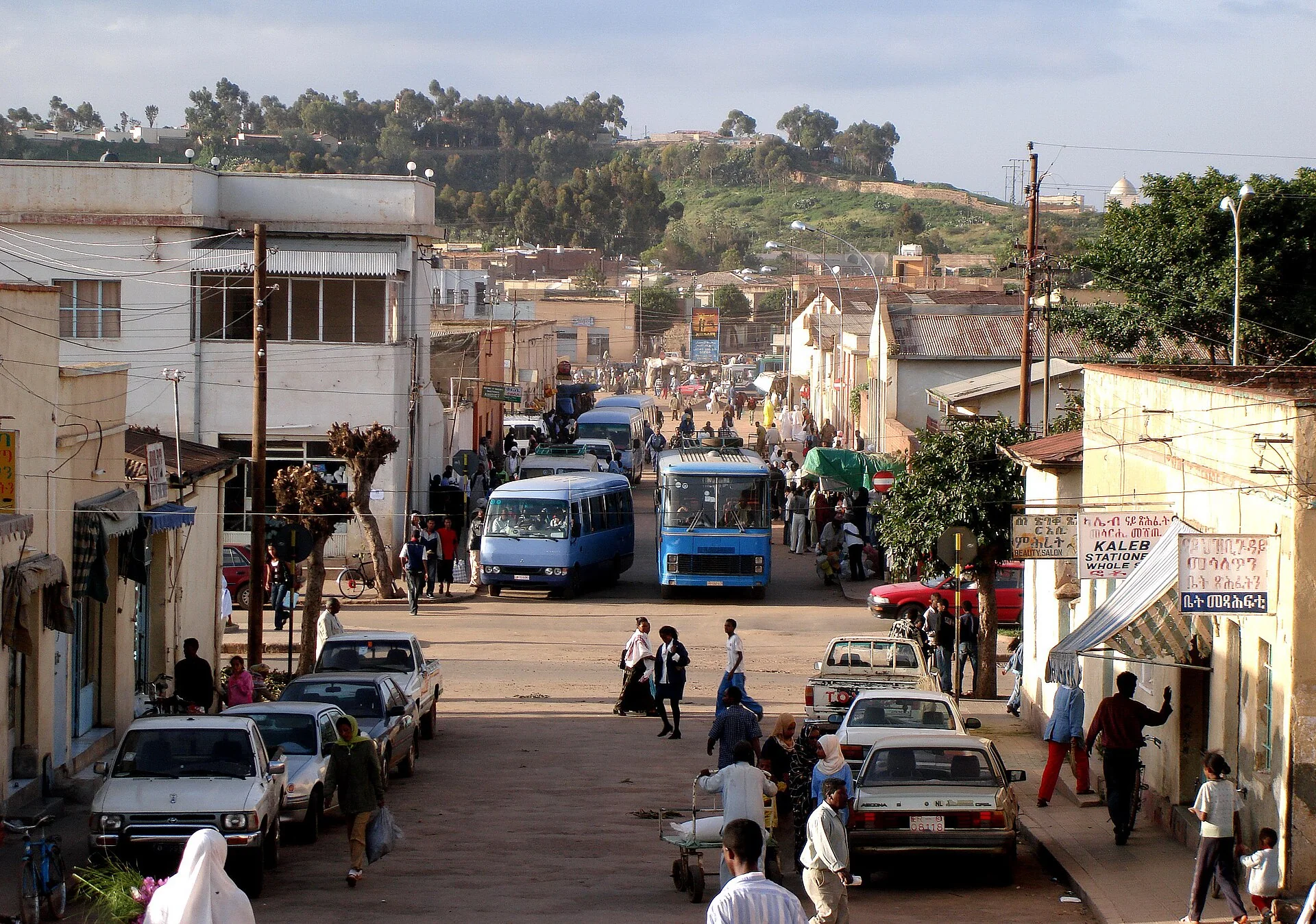
Eritrea
Travel to Eritrea provides one the opportunity to see and learn more about one of the most isolated countries on the planet, governed by one of the world's most repressive dictatorships. Not that many…
At a glance
Useful facts for planning
In this guide
Why go
Overview
Travel to Eritrea provides one the opportunity to see and learn more about one of the most isolated countries on the planet, governed by one of the world's most repressive dictatorships. Not that many people are brave enough to explore this mysterious nation, but if you do intend to visit, know that you are in for a real, authentic African experience; the country's charms lie in its natural attractions, wonderful architecture, dramatic scenery, and highly friendly and hospitable people.
The territory that is present-day Eritrea is considered to be the likely location of Punt, which had close relations with Ancient Egypt during the rule of Pharaoh Sahure and Queen Hatshepsut.
South Arabian migrants settled in the highlands in the 1st millennium BC and introduced Semitic elements and Eritrea was part of the Kingdom of D'mt. From the 3rd to 7th centuries, much of the territory was part of the Kingdom of Aksum.
Eritrea was conquered in 1890 by Italy, who hung onto it until World War II, when they were expelled by the British. Eritrea was awarded to Ethiopia in 1952 as part of a federation. Ethiopia's annexation of Eritrea as a province ten years later sparked a 30-year struggle for independence, which ended in 1991 with Eritrean rebels defeating Ethiopian and Ethiopian-backed forces. Independence was overwhelmingly approved in a 1993 referendum administered by the UN.
Culture and food
Eritrean cuisine in the highlands (around Asmara) consists largely of spicy dishes and is very similar to Ethiopian food. The staple is a flat, spongy crepe or bread called injera, made from a batter of fermented grains. Spicy stews with meat and vegetables are served on top of it and eaten with the hands. This cuisine is generally found in many restaurants in the country. Pork is rare as the Eritrean church forbids its followers from consuming pork.
Lowland cuisine is not readily available in many restaurants, but in the old town (outermost island) of Massawa, adjacent to the freeport area, there are some simple restaurants that serve cuisine typical to the Red Sea area such as grilled spicy fish and "khobzen" (pitas drenched in goats butter and honey).
Owing to its colonial history, Italian food is abundant, albeit not too varied all across Eritrea. You will always find a restaurant that serves good pasta, lasagna, steak, grilled fish, etc.
Eritrean culture encompasses the collective cultural heritage of the various populations native to Eritrea and the rich culture inherited through its long history. Modern-day Eritrea is also defined by the struggle for independence. The nation has a rich oral and literary tradition, which ranges across all nine ethnic groups and includes poetry and proverbs, songs and chants, folk tales, histories, and legends. It also has a rich history in theatre and painting, often colourful and depicting a reflection of the Eritrean people's history.
Planning your route
The only rail line in Eritrea runs between Asmara and Massawa, and it is only served by a museum railway (steam engine and all) with no regular service except for freight. It only caters to chartered tour groups, and it takes a daunting 5 hours to complete just the one way journey.
The roads from Asmara to Massawa, Medefera, Dekemhare, Barentu and Keren are paved and in relatively good condition. Other roads are unpaved and can be in very poor condition, especially during the rainy season.
Sights and landscapes
Eritrea is located in East Africa . It is bordered to the northeast and east by the Red Sea , Sudan to the west, Ethiopia to the south, and Djibouti to the southeast. Eritrea lies between latitudes 12° and 18°N, and longitudes 36° and 44°E.
The country is virtually bisected by a branch of the East African Rift . Eritrea, at the southern end of the Red Sea, holds the fork in the rift. The Dahlak Archipelago and its fishing grounds are situated off the sandy, arid coastline.
Eritrea's major urban areas include its capital city Asmara , the port town of Asseb in the southeast, the towns of Massawa to the east, the town of Keren to the north, and the central town Mendefera .
Eritrea is part of a 14-nation constituency within the Global Environment Facility , which partners with international institutions, civil society organizations, and the private sector to address global environmental issues while supporting national sustainable development initiatives.
The climate of Eritrea is shaped by its diverse topographical features and its location within the tropics. The variation of landscape and topography across the highlands and lowlands of Eritrea creates a diversity of climate. The highlands have a temperate climate throughout the year. The climate of most lowland zones is arid and semi-arid. Distribution of rainfall and vegetation types varies markedly throughout the country. Eritrean climate also varies based on seasonal and altitudinal differences.
Due to its physical diversity, Eritrea is one of the few countries where one can experience "four seasons in a day". In the highlands (up to 3,000 m or 9,800 ft above sea level), the hottest month is usually May, with temperatures reaching 30 °C (86 °F), whereas winter occurs during December to February when temperatures can be as low as 10 °C (50 °F) at night. The capital, Asmara, is temperate year-round.
Travel guide text compiled and adapted from Wikivoyage article (contributors) and Wikipedia article (contributors). Sections were selected and reordered for this guide. Text is shared under CC BY-SA 4.0. Check current arrangements with your travel consultant.
Plan the full journey
Useful for this trip
This country’s visa guidance has not been fully verified against current official requirements. Confirm the application route for your passport, residence and purpose before making travel commitments.
Review details
Eritrea: The supplied sources could not provide sufficient readable official guidance during this assessment. 1 source link(s) could not be retrieved successfully; see the source log. Still to confirm: passport validity, tourist and business eligibility, application route, any exemptions and published processing guidance. Residents using other passports require a separate nationality check.