
Albania
Albania ( Albanian : Shqipëria ) is a country in the Balkan region of Europe with unspoiled beaches, mountainous landscapes, traditional cuisine, archaeological artefacts, unique traditions, low prices and the wild atmosphere of the…
At a glance
Useful facts for planning
In this guide
Why go
Overview
Albania ( Albanian : Shqipëria ) is a country in the Balkan region of Europe with unspoiled beaches, mountainous landscapes, traditional cuisine, archaeological artefacts, unique traditions, low prices and the wild atmosphere of the countryside. It is one of the sunniest countries in Europe. The country has an extensive archaeological heritage; it was part of Ancient Greece , the Roman Empire and the Ottoman Empire until its first declaration of independence in 1912, becoming a kingdom and then a communist dictatorship before becoming a democratic republic. Albania is one of just a few Muslim majority nations in Europe.
While the relative majority of the people in Albania are of Muslim heritage (55–65%), according to the polls, around 35% of the Albanians are agnostics; 22% are atheists; 19% are Muslim; 15% are Orthodox; 8% are Catholics and 1% are of other religions. Mixed marriages are very common.
Traditional Albanian culture honors the role and person of the guest. In return for this place of honor, respect is expected from the guest. Albanians enjoy long walks in the city streets, drinking coffee, and among the younger generations, participating in nightlife activities such as cafe lounging and dancing.
During the Middle Ages, Albania was home to its historical inhabitants, the Arbër. First recorded in Byzantine texts in the 11th century, they inhabited mountainous areas between Lake Ohrid and the Shkumbin River. The term served as the native endonym for all Albanians until it was gradually replaced by Shqiptarët in the 18th century.
The English name Albania comes from Albanoi , the Greek name of an Illyrian tribe which lived in the area in during antiquity. Albanians call their own country Shqipëria , which means "Land of the Eagles". The name comes from an old myth that Albanians descend from a black eagle. A double headed black eagle was used as an insignia by the "Father of the Nation", Skanderbeg, as early as the 15th century, and can still be seen on the country's flag.
Sights and landscapes
Albania has varied cultural influences. In the south you can see the legacy of the Turks and Greeks, whereas in the north you can see many ancient Illyrian ruins.
Experiences
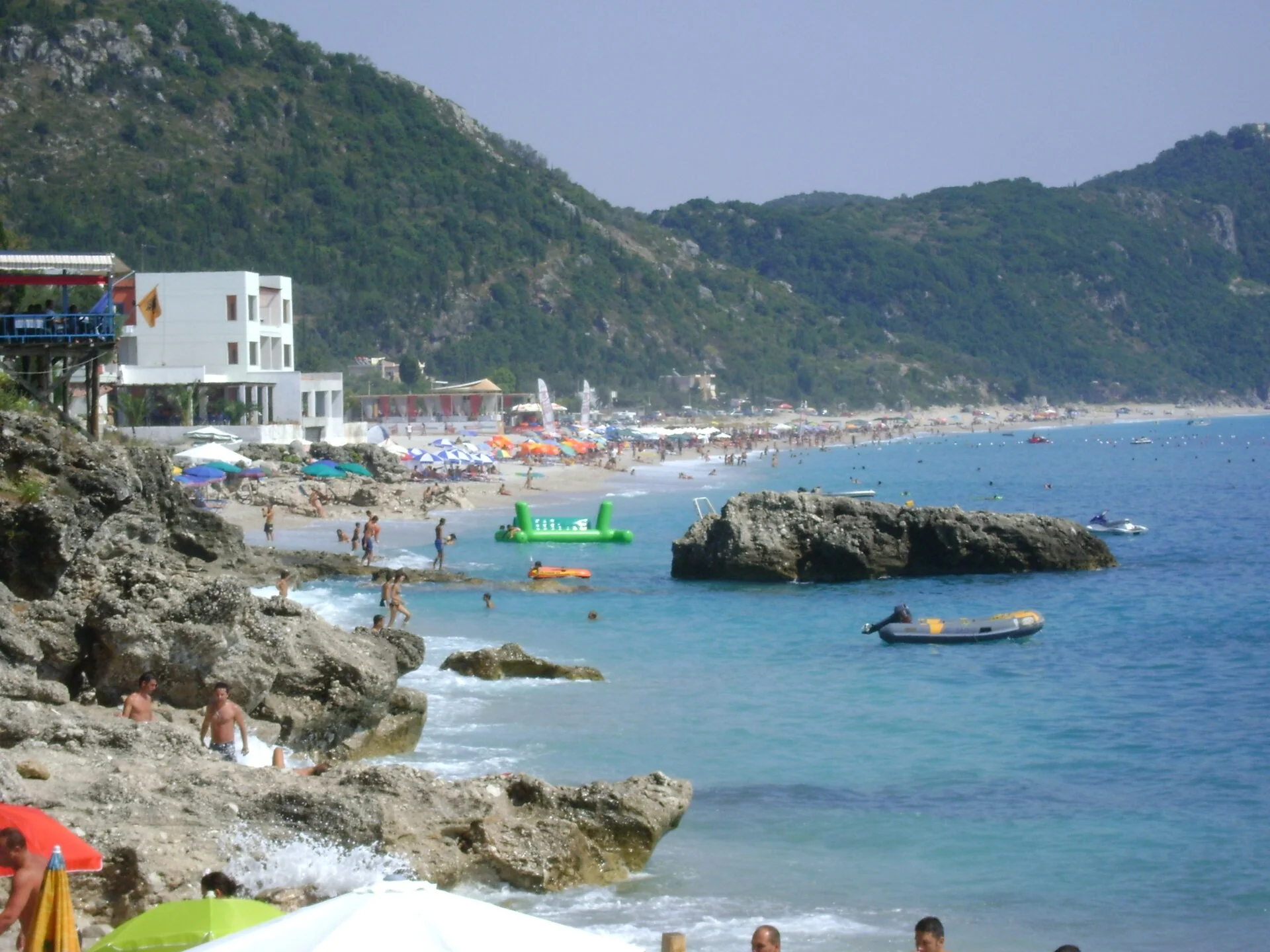
Including various lagoons and harbors, the coast stretches for a total of 450 km and touches two seas: the Ionian in the south and the Adriatic in the north.
The entire coastline and beaches belong to municipalities and is free and open to anyone. But sun loungers and umbrellas are paid here and belong to restaurants located somewhere nearby. For a day, you will have to pay around €3 for one set. But no one can prohibit sitting on the sand on one's towel or bedspread under one's own umbrella. During the high season in July and August beaches are cramped with locals and tourists, but on the 1st of September you would see very few people swimming – although water temperature is still around 23—25°C, apparently it's too cold for locals.
Almost two-thirds of Albania's geography is either hilly or mountainous. These enable outdoor recreation potential and of course impressive off-road cycling . There is a renewed interest in adventurer tourism in Albanian famous attractions—even though, most Albanians stick to pre-organised 4WD trips for the weekend for that matter. Various destinations in the Northern Alps, with elevations as high as 2,700 m, beckon to all types of “adventure seekers”. Specifically, the towns of Vermosh, Thethi, Razëm, Bogë, and Valbona can all serve as destination points for expeditions.
Culture and food
Albania, like the Balkans in general, has a primarily Turkish influence in its cuisine. This influence stems from over 400 years of Ottoman rule in the region. Influences since the fall of communism in the early 1990s have been from Italy and Western Europe in general. Most of what is available in neighboring countries such as Greece and Italy will be available in Albania, particularly in the larger cities.
The dish is prepared by layering thin sheets of dough with the cheese filling, often mixing the gjizë with herbs like parsley or dill for added flavor. It is then baked until golden brown and crispy on the outside, with a warm, cheesy interior. This byrek is popular as a light lunch, snack, or breakfast item and can be enjoyed hot or cold. It’s especially common in rural areas and is a favorite for its simplicity and delicious taste.
Byrek is a versatile dish that can be eaten any time of day, whether for breakfast, lunch, or dinner. It’s commonly enjoyed with a glass of yogurt, a side salad, or a refreshing drink. In some places, it’s even eaten as a snack on the go. Whether hot or cold, byrek offers a satisfying and delicious taste of Albanian culinary tradition.
Planning your route
Buses and furgons (minibuses) are the most reliable ways to travel around Albania. While the network is generally well-regulated and follows a fixed timetable, navigating the stations can be confusing. You will find numerous companies competing for business; however, many of these are merely ticket agents for the same service, which is often operated by an independent driver. From Tirana , many buses and furgons a day depart to Shkodër , Durres , Elbasan , Fier and Berat . Furgons departing to the south like Gjirokaster or Saranda tend to depart fairly early in the morning. Check out the schedules under Tirana#By bus .
The roads between the important destinations have been repaved and fixed, and offer most of the security measures one would expect on a highway. However be aware that some highways are not fully completed, and contain uncontrolled entry-exit points. There are no fees for using the highways – with the exception of the Rruga e Kombit highway (A1) which has a toll point near Tirana International Airport, and one near Morinë, the border with Kosovo.
Travel guide text compiled and adapted from Wikivoyage article (contributors). Sections were selected and reordered for this guide. Text is shared under CC BY-SA 4.0. Check current arrangements with your travel consultant.
Plan the full journey
Useful for this trip
This country’s visa guidance has not been fully verified against current official requirements. Confirm the application route for your passport, residence and purpose before making travel commitments.
Review details
Albania: Official pages were retrieved, but the complete imported guidance has not been corroborated claim by claim for Kenyan ordinary passports. 1 source link(s) could not be retrieved successfully; see the source log. Still to confirm: passport validity, tourist and business eligibility, application route, any exemptions and published processing guidance. Residents using other passports require a separate nationality check.