
Tuvalu
Tuvalu is a group of nine low-lying islands and atolls in the South Pacific that form the fourth smallest country in the world. It is also one of the most isolated and remote independent…
At a glance
Useful facts for planning
In this guide
Why go
Overview
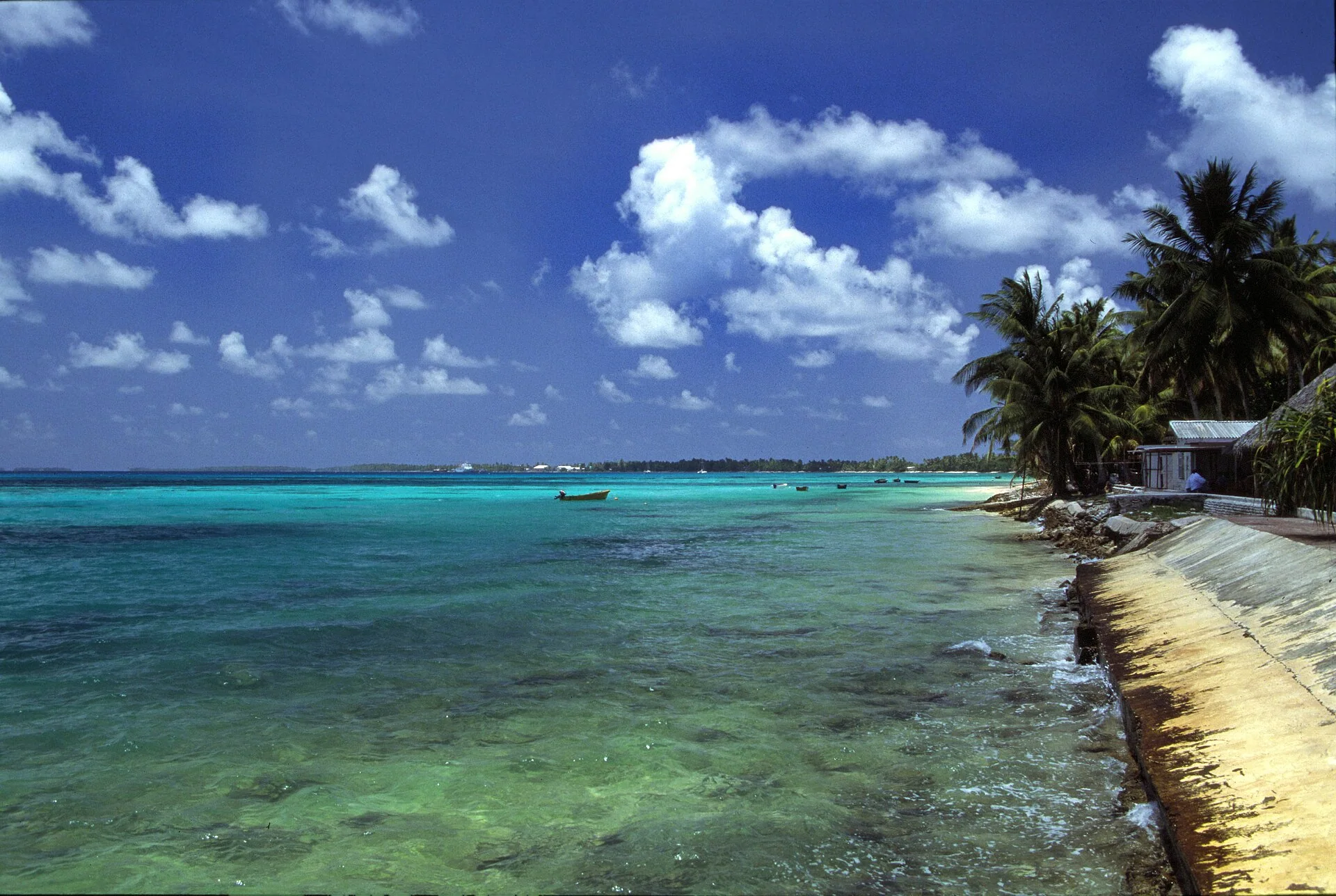
Tuvalu is a group of nine low-lying islands and atolls in the South Pacific that form the fourth smallest country in the world. It is also one of the most isolated and remote independent countries in the world. Since its highest point is 3 metres above sea level, some studies predict that the majority of the land will be regularly inundated by the sea by the end of this century due to climate change. While the nation makes preparations for its possible demise, it still welcomes tourists to its beautiful beaches.
Tuvalu is one of the world's least-visited island nations. It offers an unspoiled tropical escape with pristine beauty and a slice of paradise. Instead of resorts, tourism here is entirely non-commercialised, and features simple guesthouses, fragile seascapes, and a slow leisurely pace of life.
Tuvalu’s history is shaped by the ocean that surrounds it, the voyagers who first settled its atolls, and the global forces that later swept across the Pacific. Long before Europeans arrived, the islands were home to Polynesian navigators who travelled vast distances using stars, currents, and winds. These early settlers established small but resilient communities on the narrow coral atolls, developing traditions, social structures, and oral histories that remain central to Tuvaluan identity today. Each island evolved its own clan systems, chiefly lineages, and communal practices, all tied closely to the rhythms of the sea and the land.
European contact began in the 16th and 17th centuries, when Spanish explorers sighted some of the islands, though sustained interaction did not occur until the 19th century. During this period, Tuvalu experienced the disruptive effects of the Pacific labour trade, in which many islanders were coerced or tricked into working on plantations abroad. Missionaries soon followed, introducing Christianity, which rapidly became the dominant faith and reshaped social life. Despite these changes, Tuvaluans preserved many aspects of their traditional culture, including dance, storytelling, and communal decision‑making.
Sights and landscapes
Tuvalu is not a destination for those in search of spectacular sightseeing opportunities. The island nation is not only small, it also lacks any city-like destination or architectural heritage. There are no hills or mountain ranges, no rivers or gorges. But it will provide travellers an experience unlike others.
The Funafuti Conservation Area on the western side of the Funafuti atoll has some of the best natural sights, and includes reefs, the gorgeous lagoon, channel, parts of the ocean and island habitats. Its diversity in marine life makes it an excellent place for scuba diving or snorkelling .
The massive stationing of US troops in the Second World War left the island nation with a number of wartime remains, including airstrips, bunkers and plane wrecks along the main island of Fongafale and near the village of Nanumea. The tiny island of Motulalo in Nukufetau has an airstrip too, as well as some plane wrecks. If you have any interest in postal stamps, the Philatelic Bureau on Funafuti is a must-see. The Tuvalu Women's Handicraft Centre at the airport is a good place to see and buy local crafts. If you have time however, try catching a boat to one of the outer islands and admire the local people's skills in making ornaments, fans, mats, baskets or woodcarvings there.
Experiences
The national game is te ano (the ball). Two teams line up facing each other hitting a ball. The objective is to keep the ball in the air as long as possible. It is similar to volleyball.
Culture and food
There are many lodges that have restaurants that serve food and beverages. They serve many cuisines such as Chinese, Italian, and Indian. Fish is abundant given its location.
The traditional buildings of Tuvalu used plants and trees from the native broadleaf forest, including timber from pouka ( Hernandia peltata ); ngia or ingia bush ( Pemphis acidula ); miro ( Thespesia populnea ); Tonga ( Rhizophora mucronata ); fau or fo fafini , or woman's fibre tree ( Hibiscus tiliaceus ). Fibre is from coconut ; ferra , native fig ( Ficus aspem ); fala , screw pine or Pandanus . The buildings were constructed without nails, lashed together with plaited sennit rope handmade from dried coconut fibre.
Following contact with Europeans, iron products were used including nails and corrugated roofing material. Modern buildings in Tuvalu are constructed from imported building materials, including imported timber and concrete.
Church and community buildings ( maneapa ) are usually coated with white paint that is known as lase , which is made by burning a large amount of dead coral with firewood. The whitish powder that is the result is mixed with water and painted on the buildings.
The women of Tuvalu use cowrie and other shells in traditional handicrafts . The artistic traditions of Tuvalu have traditionally been expressed in the design of clothing and traditional handicrafts such as the decoration of mats and fans . Crochet ( kolose ) is one of the art forms practised by Tuvaluan women. The design of women's skirts ( titi ), tops ( teuga saka ), headbands , armbands , and wristbands , which continue to be used in performances of the traditional dance songs of Tuvalu, represents contemporary Tuvaluan art and design. The material culture of Tuvalu uses traditional design elements in artefacts used in everyday life such as the design of canoes and fish hooks made from traditional materials.
Planning your route
Getting around Tuvalu is simple but requires a relaxed, flexible mindset. Most movement happens on Funafuti , where the main islet, Fongafale, is long and narrow, making it easy to explore by motorbike, bicycle, or on foot . Scooters and bikes are widely rented by guesthouses, and the single main road runs the length of the islet, passing villages, shops, and the airport runway. Traffic is light, and distances are short, so getting around feels easy and informal.
Travel guide text compiled and adapted from Wikivoyage article (contributors) and Wikipedia article (contributors). Sections were selected and reordered for this guide. Text is shared under CC BY-SA 4.0. Check current arrangements with your travel consultant.
Plan the full journey
Useful for this trip
This country’s visa guidance has not been fully verified against current official requirements. Confirm the application route for your passport, residence and purpose before making travel commitments.
Review details
Tuvalu: The supplied sources could not provide sufficient readable official guidance during this assessment. 1 source link(s) could not be retrieved successfully; see the source log. Still to confirm: passport validity, tourist and business eligibility, application route, any exemptions and published processing guidance. Residents using other passports require a separate nationality check.