
Tunisia
The Republic of Tunisia ( Arabic : تونس Tūnis ), is a country in North Africa bordering the Mediterranean Sea. Tourist infrastructure is well developed, and there are several ways to enjoy the loveliness…
At a glance
Useful facts for planning
In this guide
Why go
Overview
The Republic of Tunisia ( Arabic : تونس Tūnis ), is a country in North Africa bordering the Mediterranean Sea. Tourist infrastructure is well developed, and there are several ways to enjoy the loveliness of Tunisia, including spending time on the gorgeous Mediterranean beaches, viewing its ancient ruins, living its thriving desert culture, or sampling its delicious cuisine.
Tunisia has a rich cultural history, ever since antiquity. The Carthaginian Empire, Rome's archenemy, was centred in Tunisia. Its capital, Carthage, is now a suburb of Tunis. Founded by Phoenician settlers from Tyre and Sidon (modern day Lebanon), Carthage was an ancient Mediterranean powerhouse. Three wars between Rome and Carthage (known as the Punic wars) were waged in the first few centuries before the birth of Christ. These culminated with the decimation of Carthage in 146 BCE by the Roman general Scipio, who is said to have wept at its destruction.
Between the destruction of ancient Carthage and the Arabic conquests of the 7th century, many cultures have made Tunisia their home. Carthage enjoyed a new period of prosperity under the Roman Empire until its collapse in the 5th century. Roman rule was replaced briefly by the Vandals, who made Carthage the capital of their kingdom. Carthage was then absorbed temporarily by the Byzantine Empire, until the rise of Islam in the 7th century.
After the dissipation of the Arabic Caliphates, the Ottoman Empire's Turkish Pashas ruled Tunisia. With the fall of the Ottoman Empire, Tunisia eventually fell under the sway of European Imperialism, as a French Protectorate, along with neighbouring Algeria.
Sights and landscapes
Little remains of Carthage , but what does is relatively well presented compared to the rest of the ruins in Tunisia. This great city of the Phoenician and Punic periods dates from the 6 th century BC and was the base of a hugely powerful empire spanning the entire south Mediterranean. Its most famous general was Hannibal who crossed the Alps to battle the Romans . Hannibal suffered his first significant defeat at the Battle of Zama in 202 BC, and after over 50 years of being watched closely by Rome, Carthage was attacked in the 3 rd Punic War and completely destroyed. The city was redeveloped by the Romans a century later, and Carthage became the capital of the Roman province of Africa. What we see today are the remains of that era.
Dougga and Kerkouane are two other must see UNESCO World Heritage Sites that have amazingly well preserved ruins, but are sadly less informative with little to no signboards.
Both Monastir and Sousse are well known as beach resorts amongst sun-worshiping Europeans , but they are also towns with great historical heritage. Monastir has a history back to the time of Hannibal, an especially notable museum and a wonderful ribat (fortified monastery). Sousse is a UNESCO World Heritage Site for its authentic medina and souk, which should not be missed.
Experiences
Beach resort holidays in Tunisia are extremely popular, especially with Europeans. The main resorts are on the east coast from La Goulette (close to Tunis ) south to Monastir . The southern island of Djerba is an alternative. Many water sport activities are widely available or you can just relax, taking advantage of the almost relentless sunny climate.
All of Tunisia can be proud of its beaches, you just have to know where to find the "undiscovered" ones. There is a beach not far from Sousse called Chott Meriam. The beach is clean with white sand and beautiful clean sea. The best beaches of Tunisia can be found in Kelilbia, Djerba, Ghar El-Melh, Rafrafbeach, Sidi El Mekki, Sounine, Sousse and Zarzis.
A few tour organizations organize day trips from Tunis to beaches in Bizerte and around the area for a price of about DT25 per person, with a meal included. These events can be found mainly on Facebook.
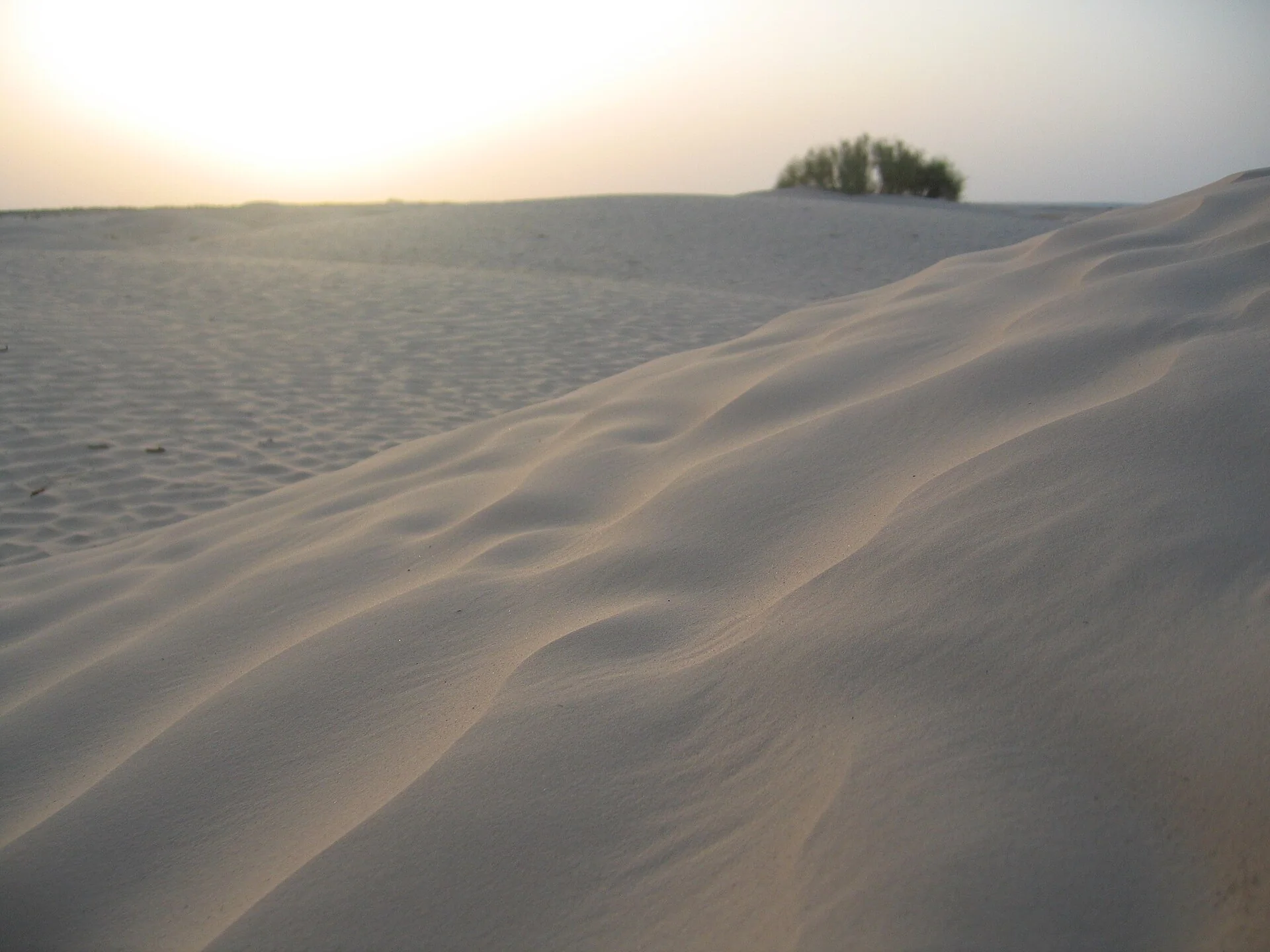
Treks into the desert are an increasingly popular part of a visit to Tunisia, and the towns of Douz and Tozeur are good starting points. Close to Tozeur is the small town of Metlaoui , and this is the starting point of a great train journey. The beautifully-restored wagons date from 1904, and the luxurious train takes you into a truly stunning desert mountain landscape. Agencies organizing such treks include Libre Espace Voyage and Au Coeur du Desert.
Culture and food
Tunisian cuisine has similarities with Middle Eastern cuisine , and mainly builds on the Northern African Maghreb tradition, with couscous and marqa stews (similar to the Moroccan tajine ) forming the backbone of most meals. Distinguishing characteristics are the fiery harissa chili sauce, the heavy use of tiny olives which are abundant in the country, and the Tunisian tajine which, unlike the Moroccan dish of the same name, refers to a type of omelette-like pie prepared with a ragout of meat and/or vegetables mixed with herbs, legumes and even offal, enriched with eggs and cheese and baked in a deep pie dish until the eggs are just set, somewhat like an Italian frittata . Lamb forms the basis of most meat dishes and local seafood is plentiful. Pork and pork products are not widely available but can be found in some supermarkets and in some hotels in tourist areas.
Planning your route
Tunisair express is the domestic airline branched off of TunisAir. You can fly between Tunis and Tozeur, Djerba and Gabes, as well as flights to Malta and Napoli. French-only website, booking is available online or through agencies Tunisair Express .
Travel guide text compiled and adapted from Wikivoyage article (contributors). Sections were selected and reordered for this guide. Text is shared under CC BY-SA 4.0. Check current arrangements with your travel consultant.
Plan the full journey
Useful for this trip
This country’s visa guidance has not been fully verified against current official requirements. Confirm the application route for your passport, residence and purpose before making travel commitments.
Review details
Tunisia: The supplied sources could not provide sufficient readable official guidance during this assessment. 1 source link(s) could not be retrieved successfully; see the source log. Still to confirm: passport validity, tourist and business eligibility, application route, any exemptions and published processing guidance. Residents using other passports require a separate nationality check.