
Philippines
The Philippines ( Filipino : Pilipinas ), officially the Republic of the Philippines ( Republika ng Pilipinas ), is an archipelago of more than 7,100 islands in Southeast Asia .
At a glance
Useful facts for planning
In this guide
Why go
Overview
The Philippines ( Filipino : Pilipinas ), officially the Republic of the Philippines ( Republika ng Pilipinas ), is an archipelago of more than 7,100 islands in Southeast Asia .
The country has one of the world's longest coastlines with many fine beaches and excellent diving . There is great cultural diversity due to the many islands, many waves of immigration, and a mixture of foreign influences — the country has been trading with nearby nations for several thousand years and was a Spanish colony from 1562 to 1898, then American until 1946. It would take decades to visit and experience everything.
Many locals speak English well and a lot of the others have at least some English. Food and accommodations are cheap, many destinations have excellent infrastructure, and the people are cheerful and friendly; perhaps the easiest way to recognize a Filipino abroad is to see who has the broadest smile.
With over 7,100 islands and 300,000 km 2 (120,000 sq mi) of territory between the Philippine Sea and the South China Sea (called the "West Philippine Sea" in the Philippines), the Philippines is the world's second largest archipelago country, after nearby Indonesia ( Northern Canada has the largest archipelago). The islands are mostly volcanic in origin, covered with tropical rainforest and fertile soil, but much of the rainforest has been cut down. The terrain varies considerably, but many of the coasts have a lot of bays and headlands, and many of the larger islands have mountainous interiors. The coasts also have many coral reefs.
Sights and landscapes
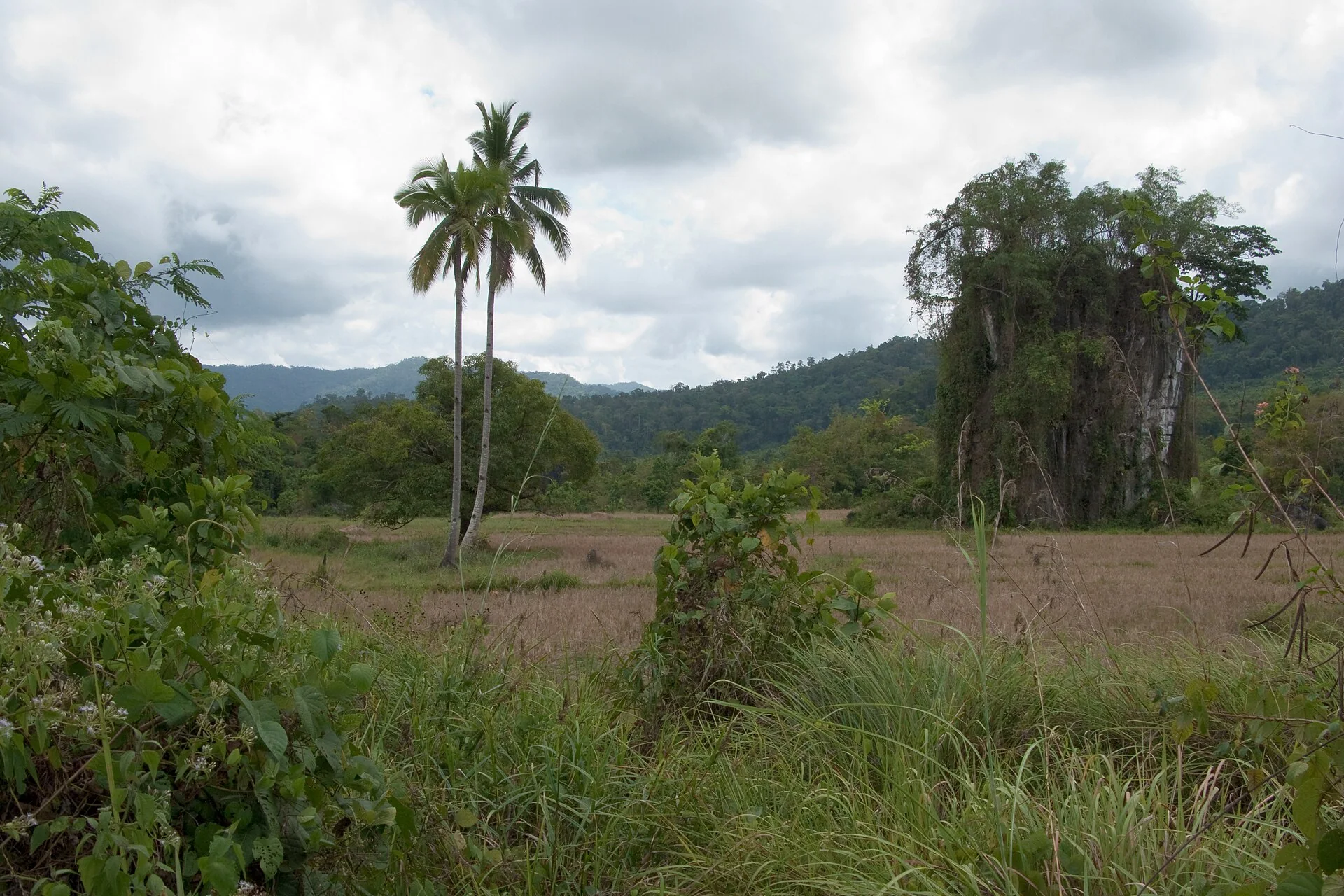
The Philippines can give you the tropical island experience of your life. Its beautiful sandy beaches, warm climate, century old churches, magnificent mountain ranges, dense rain forests, rich culture and smiling people are some of the attractions that you can see and experience on this archipelago composed of 7,107 islands. You can experience the country's rich and unique culture in different ways like touring old Spanish churches, joining colorful fiestas (festivals) and by enjoying exotic and tasty cuisine. But perhaps the greatest way to experience Filipino culture is by riding a jeepney.
The Spanish began colonizing the Philippines in the 1560s and held it until the Americans took over in 1898. Almost every town in the country has a few fine old buildings from that period, at least a Catholic church. A few have much more than that, whole districts full of old buildings including the remains of Spanish fortifications:
Several towns have particularly fine collections of heritage buildings, including many heritage homes built for important Spaniards or for wealthy Filipino families. Many of these are still private homes and by no means all are open to the public, but some have become museums and others allow tours.
Since the country was a Spanish colony for 300 years, Baroque churches can easily be found around the Philippines. These churches will look almost like those which you might see in Spain and elsewhere in Europe. Some of the most iconic in the country are:
Beaches and diving are among the best-known tourist attractions of the country; with 7,107 islands there is certainly enough choice. Many beaches have bright white sand, but beige, gray, black or even pink sand are also found. Most of the diving is around coral reefs; many are reachable by just walking into the water, or on a day trip by boat from one of the resorts. A few such as Coron feature wreck diving and some such as Tubbataha Reefs Natural Park involve longer trips on live-aboard boats.
Experiences
Scuba diving is spectacular in the Philippines. While there are many fine dive sites, including some in nearly every region of the country, three stand out as among the world's best:
Culture and food
Filipino cuisine has developed from the different cultures that shaped its history; it is Southeast Asian cuisine but with influences from both Asia and the West. Though its cuisine is not as renowned as many of its neighbors, such as that of Thailand and Vietnam, Filipino cooking is nonetheless distinct in that it is possibly the least spicy of all Southeast Asian cuisines. Don't make the mistake of thinking that Filipino food is bland, though. It is just that instead of spices, Filipino food depends more on garlic, onions, ginger and vinegar to add flavor to dishes, and is mostly sweet, sour, and salty. Painstaking preparation and prolonged cooking time is also a characteristic of most Filipino dishes, and when done properly is often what brings out the flavor of the food, as opposed to a healthy dose of spices. As with the rest of Southeast Asia, rice is the staple food of the Philippines, but parts of the country rather have corn instead. Nonetheless, non-Filipinos may be caught off-guard by the tendency for all meat to be cooked well-done.
Planning your route
The country's vast archipelagic nature makes travel by plane and boat very important for most visitors, especially between major cities. The country is quite large, especially when considering the area that is water, and its geography and population patterns mean that seemingly short distances, especially on land, may take more time to travel than you would expect.
Do what Filipinos do, and try to "commute" or take public transportation when possible. That said, travel by car or motorcycle is still an interesting way to discover the Philippines and find places off the beaten track, if you're willing to face the rather shocking situation on Philippine roads.
Travel guide text compiled and adapted from Wikivoyage article (contributors). Sections were selected and reordered for this guide. Text is shared under CC BY-SA 4.0. Check current arrangements with your travel consultant.
Plan the full journey
Useful for this trip
This country’s visa guidance has not been fully verified against current official requirements. Confirm the application route for your passport, residence and purpose before making travel commitments.
Review details
Philippines: Official pages were retrieved, but the complete imported guidance has not been corroborated claim by claim for Kenyan ordinary passports. 1 source link(s) could not be retrieved successfully; see the source log. Still to confirm: passport validity, tourist and business eligibility, application route, any exemptions and published processing guidance. Residents using other passports require a separate nationality check.