
Palau
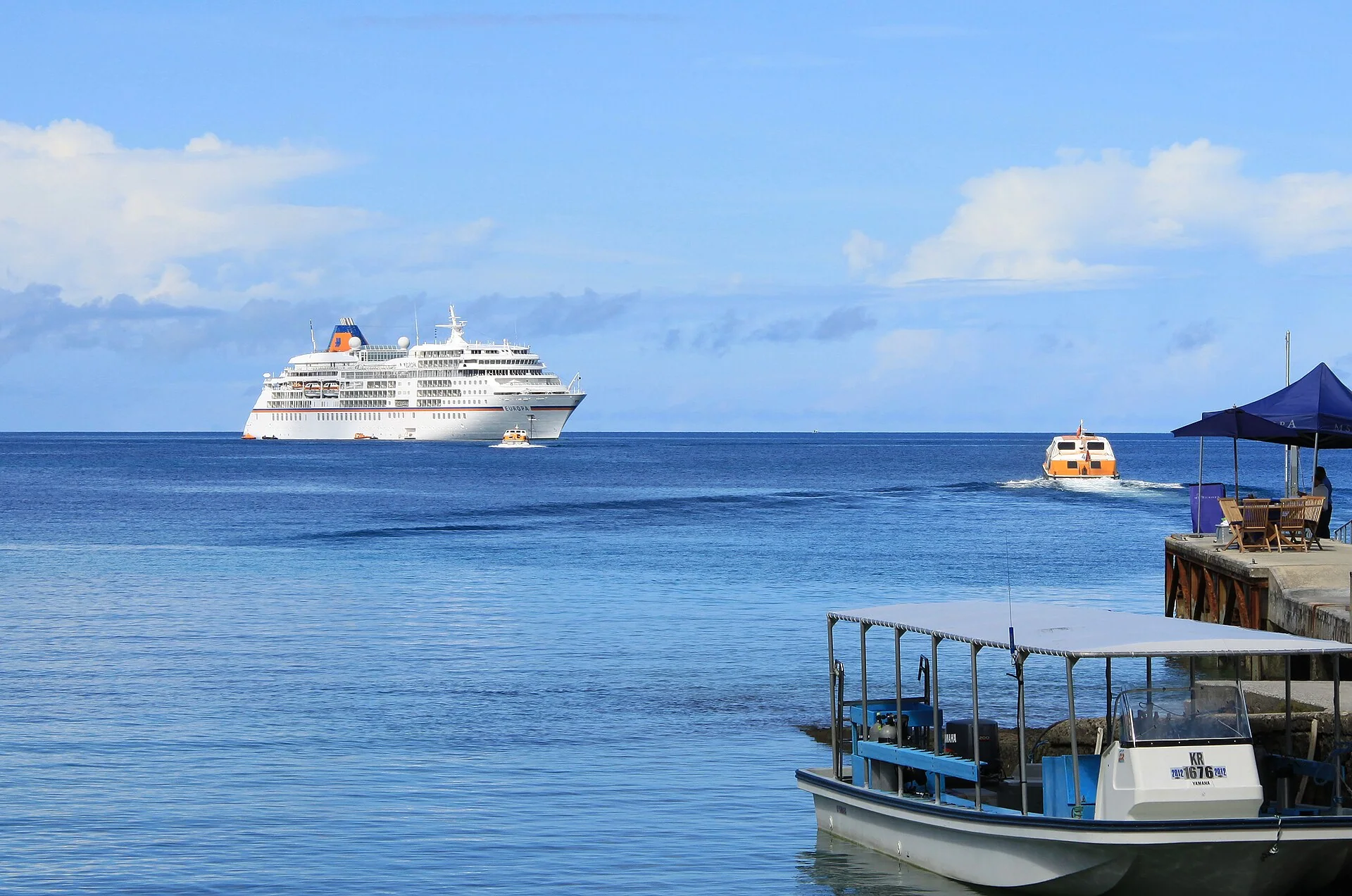
Palau ( Belau ) is a group of more than 300 tropical islands in the Micronesia area of the Pacific Ocean , to the southeast of the Philippines .
At a glance
Useful facts for planning
In this guide
Why go
Overview
Palau ( Belau ) is a group of more than 300 tropical islands in the Micronesia area of the Pacific Ocean , to the southeast of the Philippines .
It is illegal to sell/buy or use sunscreen or skin care products that contain chemicals that damage the reef. Details can be found on the ICRI web page .
Early Palauans may have come from Polynesia and Asia . Depending on the origin of a family, Palauans may represent many parts of Melanesia , Micronesia and Polynesia. However, they are not traditionally considered to be Micronesian. For thousands of years, Palauans have had a well established matrilineal society, believed to have descended from Javanese precedents.
Palau had limited relations before the 18th century, mainly with Yap and Java . Had it not been for shipwrecked islanders who took refuge in the Philippines, Europeans likely would not have found Palau until much later. Englishman Captain Henry Wilson was shipwrecked off the island of Ulong in 1783 and it was Wilson who gave the archipelago the name "Pelew Islands".
Palau enjoys a tropical climate all year round with an annual mean temperature of 82 °F (28 °C). Rainfall can occur throughout the year, averaging a total of 150 inches (3,800 mm). The average humidity over the course of the year is 82%, and although rain falls more frequently between July and October, there is still much sunshine. Typhoons are rare, as Palau is outside the main typhoon zone.
Places to explore
The southwestern islands of Palau are worth a visit if you have your own marine transport such as an ocean-going yacht. There are Sonsorol, Fana, Meriil, Hatohobei and Helen Reef, a conservation area. However be sure to take mosquito repellent if you visit Meriil as its local name is Dancing Island. Go there and you will find out why! If you intend to visit any of these islands it is a wise idea to make the acquaintance of the governors at their offices in Koror. If you are lucky you just might be able to take a trip on the island supply vessel, the Atoll Way. Sleeping is on a hard wooden platform along with the other souls who are either returning to their home islands or maybe the doctor from Peleliu Island Hospital who is making a routine visit to check up on the health of the islanders.
Sights and landscapes
Most visitor attractions are found on and around The Rock Islands or Chelbachebover . These 250 rock islands — many tiny, uninhabited places — offer some enchanting views and are a World Heritage site. Popular dives include Blue Corner, Blue hole and the German Channel .
Take a guided tour along ancient stone monoliths and terraces while your guide tells you about the legends that surround them. With just over 21,000 inhabitants, even the capital might feel like a village, but there's a handful of interesting sights and a few museums showcasing traditional Palau culture and the country's turbulent war time history. Again though, it's the sheer beauty both above and under water that makes visitors rave about this small island nation.
Experiences
Palau is most famous for scuba diving . The Blue Corner, with constant sharks and a high current, is less than 1 hour's boat ride from most resorts. There are many local dive shops and live-aboards that offer tours, including tours to World War II battle fields.
Culture and food
Palau has large communities from Taiwan, the Philippines, Korea, Japan and the United States and the local stores have evolved to supply their needs. So Koror offers an amazing range of foodstuffs in its stores, at a price of course. Japanese-inspired Bento lunch boxes are very popular. Koror also has the largest concentration of restaurants.
Many licensed establishments in Palau — from quiet little bars to Japanese-style karaoke bars complete with bar girls. For a decent affordable drink, try Sam's Dive Shop or High Tide . Alcohol is readily available at most stores. Public drinking is not allowed, and the local police are more than happy to inconvenience you if you are caught.
Red Rooster Beer. Despite its size Palau has a small brewery, to be found next to the West Plaza by the Sea hotel (see below). It offers Amber and Stout and three other beers. Abai Ice in Koror is a small hut that offers fresh fruit smoothies — highly recommended.
Planning your route
If you rent a car, be prepared to drive slowly on some bumpy roads. Palau features both left- and right-hand drive cars, which can cause some confusion; traffic drives on the right. If you drive south to Ice Box Park, the facility behind it is a sewage treatment plant. The road further north is paved and is very nice… once you get past the airport.
Speed limits in Palau are in miles per hour (mph), with the same design of the speed signs seen in the United States . The national speed limit is 25 mph (40 km/h), even on rural roads. It's also illegal to pass slow vehicles.
Any other diving will be from a boat, after an hour or more ride which will cost around US$150 for a two-tank dive. There are no dive spots or beaches on Koror, the main island.
Travel guide text compiled and adapted from Wikivoyage article (contributors). Sections were selected and reordered for this guide. Text is shared under CC BY-SA 4.0. Check current arrangements with your travel consultant.
Plan the full journey
Useful for this trip
This country’s visa guidance has not been fully verified against current official requirements. Confirm the application route for your passport, residence and purpose before making travel commitments.
Review details
Palau: Official pages were retrieved, but the complete imported guidance has not been corroborated claim by claim for Kenyan ordinary passports. Still to confirm: passport validity, tourist and business eligibility, application route, any exemptions and published processing guidance. Residents using other passports require a separate nationality check.