
Oman
The Sultanate of Oman ( Arabic : سلطنة عُمان ) is on the eastern side of the Arabian Peninsula . Under the radar of most visitors to the Gulf, Oman is peaceful and prosperous,…
At a glance
Useful facts for planning
In this guide
Why go
Overview
The Sultanate of Oman ( Arabic : سلطنة عُمان ) is on the eastern side of the Arabian Peninsula . Under the radar of most visitors to the Gulf, Oman is peaceful and prosperous, with amazing natural sights and hospitable people.
Until Sultan Qaboos bin Said exiled his father, the previous Sultan, in 1970, Oman was an under-developed nation, almost completely closed to visitors and badly manipulated by the British, although never annexed. After the accession of Qaboos, education, public works and tourism took off throughout Oman.
Omanis are proud of their country's rapid progress and of their heritage as one of the great seafaring nations. Excellent schools and hospitals, good governance, and on-going infrastructure improvements are all important characteristics of this once introverted and closed nation.
Sumerian tablets refer to a country called Magan, a name thought to refer to Oman's ancient copper mines. The present-day name of the country is believed to originate from the Arab tribes who migrated to its territory from the Uman region of Yemen . Many tribes settled in Oman making a living by fishing, herding or stock breeding and some present day Omani families are able to trace their ancestral roots to other parts of Arabia.
From the 6th century BCE to the arrival of Islam in the 7th century CE, Oman was controlled or influenced by three Persian dynasties: the Achaemenids, Parthians and Sassanids. By about 250 BCE the Parthian dynasty brought the Persian Gulf under their control and extended their influence as far as Oman and established garrisons in Oman. In the third century CE the Sassanids succeeded the Parthians and held the area until the rise of Islam four centuries later.
Sights and landscapes
Oman is famous for its historic forts , which are the country's most striking cultural landmarks. There are over 500 forts and towers which were the traditional defence and lookout points to deter potential invaders. Some of the best examples are in the capital, Muscat . Jalali and Mirani forts stand at the entrance to Muscat Bay and date from the early 16th century.
Bahla Fort at the base of the Djebel Akhdar highlands is a UNESCO World Heritage Site and has 7 miles of walls. It was built in the 13th and 14th centuries when Bahla was a thriving oasis town.
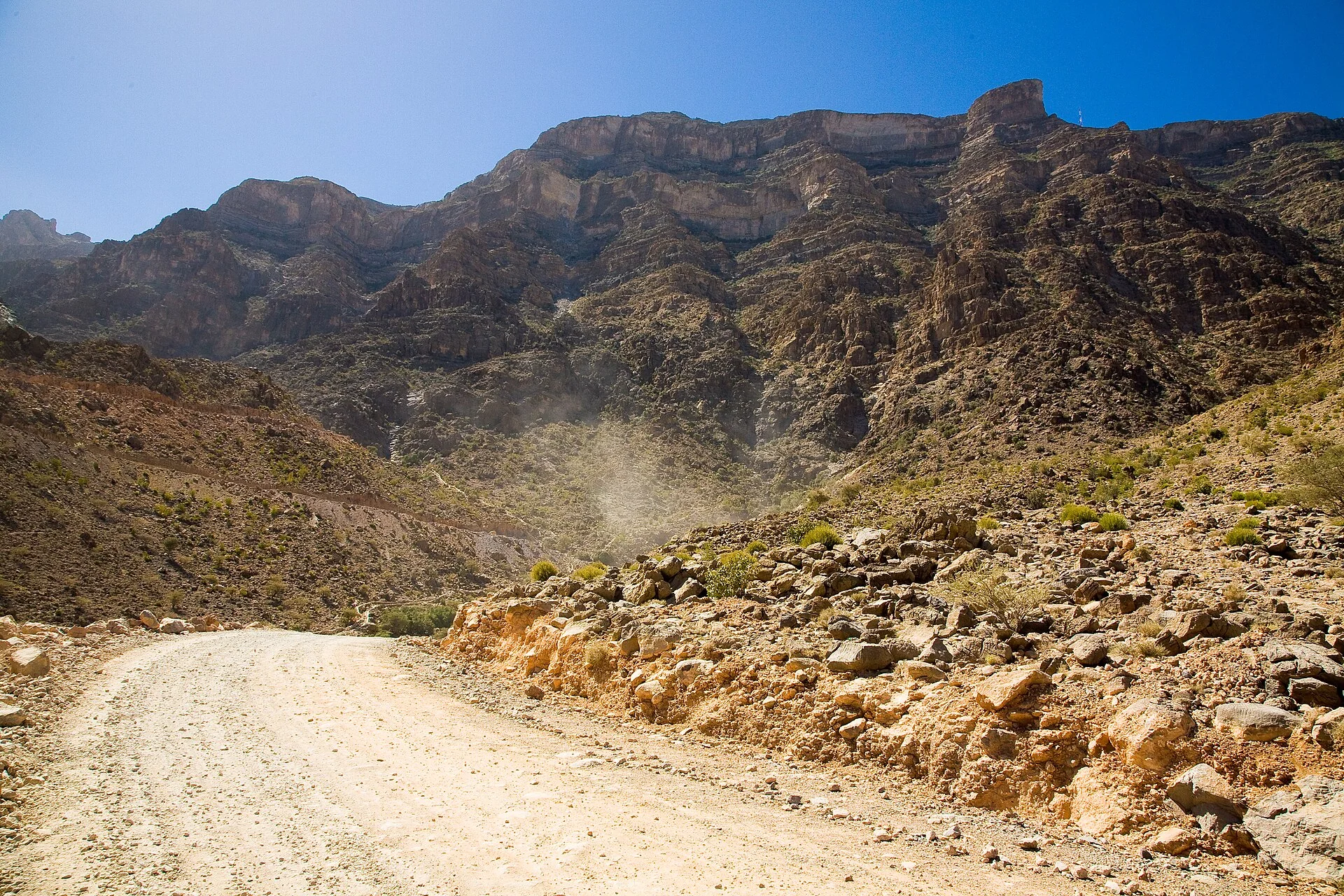
Oman's rugged mountains offer some stunning scenery and probably the best opportunities for driving in dry wadis anywhere in the world. Many of the wadis have made roads (often unsurfaced but decent enough) while others require serious off-roading. You can easily get well off the beaten path into remote areas.
Oman's beaches are major breeding locations for various species of sea turtle . Masirah Island is the perhaps best bet where four species breed, including the largest number of leatherbacks anywhere in the world.
Oman lies between latitudes 16th parallel north and 28th parallel north , and longitudes 52nd meridian east and 60th meridian east . A gravel desert plain covers most of central Oman, with mountain ranges along the north ( Hajar Mountains ) and southeast coast ( Dhofar Mountains ), where the country's main cities are located: the capital city Muscat , Sohar and Sur in the north, and Salalah in the south and Musandam . Oman's climate is hot and dry in the interior and humid along the coast.
The peninsula of Musandam (Musandem), strategically located on the Strait of Hormuz , is an exclave separated from the rest of Oman by the United Arab Emirates .
Culture and food
Omani food tends to be simple but rewarding and filling. Rice is the main staple and so is bread. The national dish is called " Qabuli", consisting of; spiced rice, lamb or chicken, split peas and caramelized onions. It can be found in many restaurants across the country. Another popular dish is "shuwa" which consists of a whole roasted lamb wrapped around banana or palm leaves and marinated in a plethora of different spices, before being buried underground and cooked for an overnight. Shuwa is often served with plain rice but in some upscale restaurants it can be served as a sandwich with fries and ketchup. You have to try harees whenever possible, which is a porridge-like dish of cracked wheat, ghee, chicken or beef and some spices. With a long coastline, Oman has a rich seafood culture and freshly caught fish served with a salad and rice is not unheard of for lunch.
Planning your route
Oman Air is the national carrier and flies regularly between the two airports in the country (Muscat/Seeb, and Salalah). Air Arabia offers flights to Salalah and Muscat from the United Arab Emirates (UAE).
There are regular, daily bus services connecting the bigger cities within Oman ( Muscat , Salalah , Sohar , Sur and Nizwa ). There are several, daily bus services from Muscat to Dubai. There is one bus a day from Muscat to Abu Dhabi. For details see the pages of the Oman National Transport Company .
The orange-badged taxis are usually owner-operated, these are un-metered with negotiated fares before departure. If you get a very cheap price, then do not be surprised if the Taxi stops to add extra passengers unless you request for it to be private. You may ask for engaged , just say 'engaged taxi' to the driver, and you will pay for all the seats (4) and now have the taxi to yourself. Women must always sit alone in the back. This is for your own safety and comfort.
Travel guide text compiled and adapted from Wikivoyage article (contributors) and Wikipedia article (contributors). Sections were selected and reordered for this guide. Text is shared under CC BY-SA 4.0. Check current arrangements with your travel consultant.
Plan the full journey
Useful for this trip
This country’s visa guidance has not been fully verified against current official requirements. Confirm the application route for your passport, residence and purpose before making travel commitments.
Review details
Oman: Official pages were retrieved, but the complete imported guidance has not been corroborated claim by claim for Kenyan ordinary passports. Still to confirm: passport validity, tourist and business eligibility, application route, any exemptions and published processing guidance. Residents using other passports require a separate nationality check.