
North Macedonia
The Republic of North Macedonia ( Macedonian : Северна Македонија, Severna Makedonija ), mostly still referred to as simply Macedonia by its residents, is a landlocked country in the heart of the Balkans .…
At a glance
Useful facts for planning
In this guide
Why go
Overview
The Republic of North Macedonia ( Macedonian : Северна Македонија, Severna Makedonija ), mostly still referred to as simply Macedonia by its residents, is a landlocked country in the heart of the Balkans . The country has an ethnically diverse population (a Macedonian Slav majority, with minority populations of Albanians, Turks, Romani, and others) sharing an often ruggedly beautiful landscape. Architecture from the bygone eras of the Ottoman Empire and socialist Yugoslavia remains and now contrasts with the modern structures of independent Macedonia. Relative to other European nations, Macedonia is off the beaten path, and tourist infrastructure is underdeveloped and occasionally challenging to navigate.
North Macedonia is a diverse country with several ethnic minorities. The majority of the population is ethnic Macedonian and Orthodox Christian, but there is also a significant Albanian Muslim minority. Across the country's north and west (the region stretching approximately from Kumanovo to Struga), Macedonians and Albanians live side by side, if somewhat uneasily.
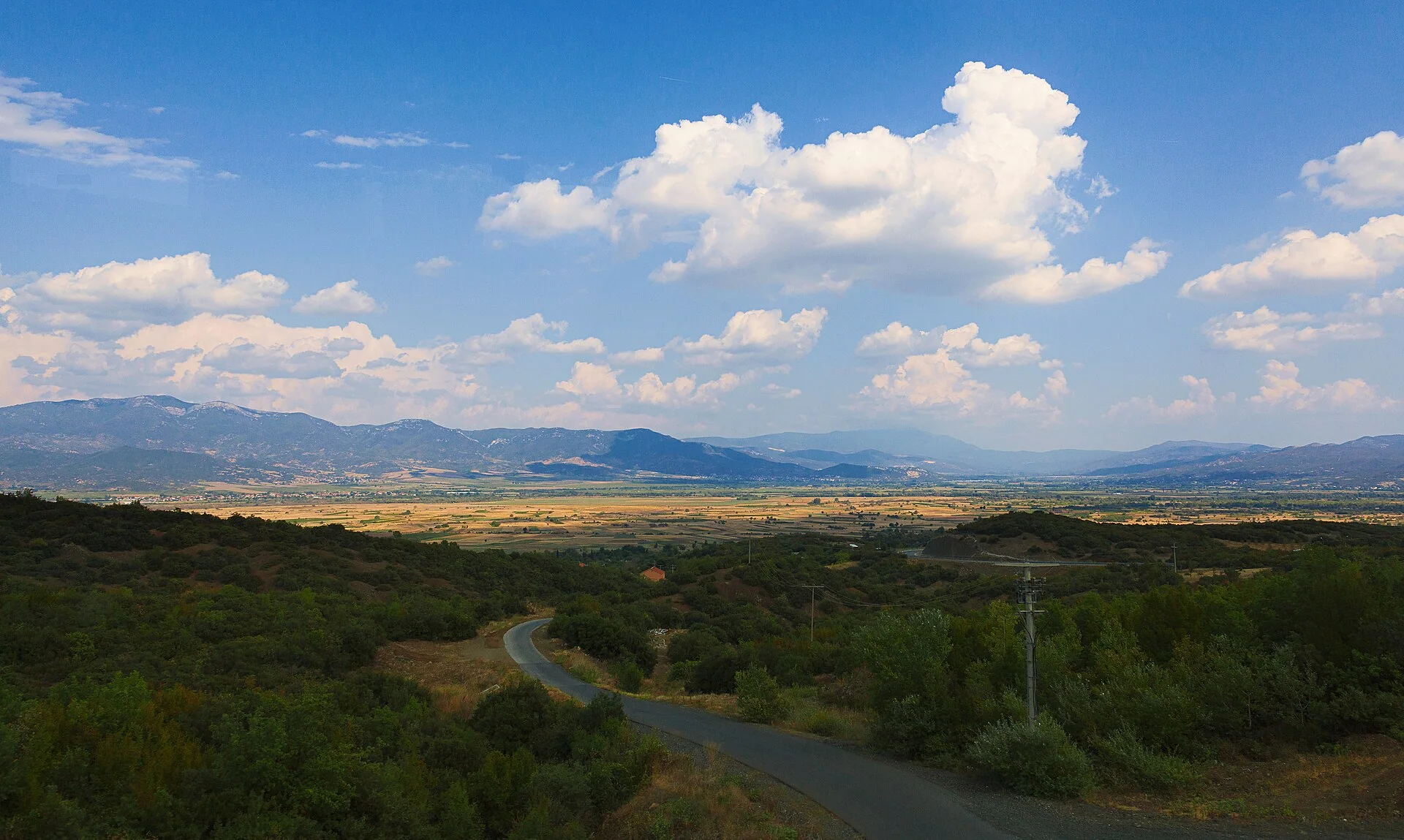
About 85% of North Macedonia is considered mountain area, making it one of the most mountainous countries in the world. There are three large lakes, each divided by a frontier line, and the country is bisected by the Vardar River. The Dinaric Alps stretch down to here.
North Macedonia is blessed with outstanding natural beauty. Do not miss a trip to one of the large lakes, Pelister Mountains, Shar Planina in the west, and the rolling hills and mountains of the east with their rice fields.
Places to explore
While Skopje is home to over half a million residents, the rest of the country's cities are significantly smaller, ranging from just a few thousand to under 100,000 residents. Ohrid is the only one most tourists stop at, which means other Macedonian cities are cheaper, more authentic, and just as welcoming.
Sights and landscapes
This lovely, compact country has a surprising myriad of attractions to offer. It's a fascinating mix of the ancient Balkan, the laid-back Mediterranean and the hip and happening vibe of modern Europe.
Smaller but a visitor's favourite is the city of Ohrid , famous for its countless Byzantine churches. Beautifully situated on Lake Ohrid , this place is listed by UNESCO as both a cultural and a natural monument. It's home to one of the most prominent collections of Byzantine icons in the world, second only to that of the famous Tretiakov Gallery in Moscow, as well as to the oldest Slavic monastery in the country and the picture-perfect Church of St. John at Kaneo right on the edge of the lake. The city's little sister on the lake, Struga , offers similar charm but is less overrun with visitors.
Still, many will argue that North Macedonia's best experiences can not be found in its cities, but rather in the stunningly beautiful mountain landscapes , remote monasteries and friendly rural villages. In any case, a tour of the countryside is a must-do for any visitor. Pelister National Park is the oldest of the country's three national parks and a popular destination for its typical Eastern European flora and fauna. The larger Mavrovo National Park offers great landscapes year round and is popular for winter sports in winter. It also holds the impressive Sveti Jovan Bigorski Monastery and a relic of its namesake patron. There are dozens of other monasteries to see, of which the Monastery of Bogorodica and the Zrze Monastery are good picks. For true nature lovers, the little known Public Enterprise for Managing and Protection of the Multipurpose Area Jasen is an excellent and off the beaten track reserve with great wildlife spotting opportunities, and yet right next to the capital.
Culture and food
If you are on a tight budget, try one of the Skara (grill) places. There are quite a few up-market restaurants serving better quality food on the waterfront, but these cater to tourists, so don't be surprised by a rather sizeable bill at the end of your meal.
Service at the restaurants and cafés nationwide tend to be slow-ish, either because these businesses are chronically understaffed, or because of the general laid-back culture. Consider yourself lucky if your food is served within half an hour after you get seated.
Planning your route
In this mountainous developing country, the roads are often narrow and not very well maintained, with warning signs for the quite frequent sharp turns rarely provided, and the safety barriers between your tires and high cliffs often rusty or sometimes completely absent. In the north, there is a short network of motorways with separated directions and a posted speed limit of 120 km/h, linking Skopje with Tetovo and Gostivar in the west, and with the Alexander the Great Airport and Kumanovo in the east, but the surface quality is hardly better than the rest of the roads. The toll collection on the motorways depends on a system of toll stations ( PEAGE ) every 20 km or so (typically after leaving and on approaching major towns, which means you will pay twice for the route, say, between Skopje and Tetovo, two neighbouring cities), where all through traffic comes to a complete halt (as opposed to only those leaving and entering the motorway) and pay according to the type of the vehicle (for motorcycles and cars, which is often 20 or 30 denar).
Travel guide text compiled and adapted from Wikivoyage article (contributors). Sections were selected and reordered for this guide. Text is shared under CC BY-SA 4.0. Check current arrangements with your travel consultant.
Plan the full journey
Useful for this trip
This country’s visa guidance has not been fully verified against current official requirements. Confirm the application route for your passport, residence and purpose before making travel commitments.
Review details
North Macedonia: Official pages were retrieved, but the complete imported guidance has not been corroborated claim by claim for Kenyan ordinary passports. 1 source link(s) could not be retrieved successfully; see the source log. Still to confirm: passport validity, tourist and business eligibility, application route, any exemptions and published processing guidance. Residents using other passports require a separate nationality check.