
Mauritania
Mauritania ( Arabic : موريتانيا, Mūrītānyā ; French : Mauritanie) is a land of desert and ocean. It is of course no wonder that the main attractions for most tourists are the desert in…
At a glance
Useful facts for planning
In this guide
Why go
Overview
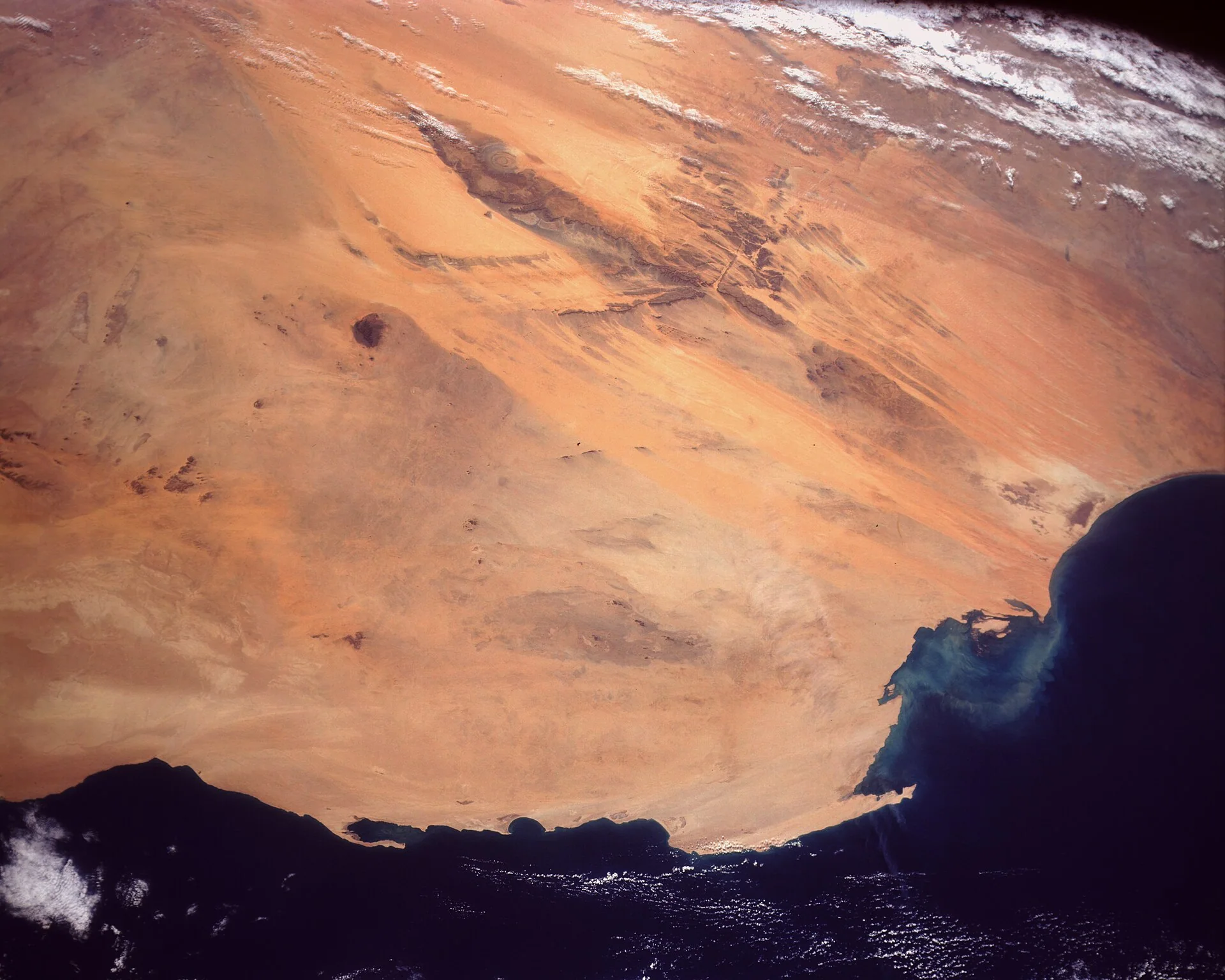
Mauritania ( Arabic : موريتانيا, Mūrītānyā ; French : Mauritanie) is a land of desert and ocean. It is of course no wonder that the main attractions for most tourists are the desert in Adrar and Tagant areas (around Atar), and the ocean in Banc d'Arguin (a natural reserve with dunes ending in the sea, full of millions of birds and protected by UNESCO).
The Mauritanian Adrar is probably exactly how you've always imagined the Sahara : endless ergs (dunes) and regs (rocky desert) with tabular small mountains, but most tourists stay along the west coast of Mauritania. There are a few beautiful sights far into the interior (rock formations in Aioun, for example). If you decide to travel off the beaten path, leave plenty of time to get around.
Southwestern Mauritania was once home to the Ghana Empire, one of the earliest urbanised civilisations to emerge in western Africa, with its capital at Koumbi Saleh . Mauritania is an Islamic Republic, and the people in the North have a reputation as being very conservative and quite reserved. The southern part of the country is filled with friendly people, and they are very welcoming, if a little unused to tourists. For people from outside the Maghreb there is a risk of kidnapping, especially in the more remote northern and eastern parts. Travelling to Mauritania is becoming easier, with charter flights from France to Atar through the winter. Guides and tourist agencies are quite easy to find.
Mauritania is officially known as the Islamic Republic of Mauritania ( Arabic : الجمهورية الإسلامية الموريتانية , al-Jumhūrīyah al-Islāmīyah al-Mūrītānīyah ), ( French : République islamique de Mauritanie )
Along with Iran and Pakistan , Mauritania is one of the three countries that style themselves as "Islamic Republic", and the only country among them in Africa .
Sights and landscapes
The Adrar massif in the north is full of stunning desert scenery. Take a 4×4 off-piste across rocky terrain and through narrow canyons to explore the lush, hidden oases which have provided water and refuge to traders crossing the Sahara for centuries. The Adrar contains two of the country's magnificent historical cities. Chinguetti was once a trading centre and centre of Islamic scholarship whose architecture remains unchanged in nearly a millennium. Along with Ouadane and a few other small towns, it is a UNESCO World Heritage Site. And do not miss the world's longest train either just for a glimpse or to hop into an iron ore car filled with Mauritanians for the 12-hour journey from the Adrar to the coast. The remains of the Almoravid capital Azoughui , and rock paintings, are draws of the Adrar.
Much of the central coastline is part of Parc National du Banc d'Arguin , home to millions of migrating birds each year. At Nouamgar, you can watch the unique spectacle of local tribesmen communicating with dolphins to round up teams of fish into shallow waters for them to be netted.
In the southeast, the oasis city of Oualata was the southern end of most trans-Sahara trading routes in the 13th & 14th centuries. The city has colourful buildings, many of which feature intricate geometric designs. The city is a UNESCO World Heritage Site and also boasts a manuscript museum with examples of ancient scrolls in fine calligraphy.
Culture and food
Mauritanian cuisine is often overlooked in favour of the more recognisable cuisines of North Africa and the Middle East. Don't let that stop you from fully experiencing Mauritanian gastronomy; Mauritanian cuisine is a unique blend of flavours and incorporates African, Arab, and French influences.
There is a decent variety of restaurants in Nouakchott with dishes costing from UM100 to 250. Most restaurants in the capital offer much the same menu – simple pizzas, hamburgers, sandwiches and salads. There is a string of restaurants on the road from the Stade Olympique to the French Embassy. Good ones include Pizza Lina, Café Liban and Le Petit Café. The Sahara Café, on the other side of the stadium, is also a good place for pizza, sandwiches or Lebanese dishes, and has some of the best reasonably-priced food in town. Near Marche Capitale, there is a street of sandwich shops that offer near-identical menus, the best of which is the Prince (which taxi drivers know by name).
Planning your route
Some countries, such as the United States, advise their citizens to not use Mauritanian taxis because they are poorly maintained. If you must get around a city, only use trusted, pre-arranged taxis. Your hotel or your tour agent may help you with this.
Although this may seem like a good way to explore the Saharan desert, keep in mind that the train can be overcrowded, it can be quite uncomfortable, and that it is depressingly common for people to fall from the train. The scorching hot temperatures of the Saharan Desert can make things even more uncomfortable and difficult. If you are not acclimatised or used to travelling in difficult conditions, travelling by train is not advisable.
From Choum it's possible to get to Atar with a bush taxi or minibus which often wait by the tracks when the train arrives. The journey typically takes about two hours (but could take much longer if the vehicle has a breakdown).
Travel guide text compiled and adapted from Wikivoyage article (contributors). Sections were selected and reordered for this guide. Text is shared under CC BY-SA 4.0. Check current arrangements with your travel consultant.
Plan the full journey
Useful for this trip
This country’s visa guidance has not been fully verified against current official requirements. Confirm the application route for your passport, residence and purpose before making travel commitments.
Review details
Mauritania: The supplied sources could not provide sufficient readable official guidance during this assessment. Still to confirm: passport validity, tourist and business eligibility, application route, any exemptions and published processing guidance. Residents using other passports require a separate nationality check.