
Lithuania
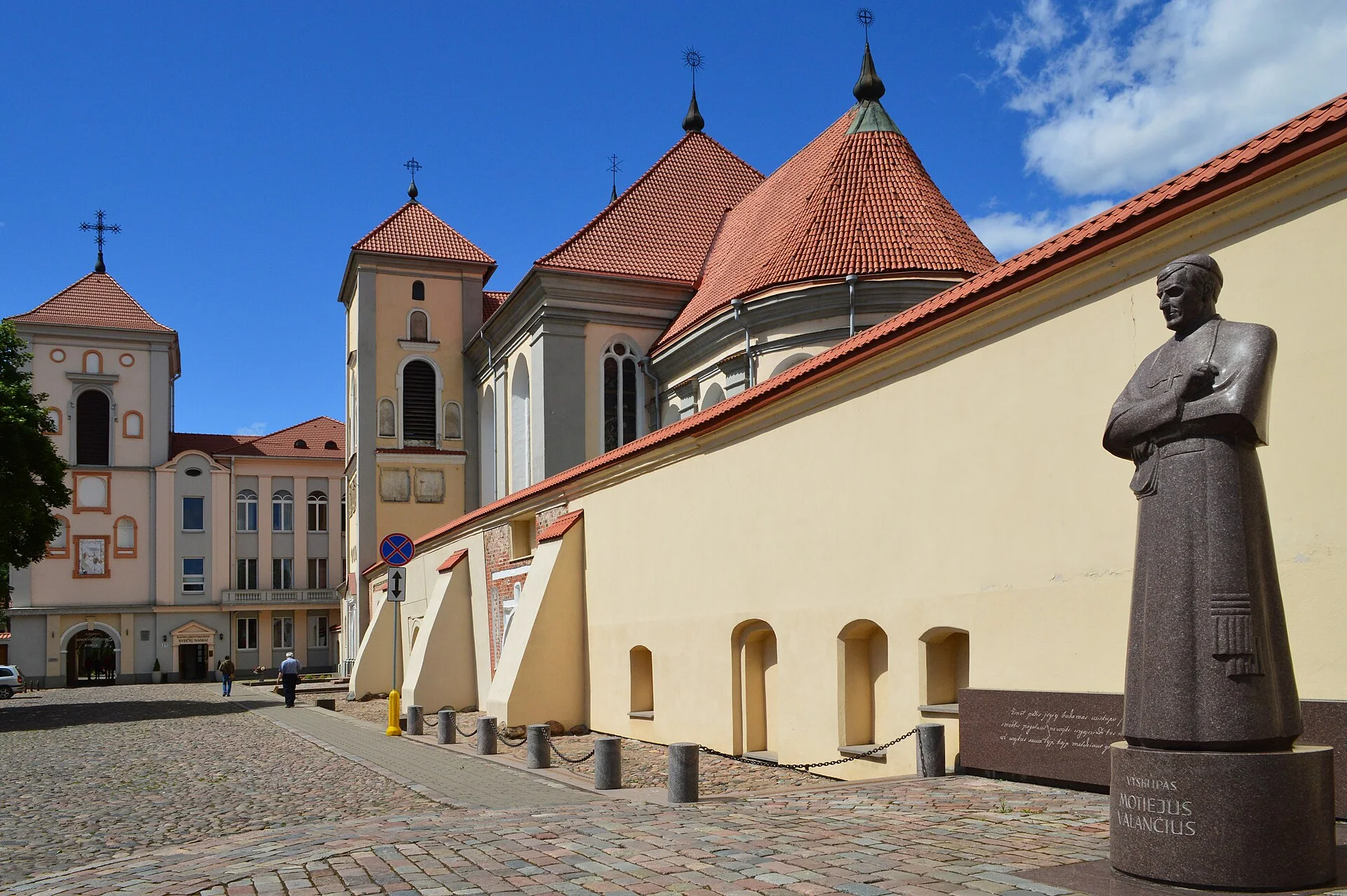
Vilnius , the capital, is the country's star attraction. Beyond is a compact yet diverse country of modern cities, unique small towns, traditional villages, forests, castles, manors, churches, lakes, rivers, hillforts and strange sculptures…
At a glance
Useful facts for planning
In this guide
Why go
Overview
Vilnius , the capital, is the country's star attraction. Beyond is a compact yet diverse country of modern cities, unique small towns, traditional villages, forests, castles, manors, churches, lakes, rivers, hillforts and strange sculptures and monuments attesting to its pagan past.
The last ice age covered the Nordic and Baltic regions from 115,000 to 12,000 years ago. It melted to form a low scoured plain with gravel deposits around its margins, boreal forests, and a great lake that eventually broke through to the ocean and became the Baltic Sea.
“Balts” were the Indo-European tribes that settled from 3000 BC. They traded with neighbouring peoples, their prize export being amber, fossilised pine resin. The name “Lithuania” is first recorded in 1009 AD, and two pagan tribes lived in it: the Samogitians west, and the Aukštaitians on higher ground to the east. Their lands lacked natural defensible borders and have continually faced attack, so wherever there was a promising-looking hummock, this was bolstered with gravel and other glacial debris to form a castle mound ( piliakalnis ) with a wooden palisade.
Places to explore
Administratively, Lithuania is divided into 10 counties ( apskritys ) and 60 municipalities ( savivaldybės ). However, for travel and cultural purposes it's considered to have five "ethnographic regions":
Culture and food
Lithuanians like their meat, and eagerly consume all parts of the pig – this partly symbolises escape from repressive impoverished times. Vegetarians and vegans should do okay in Vilnius and Kaunas but may struggle elsewhere, and there's not much in the way of international cuisine, since Lithuania never drew in the overseas workforce, cultures and cuisines that you encounter in the west.
Appetisers: Piršteliai prie alaus are thin, rolled-up puff pastries served with beer. Soups include Šaltibarščiai a summer soup based on beets and soured milk, Juka (blood soup), or Cabbage soup flavoured with carrots, ham, onions. Ruginė duona – dark rye bread – goes well with soup.
Cepelinai (Zeppelins) are potato dumplings with meat. Vėdarai is sausage, a potato-stuffed pig intestine. Skilandis is pig's stomach stuffed with ground meat and garlic, cold-smoked. Plokštainis, or kugelis, is an oven-baked serving of potatoes. Bulviniai blynai are grated potato pancakes with different sauces. Virtinukai are curd patties. Kastinys is soft sour cream butter. Šaltnosiukai are dumplings filled with lingon berry.
Wild berries, mushrooms and cheese are common ingredients, and honey and poppy seeds are commonly used as filling in pastries. For desserts, try Žagarėliai – curly, thin deep-fried pastries dusted with powdered sugar – or Spurgos , doughnuts, often filled with jam.
Planning your route
The biggest problem is that trains are infrequent apart from Vilnius-Kaunas, and they're small, only having 3 or 4 cars; so they may sell out. Flying into the country, you might be reluctant to commit to a particular train, but if you leave the booking until after your arrival, the trains may all booked out for the rest of the day. The other problem is train access with limited mobility, as platforms are low and doors are high.
Sights and landscapes
Lithuania is located in the Baltic region of Europe and covers an area of 65,300 km 2 (25,200 sq mi). It lies between latitudes 53° and 57° N , and mostly between longitudes 21° and 27° E (part of the Curonian Spit lies west of 21°). It has around 99 kilometres (61.5 mi) of sandy coastline, with around 38 kilometres (24 mi) facing the open Baltic Sea . The rest of the coast is sheltered by the Curonian sand peninsula. The warm-water port at Klaipėda lies at the narrow mouth of the Curonian Lagoon (Lithuanian: Kuršių marios ), a shallow lagoon extending south to Kaliningrad . The country's main and largest river, the Nemunas River , and some of its tributaries carry international shipping.
Lithuania lies at the edge of the North European Plain . Its landscape was smoothed by the glaciers of the last ice age , and is a combination of moderate lowlands and highlands. Its highest point is Aukštojas Hill at 294 metres (965 ft) in the eastern part of the country. The terrain features numerous lakes and wetlands, and a mixed forest zone covers over 33% of the country. Drūkšiai is the largest lake, Tauragnas is the deepest lake, and Asveja is the longest lake in Lithuania.
After a re-estimation of the boundaries of the European continent in 1989, Jean-George Affholder, a scientist at the Institut Géographique National (French National Geographic Institute), determined that the geographic centre of Europe was in Lithuania, at 54°54′N 25°19′E / , 26 kilometres (16 mi) north of Vilnius. Affholder accomplished this by calculating the centre of gravity of the geometrical figure of Europe.
Lithuania has a temperate climate with both maritime and continental influences. It is defined as humid continental (Dfb) under the Köppen climate classification (but is close to oceanic in a narrow coastal zone).
Average temperatures on the coast are −2.5 °C (27.5 °F) in January and 16 °C (61 °F) in July. In Vilnius, the average temperatures are −6 °C (21 °F) in January and 17 °C (63 °F) in July. During the summer, 20 °C (68 °F) is common during the day, while 14 °C (57 °F) is common at night; in the past, temperatures have reached as high as 30 or 35 °C (86 or 95 °F). Some winters can be very cold. −20 °C (−4 °F) occurs almost every winter. Winter extremes are −34 °C (−29 °F) in coastal areas and −43 °C (−45 °F) in the east.
Travel guide text compiled and adapted from Wikivoyage article (contributors) and Wikipedia article (contributors). Sections were selected and reordered for this guide. Text is shared under CC BY-SA 4.0. Check current arrangements with your travel consultant.
Plan the full journey
Useful for this trip
This country’s visa guidance has not been fully verified against current official requirements. Confirm the application route for your passport, residence and purpose before making travel commitments.
Review details
Lithuania: The supplied sources could not provide sufficient readable official guidance during this assessment. 2 source link(s) could not be retrieved successfully; see the source log. Still to confirm: passport validity, tourist and business eligibility, application route, any exemptions and published processing guidance. Residents using other passports require a separate nationality check.