
Libya
Libya ( Arabic : ليبيا, Libiya ) is a country in the Maghreb region of North Africa and a part of the Arab world. Although the country is rich in history and culture and…
At a glance
Useful facts for planning
In this guide
Why go
Overview
Libya ( Arabic : ليبيا, Libiya ) is a country in the Maghreb region of North Africa and a part of the Arab world. Although the country is rich in history and culture and has great tourism potential, the country has been in the news for all the wrong reasons since the 1960s. Since the 2010s, the country has been in a state of flux and is rather dangerous to travel to.
However, under less extreme circumstances, this vast country has a lot to offer to the adventurous, thrill-seeking traveller, from deserts to historical ruins from various historical periods. Libya is a difficult country to get around, but the rewards for the persistent visitor are unforgettable.
If you do decide to visit, know that there's a lot to do and see in Libya; in fact, you might be showered with a lot of hospitality and care, even if you unintentionally make a few cultural blunders.
Libya is Africa's 4th largest country, covering nearly 1,800,000 square kilometres (690,000 sq mi) of land (similar to Alaska ). While the country's northern parts are densely populated, the southern parts are barren, poorly developed, and virtually uninhabited. In all, Libya has some 7 million inhabitants, making it one of the most sparsely populated countries in the world.
Archaeological evidence indicates that from as early as 8,000 BC, the coastal plain of Ancient Libya was inhabited by a Neolithic people, the Berbers, who were skilled in the domestication of cattle and the cultivation of crops. Later, the area known in modern times as Libya was also occupied by a series of other peoples, with the Phoenicians, Carthaginians, Greeks, Persian Empire, Romans, Vandals, Arabs, Turks and Byzantines ruling all or part of the area.
Sights and landscapes
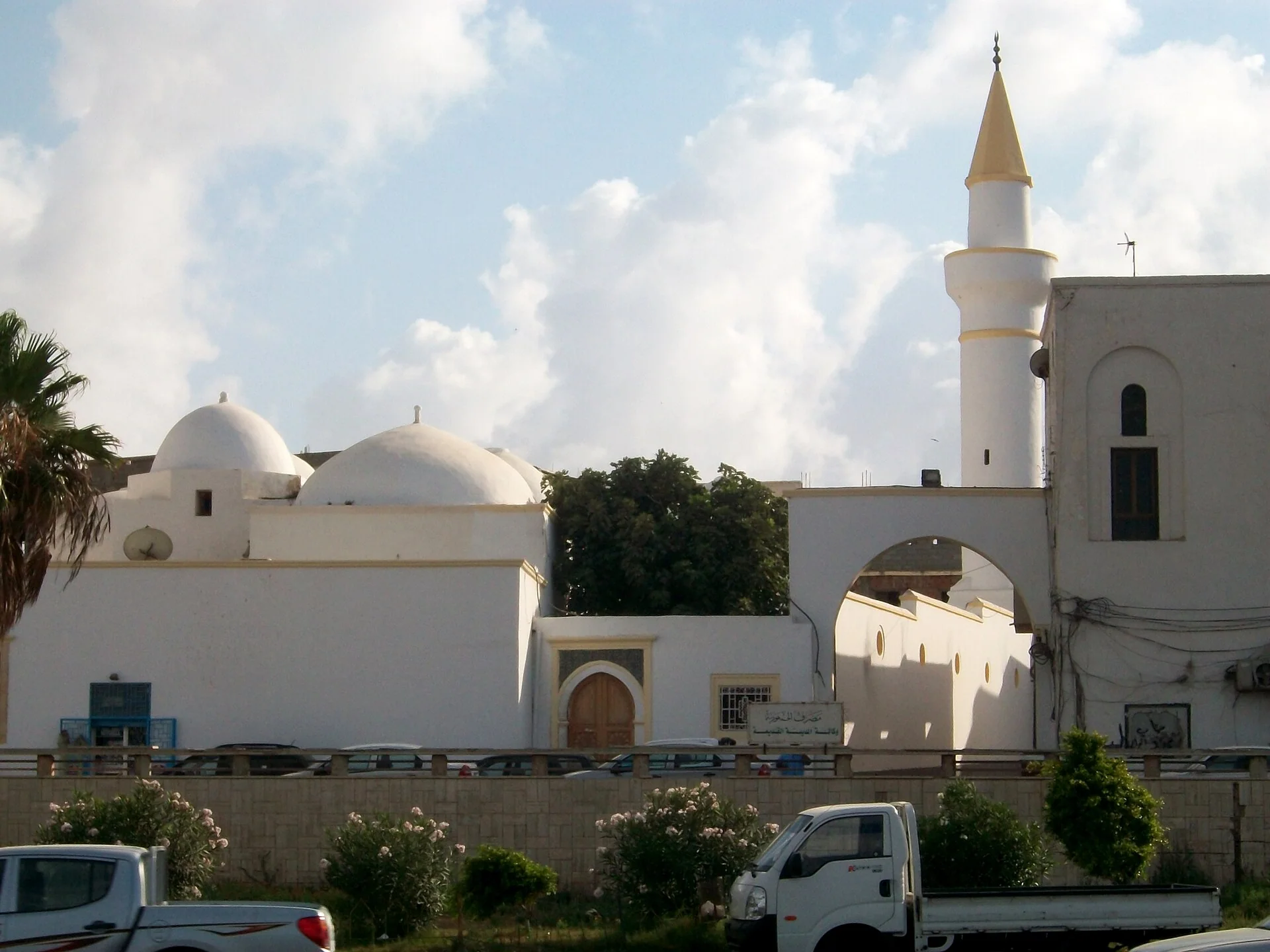
Libya's colourful capital Tripoli makes for a great start to explore the country, as it still has its traditional walled medina to explore, as well as the interesting Red Castle Museum , with expositions on all parts of the region's history. Despite the development as a tourist destination, this remains a quintessentially North-African place, with a range of beautiful mosques and impressive fountains and statues to remind of its historic role in the great Ottoman Empire. Some 130 km from the capital is Leptis Magna (' Arabic : لَبْدَة), once a prominent city of the Roman Empire. Its ruins are located in Al Khums, on the coast where the Wadi Lebda meets the sea. The site is one of the most spectacular and unspoiled Roman ruins in the Mediterranean. Another must-see is Cyrene , an ancient colony founded in 630 BC as a settlement of Greeks from the Greek island of Theraand. It was then a Roman city in the time of Sulla (c. 85 BC) and now an archaeological site near the village of present-day Shahhat and Albayda .
The vast Sahara makes for some excellent natural experiences, complete with picture-perfect oases like Ubari . The Unesco listed town of Ghadames was once a Phoenician trade town, and the ruins of its ancient theatre, church and temples are a major attraction today. For stunning landscapes, try the Acacus Mountains , a desert mountain range with sand dunes and impressive ravines. The varied cave paintings of animals and men that were found here have earned the area recognition as a UNESCO World Heritage Site too.
Culture and food
In Tripoli, it is surprisingly hard to find a traditional Libyan restaurant. Most serve western-style cuisine, with a few Moroccan and Lebanese restaurants thrown in. There are also good Turkish restaurants, and some of the best coffee and gelato outside of Italy. There are some wonderful Libyan dishes you should taste in case you are fortunate enough to be invited to a Libyan dinner party or wedding (be prepared to be overfed!)
A favourite café for the local expatriate community is the fish restaurant in the souq. For the equivalent of a few US dollars, you can enjoy a great seafood couscous. A local speciality is the stuffed calamari.
Also recommend Al-Saraya: Food OK, but its attraction is its position, right in Martyr's Square (Gaddafi name: Green Square). Another good seafood restaurant is Al-Morgan, next to the Algiers Mosque, near 1st of September Street.
There are flashy looking big fast-food outlets in Tripoli. These are not quite the multinationals, but a close copy of them. They are springing up in the Gargaresh Road area, a big shopping area in the western suburbs of Tripoli.
Tea is the most common drink in Libya. Green tea and "red" tea are served almost everywhere from small cups, usually sweetened. Mint is sometimes mixed in with the tea, especially after meals.
Planning your route
Due to the immense size of the country, the terrible state of the roads, and the poor security situation, the only way to get around the country quickly is by plane. This is not to say that it's entirely safe, but it's still a better alternative to travelling overland.
Prior to the civil war many visitors undertook the trip in their own 4x4s or using their own dirt bikes and campervans. It would seem that they encountered considerable hospitality once in the country. It was not uncommon to see convoys of European campervans on Libya's highways prior to the civil war. Please make serious and detailed enquiries prior to undertaking any trip by road into Libya to determine if the area you will be travelling through is safe and if fuel and other services are available. Travel such as this is not recommended.
Travel guide text compiled and adapted from Wikivoyage article (contributors). Sections were selected and reordered for this guide. Text is shared under CC BY-SA 4.0. Check current arrangements with your travel consultant.
Plan the full journey
Useful for this trip
This country’s visa guidance has not been fully verified against current official requirements. Confirm the application route for your passport, residence and purpose before making travel commitments.
Review details
Libya: Official pages were retrieved, but the complete imported guidance has not been corroborated claim by claim for Kenyan ordinary passports. Still to confirm: passport validity, tourist and business eligibility, application route, any exemptions and published processing guidance. Residents using other passports require a separate nationality check.