
Laos
Laos (ເມືອງລາວ mư̄ang lāo or ປະເທດລາວ pa thēt lāo ) is the only landlocked nation in Southeast Asia . Laos is rich in both the diversity of its people and its landscapes.
At a glance
Useful facts for planning
In this guide
Why go
Overview
Laos (ເມືອງລາວ mư̄ang lāo or ປະເທດລາວ pa thēt lāo ) is the only landlocked nation in Southeast Asia . Laos is rich in both the diversity of its people and its landscapes.
The Lao People's Democratic Republic (ສາທາລະນະລັດ ປະຊາທິປະໄຕ ປະຊາຊົນລາວ) ( Lao PDR ) is the only landlocked country in Southeast Asia, and the most sparsely populated. Once the center of the powerful kingdom of Lan Xang, Laos was reduced to a vassal state of Siam (modern-day Thailand) by the end of the 18th century. It was freed from Siamese fiefdom in 1893 upon becoming a French protectorate and gained its independence in 1953 amidst the backdrop of the chaotic Indochina Wars . Since the end of the civil war in 1975, Laos is a one-party communist state under a presidential system. Unlike most countries in Asia, the country has not undergone a major industrialisation and modernisation period; as a result, its lifestyle remains mostly rural, with strong Buddhist traditional culture, and the only large city is Vientiane.
Sights and landscapes
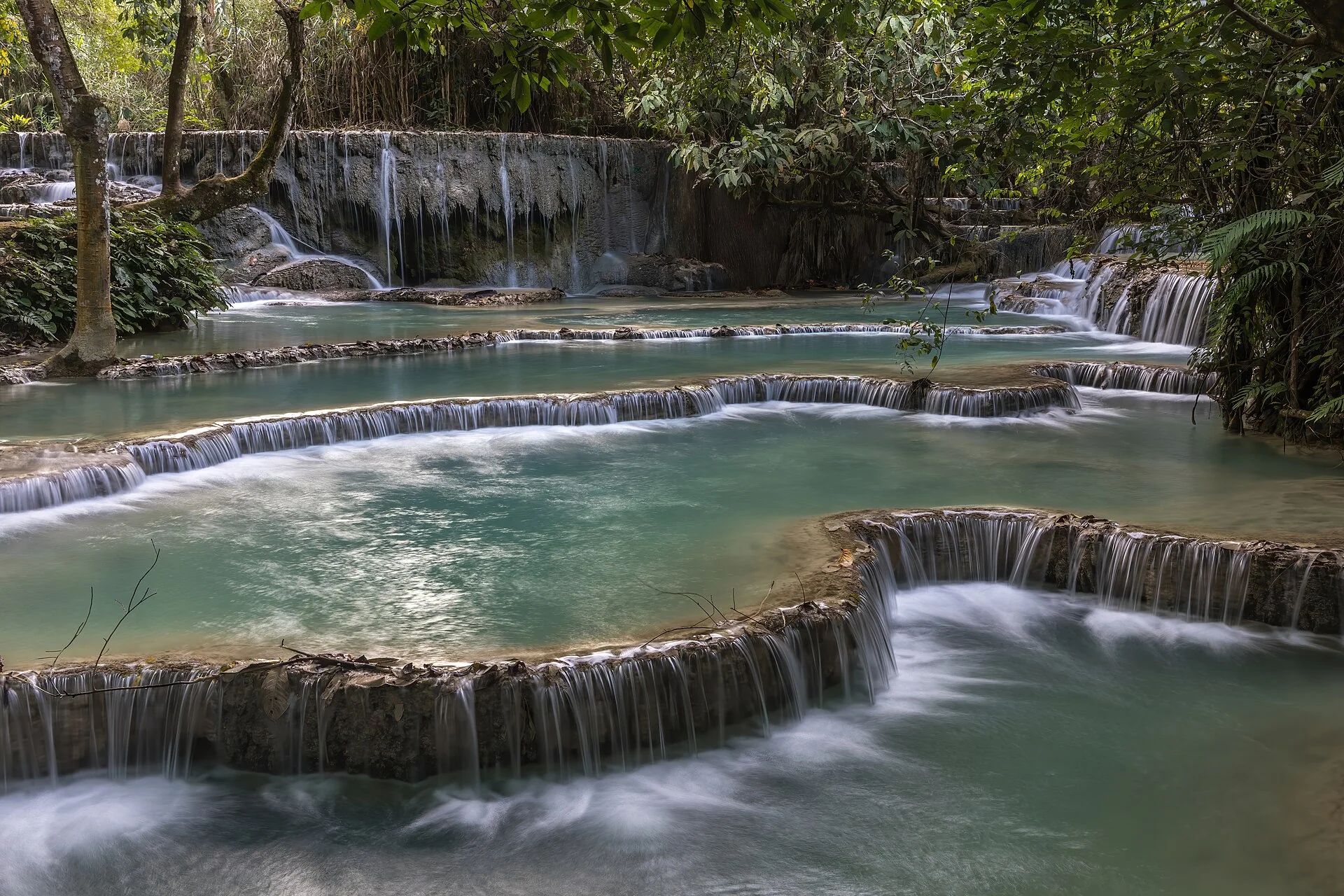
The term wilderness is much misused, but it can truly be applied to much of Laos. The mighty Mekong River and its tributaries together create perhaps the single most important geographic feature of the country. Its meandering path in the North has created some of the most stunning limestone karsts anywhere on earth. The backpacker-central town of Vang Vieng is a commonly used base for exploring the karsts. Further north, the terrain becomes more hilly, and the jungle less explored. Luang Namtha is the far-northern town which makes the best base for those visitors who really want to see the truly remote Lao wilderness, and directly experience the lifestyles of the various hill tribes in this region.
In direct contrast to Northern Laos, the Mekong delta lowlands in the South are perfectly flat. Si Phan Don ( four thousand islands ) is a great base for experiencing what is surely the most chilled and relaxed region anywhere in Asia. Experiencing local village life, taking it all in and doing absolutely nothing should be the aim here. There are though some wonderful river-based sights, including the largest falls anywhere in Southeast Asia. If you are lucky you might get a close-up view of a Mekong pink dolphin.
In this most Buddhist of nations, it is no surprise that temples are a key attraction. In the capital city of Vientiane , the three-layered gilded stupa of Pha That Luang is the national symbol and most important religious monument in the country, dating from the 16th century. There are numerous other beautiful temples which on their own make a stay in the capital city vital for any visitor to Laos.
The whole of the ancient capital of Luang Prabang is a UNESCO World Heritage Site . Befitting that status, it is a unique city. Beautifully preserved gilded temples with their attendant orange-robed monks mold almost seamlessly with traditional wooden Lao houses and grand properties from the French colonial era. Spotlessly clean streets with a thriving café culture on the banks of the Mekong and the Nam Khan, complete the picture of a city which is almost too pleasant to be true.
The Plain of Jars is a megalithic archaeological landscape dating from the Iron Age. Thousands of stone jars are scattered over a large area of the low foothills near Phonsavan . The main archaeological theory is that the jars formed part of Iron Age burial rituals in the area, but this is by no means proven, and a great deal of mystery remains. The American air force extensively bombed the area during the Secret War of the 1960s, and much unexploded ordinance from that period remains uncleared, leaving large sections of the site closed to the public. When that process is complete it is very likely this will be declared a UNESCO World Heritage site. Even so, enough information has been lost in the destruction that we may likely never know the purpose of the jars.
Experiences
Shorter driving intervals (20-80 minutes) with frequent breaks are recommended due to varying road conditions and personal comfort. Poorer road conditions can be mentally taxing and necessitate more frequent rest stops. If you are not experienced on a motorbike, take a course or get plenty of practice because you do not want to have an accident out here. Overall, either loop offers numerous appealing stopping points, particularly during the dry season (November-February), although shorter days and cold nights may reduce driving enjoyment.
Culture and food
Lao food is one of the underappreciated cuisines of the world and can be a real highlight of your trip. It's very similar to the Isaan food of northeastern Thailand: very spicy, more often bitter than sweet, and using lots of fresh herbs and raw vegetables. These cool your mouth when the chilli gets too intense.
Rice is the staple carbohydrate. The standard kind is sticky rice (ເຂົ້າໜຽວ khao niaow ), eaten by hand from small baskets called tip khao . Using your right hand, never your left, pinch off a bit, roll into flat disk, dip or wrap and munch away. Sticky rice is so important culturally that it's the standard offering to monks and the Lao even call themselves "children of sticky rice" ( luk khao niaow ).
The national dish is laap (ລາບ, also larb ), a "salad" of minced meat or fish mixed with herbs, spices, lime juice and, more often than not, blistering amounts of chili. Unlike Thai larb , the Lao version can use raw meat ( dip ) instead of cooked meat ( suk ), and if prepared with seafood makes a tasty, if spicy, carpaccio.
Planning your route
In addition to the three international airports mentioned in the Get In section (Vientiane, Luang Prabang & Pakse), there are domestic airports with scheduled flights to Vientiane in Bokeo, Luang Namtha , Oudomsay , Xieng Khouang (flights to/from Luang Prabang too), Sam Neua & Sayaboury .
Travel guide text compiled and adapted from Wikivoyage article (contributors). Sections were selected and reordered for this guide. Text is shared under CC BY-SA 4.0. Check current arrangements with your travel consultant.
Plan the full journey
Useful for this trip
This country’s visa guidance has not been fully verified against current official requirements. Confirm the application route for your passport, residence and purpose before making travel commitments.
Review details
Laos: The supplied sources could not provide sufficient readable official guidance during this assessment. 1 source link(s) could not be retrieved successfully; see the source log. Still to confirm: passport validity, tourist and business eligibility, application route, any exemptions and published processing guidance. Residents using other passports require a separate nationality check.