
Kiribati
Kiribati (pronounced Kiribahs ) is a remote archipelago nation in Micronesia , at the equator. It consists of 33 atolls widely dispersed through 3.5 million km² of sea territory. Kiribati is a tranquil paradise.…
At a glance
Useful facts for planning
In this guide
Why go
Overview
Kiribati (pronounced Kiribahs ) is a remote archipelago nation in Micronesia , at the equator. It consists of 33 atolls widely dispersed through 3.5 million km² of sea territory. Kiribati is a tranquil paradise. While most of its local lifestyle remains communal, its main highlight are aquamarine waters set around an 800-km² island backdrop.
Other islands have far fewer people, and getting to them can be difficult, and conditions are even more primitive. Most tourists, especially from the US, go to Kiritimati (Christmas Island). Conditions there are somewhat better than in the rest of Kiribati.
While the islands are on both sides of the 180th meridian, the International Date Line has been drawn east of them all, placing Kiribati islands in the same day, in time zones UTC +12, +13 and +14. The Line Islands are in the latter time zones, and are therefore the first part of Earth to see every new day and the first place to celebrate the New Year.
Kiribati was granted self-rule by the United Kingdom in 1971 and complete independence in 1979. The US relinquished all claims to the sparsely inhabited Phoenix and Line Island groups in a 1979 treaty of friendship with Kiribati. The name "Kiribati" is pronounced "Kiri-bass", which is the closest local equivalent to "Gilberts".
The Phoenix and Line Islands were generally held to be on the east side of the International Date Line and are in different time zones from the Gilbert Islands group, but on 1 January 1995, Kiribati proclaimed that all of its territory was on the same calendar day (skipping 31 December 1994 in those island groups), effectively extending the Date Line further eastward to accommodate this. This makes the Line Islands the farthest "ahead" of any territory on the planet.
As Kiribati is perhaps the most vulnerable country to global warming due to rising sea levels, the country has looked to purchasing land at Fiji where its entire population will eventually migrate supposedly if their islands are submerged in the future.
Places to explore
Except for Banaba (Ocean Island, 6 km²/2.3 sq mi, population c. 300 ), all the main islands are in one of 3 three groups: the Gilbert Islands, the Line Islands, and the Phoenix Islands.
Sights and landscapes
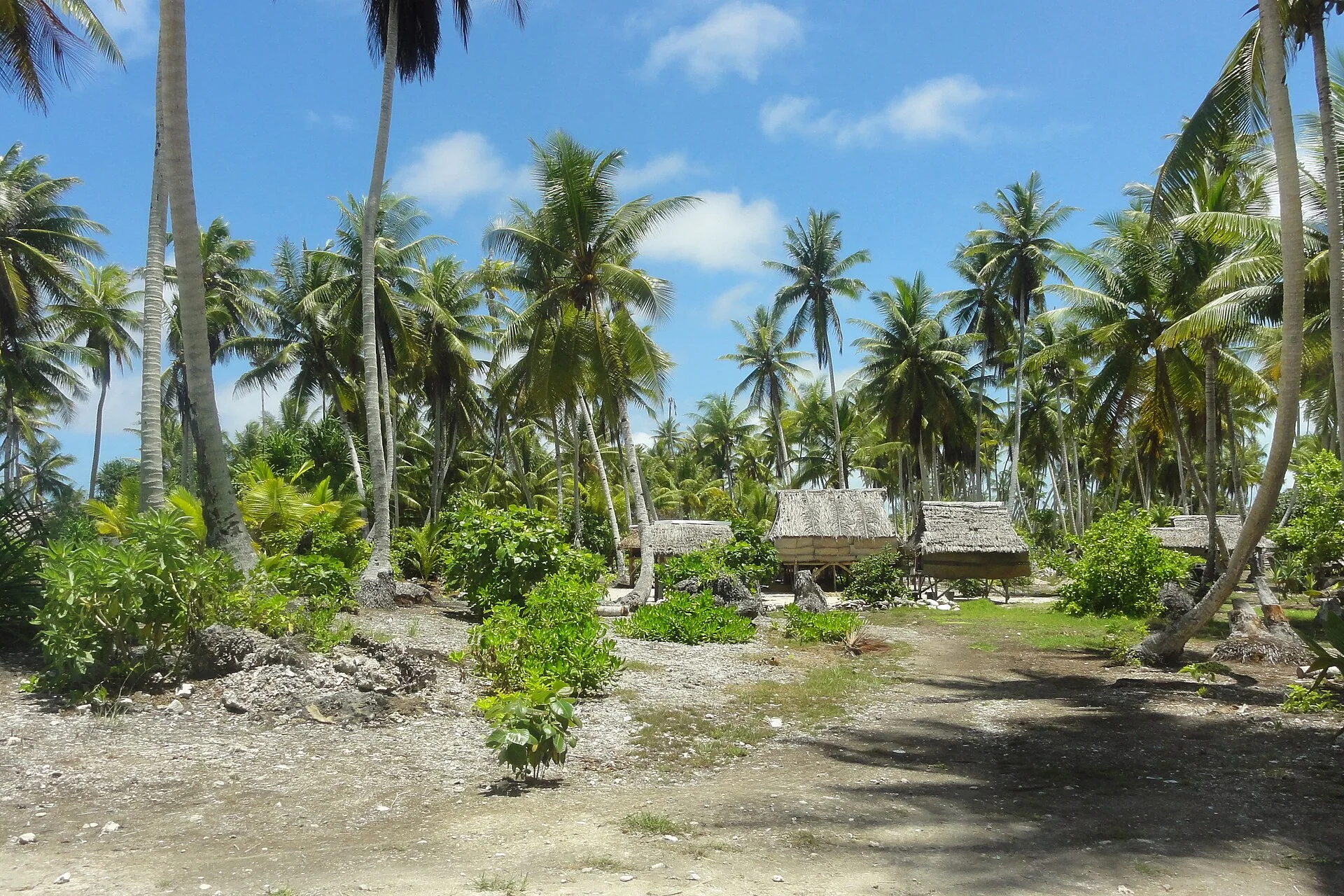
Kiribati has some beautiful beach scenery , is a great place for boating or yachting and many of the atolls are lovely to explore on bike or foot. The lagoons are stunning to look at and the white sandy beaches and waving palm trees are a typical holiday brochure sight. Especially on the outer islands you'll find traditional culture is still very much alive. The Kiribati people are generally friendly and welcoming to visitors, and will include you in their celebrations if you happen to be around.
The islands of Kiribati saw some of the bloodiest fighting of World War II and remnants of that war are still all around. Tarawa (and Betio in particular), Butaritari , Abemama and Banaba island are home to the most prominent World War II sights, including coastal defence guns, bunkers and pillboxes. Tanks, ship wrecks, Amtracs and plane wrecks are still visible at the coasts of Tarawa and Butaritari, especially during low tide. If you want the full story behind the remains, take a guided tour.
For anyone with an interest in sea life, the tranquil Phoenix Island Marine Protected Area (the world’s largest marine protected area) is a treasure waiting to be discovered. It boasts some gorgeous landscapes combining sandy beaches with coral islands and incredibly blue lagoons. The islands are a bird watcher's paradise and its underwater coral life is practically unspoiled. However, limiting visitor numbers is an explicit goal of the authorities. Gaining access to the islands isn't easy and although there are rumours of plans to open the region a bit more for tourist purposes, you probably won't be able to dive there yet.
Culture and food
The variety of food on Kiribati is limited. If a shipment of imported food has just come in, buy it now, as it won't last long! The variety and amount is increasing and improving all the time as is the number of supply boats that arrive.
The staple diet of the I-Kiribati is fish and rice and this is reflected in many of the eating outlets on Tarawa. It is worthwhile trying the local sashimi which is supplied straight from the ocean to your plate.
The local drink is toddy made from the sap of a coconut tree. This sweet toddy can then be fermented for a couple of days into the alcoholic sour toddy that is favoured by locals. The original sweet toddy can also be cooked into a syrup called Kamaimai. The Kamaimai can then be drizzled on sweet buns or ice cream.
The two main bars in Tarawa are Captains Bar in Betio and the Lagoon Club in Ambo. Friday nights at the Otintaai are dance night. Supply of wine and spirits is limited, however there is a good supply of beer which is always cold.
Planning your route
Reliability of internal flights in Kiribati is improving all the time and fares are relatively cheap. It is important to reconfirm your return flight on arrival at your destination. Each airline has different booking and confirmation conditions, you need to ensure you are familiar with these to ensure a hassle free trip.
Travel guide text compiled and adapted from Wikivoyage article (contributors). Sections were selected and reordered for this guide. Text is shared under CC BY-SA 4.0. Check current arrangements with your travel consultant.
Plan the full journey
Useful for this trip
This country’s visa guidance has not been fully verified against current official requirements. Confirm the application route for your passport, residence and purpose before making travel commitments.
Review details
Kiribati: Official pages were retrieved, but the complete imported guidance has not been corroborated claim by claim for Kenyan ordinary passports. Still to confirm: passport validity, tourist and business eligibility, application route, any exemptions and published processing guidance. Residents using other passports require a separate nationality check.