
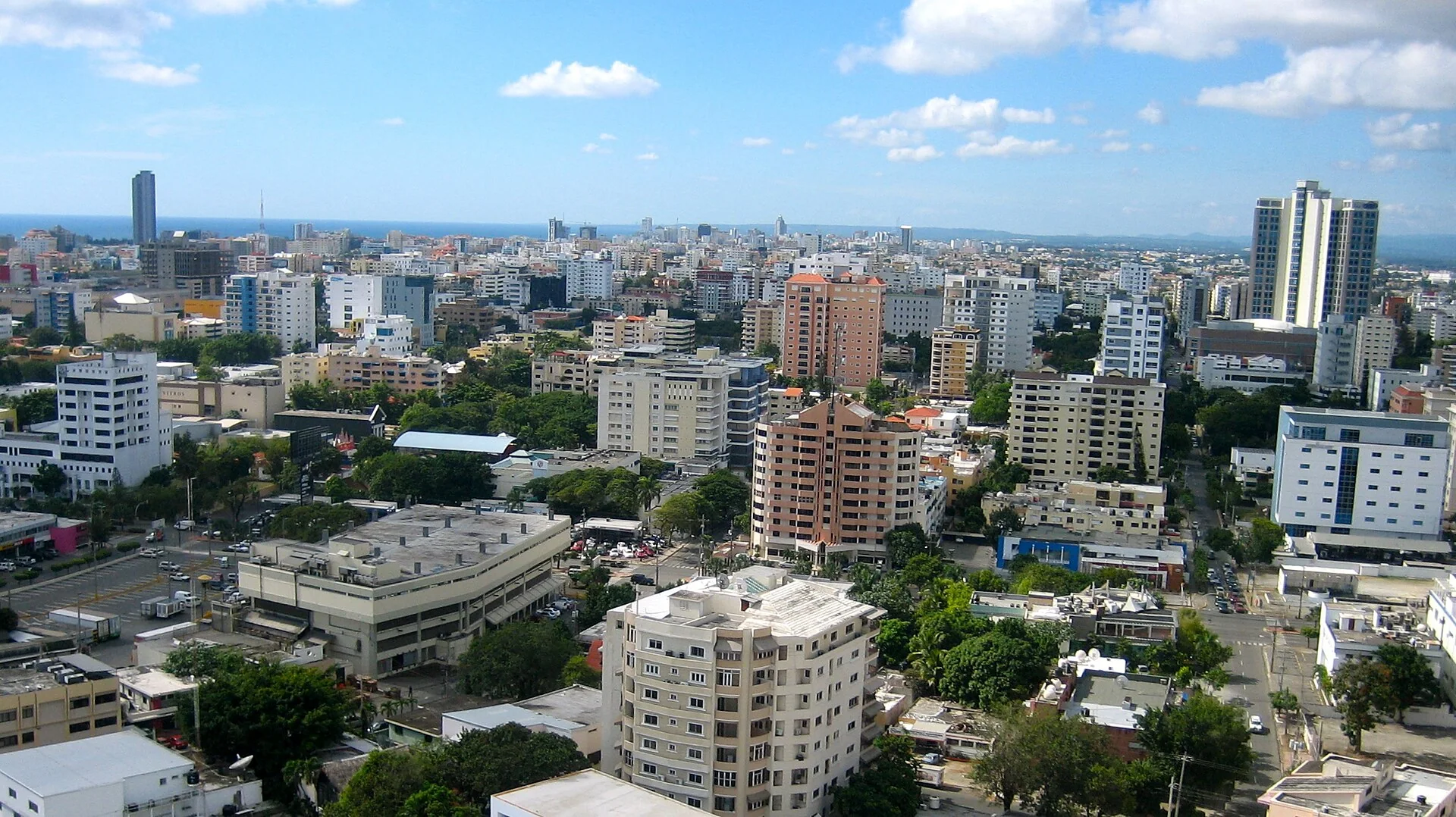
Dominican Republic
The Dominican Republic ( Spanish : República Dominicana ) is a Caribbean country that occupies the eastern half of the island of Hispaniola , which it shares with Haiti . Besides white sand beaches…
At a glance
Useful facts for planning
In this guide
Why go
Overview
The Dominican Republic ( Spanish : República Dominicana ) is a Caribbean country that occupies the eastern half of the island of Hispaniola , which it shares with Haiti . Besides white sand beaches and mountain landscapes, the country is home to the oldest European city in the Americas, now part of Santo Domingo . Due to its Hispanic heritage, the Dominican Republic is called the Cradle of the Americas.
Explored and claimed by Columbus on his first voyage on December 5, 1492, the island of Ayití, named by Columbus as La Hispaniola, became a springboard for Spanish conquest of the Caribbean and the American mainland.
The island was first inhabited by the Taínos and Caribes. The Caribes were an Arawakan-speaking people who had arrived around 10,000 BCE. Within a few short years following the arrival of European explorers, the population of Tainos had significantly been reduced by the Spanish conquerors. Based on Fray Bartolomé de las Casas (Tratado de las Indias) between 1492 and 1498 the Spanish conquerors killed around 100,000 Taínos.
The first European settlement founded on the American continent was on La Isabela, founded in 1493 using a 15th-century style in La Isabela, Puerto Plata (19°53'15.08" N 71°04'48.41" W). The City of Santo Domingo was founded by Bartolomé Colón, on August 5, 1496 and was moved by Frey Nicolás de Ovando to the west side of Ozama river in 1502.
In 1606 the royal crown of Spain ordered the depopulation of the western end of the island due to high piracy and contraband. This led to the French invasion and the establishment of Haiti .
In 1697, Spain recognized French dominion over the western third of the island, which in 1804 became Haiti. The remainder of the island, by then known as Santo Domingo, sought to gain its own independence in 1821, but was conquered and ruled by the Haitians for 22 years; it finally attained independence as the Dominican Republic in 1844.
Sights and landscapes
There is one UNESCO World Heritage Site, the old town of Santo Domingo which is the oldest European city in the Americas. In addition to that there are many national parks and beaches in the country.
Boinayel is a revered Taíno deity of rain in the Dominican Republic. In Indigenous myth, his tears were believed to create rainfall to fertilize the soil. He is deeply featured in the country's cultural heritage, notably in depictions of cave art, whose name can be seen in the prehistoric Las Cuevas del Pomier.
The Dominican Republic comprises the eastern five-eighths of Hispaniola , the second-largest island in the Greater Antilles , with the Atlantic Ocean to the north and the Caribbean Sea to the south. It shares the island roughly at a 2:1 ratio with Haiti , the north-to-south (though somewhat irregular) border between the two countries being 376 km (234 mi). To the north and north-west lie The Bahamas and the Turks and Caicos Islands , and to the east, across the Mona Passage , the US Commonwealth of Puerto Rico . The country's area is reported variously as 48,442 km 2 (18,704 sq mi) (by the embassy in the United States) and 48,670 km 2 (18,792 sq mi), making it the second largest country in the Antilles , after Cuba . The Dominican Republic's capital and largest city Santo Domingo is on the southern coast. A major fault system, the Septentrional fault system, representing the intersection of the North American plate and the Caribbean plate runs through the Dominican Republic.
Culture and food
Do not drink tap water! Locals, even in the most rural areas, will either boil their water or purchase bottled water. Eating salads or other food that may be washed in tap water is not advisable. Ice is a bad idea as well, except in luxury hotels and restaurants (which produce ice from bottled water). If you plan on cooking or washing dishes for longer stays, it is a good idea to rinse everything with bottled or boiled water before use.
Food in the Dominican Republic is very diverse, a fusion of Spanish, African and Taino culture. The national dish, “La Bandera”, consists of rice, red kidney beans and meat. The most popular breakfast is called “Tres Golpes” and is made out of mangú (smashed green plantains, fried cheese, salami and eggs). Tostones are also very popular, and the fried pork mofongo. Lots of types of tropical fruits and seafood are eaten. Most restaurant meals will cost an additional 18% tax plus 10% service: for very good service, it is customary to leave an additional 10%.
Planning your route
Options for getting around the country include bus service, 'gua-guas' (pronounced "Gwa-Gwas": small battered vans or trucks that serve as a collective taxi running fixed routes that are very cheap but can also be very overloaded), domestic air flights and charter air service. There is a rail system operating only in the city of Santo Domingo. Most towns and cities have regularly scheduled bus service, if not by one of the big bus companies, then by gua-gua. The bus lines are most often simple, independently run operations, usually only connecting two cities within a region (Southwest, East, North) or between one city and the capital (with stops made for any towns on the route). Because of the geography of the country, to get from one region of the country to another you have to go through the capital. At horariodebuses.com you can check bus timetables between destinations in the country.
Travel guide text compiled and adapted from Wikivoyage article (contributors) and Wikipedia article (contributors). Sections were selected and reordered for this guide. Text is shared under CC BY-SA 4.0. Check current arrangements with your travel consultant.
Plan the full journey
Useful for this trip
This country’s visa guidance has not been fully verified against current official requirements. Confirm the application route for your passport, residence and purpose before making travel commitments.
Review details
Dominican Republic: The supplied sources could not provide sufficient readable official guidance during this assessment. 2 source link(s) could not be retrieved successfully; see the source log. Still to confirm: passport validity, tourist and business eligibility, application route, any exemptions and published processing guidance. Residents using other passports require a separate nationality check.