
Central African Republic
The Central African Republic ( French : République centrafricaine or Centrafrique , Sangho: Ködörösêse tî Bêafrîka ), also known by the acronym CAR , is located in the heart of Africa . The former…
At a glance
Useful facts for planning
In this guide
Why go
Overview
The Central African Republic ( French : République centrafricaine or Centrafrique , Sangho: Ködörösêse tî Bêafrîka ), also known by the acronym CAR , is located in the heart of Africa . The former French colony has borders with six countries and has had a very troubled history since the 1960s.
Under less extreme circumstances, however, the Central African Republic is a hidden gem waiting to be discovered by the brave and the bold, with verdant rainforests and incredible wildlife.
Until the early 1800s, the peoples of Central Africa lived beyond the expanding Islamic frontier in the Sudanic zone of Africa and thus had relatively little contact with outsiders. During the first decades of the 19th century, however, Muslim traders increasingly began to penetrate this region and to cultivate special relations with local leaders to facilitate their trade and settlement in the region. The initial arrival of Muslim traders in the early 1800s was relatively peaceful and depended upon the support of local peoples, but after about 1850, slave traders with well-armed soldiers began to penetrate the region.
European penetration of Central African territory began in the late 19th century during the so-called Scramble for Africa. The French, Belgians and Great British competed to establish their claims to territory in the Central African region.
In 1889 the French established a post on the Ubangi River at Bangui , the future capital of and the CAR and in 1894, the "French Congo's" borders with (Belgian) Congo Free State, now the Democratic Republic of the Congo and (German) Cameroon were fixed by diplomatic agreements. The French named their colony Ubang Shari.
On 1 December 1958 the colony of Ubangi-Shari became an autonomous territory and took the name Central African Republic. The founding father, Barthélémy Boganda, died in a mysterious plane accident in 1959, just eight days before the last elections of the colonial era. On 13 August 1960 the Central African Republic gained its independence and two of Boganda's closest aides became involved in a power struggle. David Dacko won and by 1962 had established a one-party state.
Sights and landscapes
The Musée Ethnograhique Barthélémy Boganda in Bangui is the country's national museum and has a decent collection of local instruments, weapons, tools, and displays about local traditions, religion, and architecture.
The Chutes de Boali , 2 hours from the capital, are a rather picturesque series of waterfalls, which are even more impressive in the rainy season. Taxi drivers will charge XAF 70,000 for the half-day trip. There is an entrance fee of XAF 5000.
As with most of Africa, local markets can be a feast for the eyes, offering a wide arrangement of crafts. Just be vigilant, as markets in the CAR are rife with petty and violent theft.
Experiences
Visits and stays with the Pygmy communities are probably the biggest attraction for the country's few tourists. Possible activities include: hunting with traditional weapons/devices, gathering medicinal plants with the women of the village, participating in a night of music & dance.
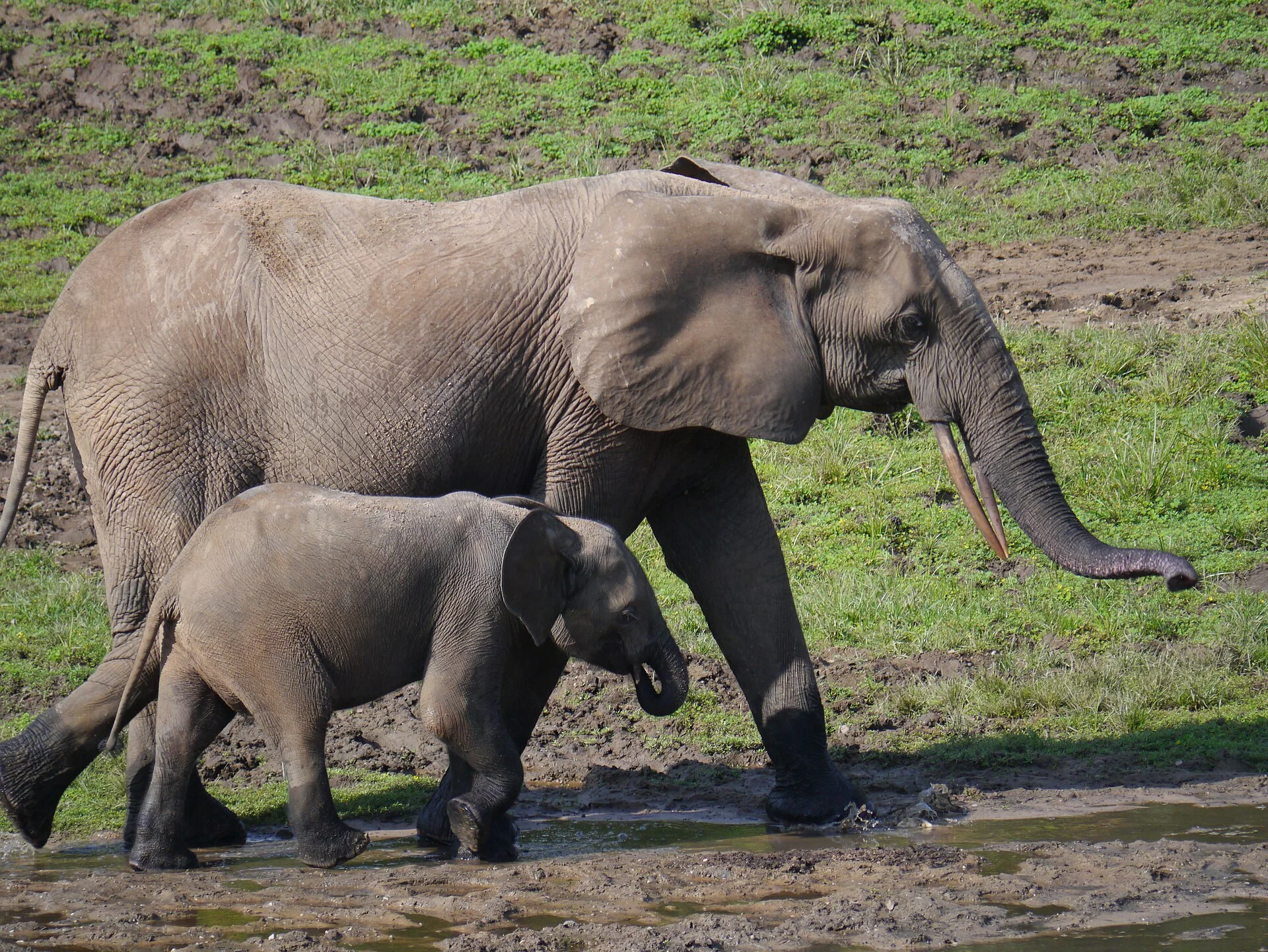
Visit the Dzanga Sangha Special Reserve to trek through the jungle in search of gorillas, elusive forest elephants, chimpanzees, & more. A visit to the reserve is often combined with a stay in a Pygmy village. The reserve is part of larger protected area, with Dzanga-Ndoki National Park (which consists of two noncontinuous parts: "Dzanga Park" & "Ndoki Park") flanking Dzanga-Sangha Special Reserve on two sides and which in turn is part of a larger, tri-national protected area including Lobéké National Park in Cameroon & Nouabalé-Ndoki National Park in Congo-Brazzaville.
Culture and food
There is a wide diversity of food in Bangui, including Chinese, Lebanese, French, local food and so forth. Food in restaurants owned by foreigners is very expensive and can be US$10–20 per dish (or more). Local food, however, may also be expensive depending upon the restaurant and its location. There are abundant French bakeries in the downtown area in the centre of Bangui with moderate prices for baked goods as well as meals. Food in supermarkets is very expensive, although cheaper food can be purchased at local markets and from sellers in the street.
Local beer ("33", Mocaf, Crystal) and soft drink (Mocaf is a major producer) is similarly priced to products in Europe and the United States. Wine is available in some French wine shops but can be very expensive. Palm wine is common. Water is produced in Cameroon and Central African Republic and can be purchased in all of the local supermarkets. Imported products such as Coca-Cola and Fanta are also available.
Planning your route
Getting around in the capital is easy with taxis, which make large parts of the city accessible. The fare must be negotiated before departure, there are no taximeters. To get to the provinces, you have to stick to buses that offer appropriate tours. You will need to plan a lot of time and some difficulties, especially during the rainy season. It is advisable to have an off-road vehicle and an experienced tour guide.
Due to the challenging security situation in some parts of the Central African Republic, travel by bus can be risky, especially for foreigners. Banditry, theft, and other criminal activity can occur along the roads, and roadblocks set up by armed groups can disrupt transportation.
Taxis can be hailed on the street or found at taxi stands in busy areas. Most taxis in CAR do not use a meter. It is crucial to negotiate the fare before starting your journey.
Travel guide text compiled and adapted from Wikivoyage article (contributors). Sections were selected and reordered for this guide. Text is shared under CC BY-SA 4.0. Check current arrangements with your travel consultant.
Plan the full journey
Useful for this trip
This country’s visa guidance has not been fully verified against current official requirements. Confirm the application route for your passport, residence and purpose before making travel commitments.
Review details
Central African Republic: The supplied sources could not provide sufficient readable official guidance during this assessment. 1 source link(s) could not be retrieved successfully; see the source log. Still to confirm: passport validity, tourist and business eligibility, application route, any exemptions and published processing guidance. Residents using other passports require a separate nationality check.