Algeria
Algeria ( Arabic : الجزائر, al-Jazāʾir ; Algerian Arabic: الدزاير, al-dzayir ; Berber : ⴷⵣⴰⵢⴻⵔ, dzayer ; French : Algérie ) is the largest country in Africa . Overlooked by many travellers, the country…
At a glance
Useful facts for planning
In this guide
Why go
Overview
Algeria ( Arabic : الجزائر, al-Jazāʾir ; Algerian Arabic: الدزاير, al-dzayir ; Berber : ⴷⵣⴰⵢⴻⵔ, dzayer ; French : Algérie ) is the largest country in Africa . Overlooked by many travellers, the country is bursting with beauty waiting to be discovered. From the bustling markets of Algiers to the pristine beaches of its Mediterranean coast, from the jaw-droppingly beautiful mountains of the north to the mesmerising deep reaches of the Sahara desert to the south, there is something for almost everyone to explore. Enjoy traditional cuisine, explore the ancient ruins, take in the breathtaking views, and then breathe in a world where few travellers tread. Algeria, and in particular Algerian hospitality, will leave a lasting impression on your heart and mind.
Algeria is officially known as the People's Democratic Republic of Algeria. Although the term "People's Republic" is commonly associated with communist states, Algeria is not a communist country. The term was adopted primarily because Algeria gained its independence through a revolutionary struggle against France .
Algeria covers an area of 2,381,741 square kilometres (919,595 sq mi), making it the world's tenth-largest country and the largest country in Africa . It is slightly larger than Mexico , four times smaller than the United States , and nearly 200 times larger than Africa's smallest country, Gambia . Algeria has diverse terrain, with the Mediterranean coast, the Atlas Mountains and the Sahara .
Sights and landscapes
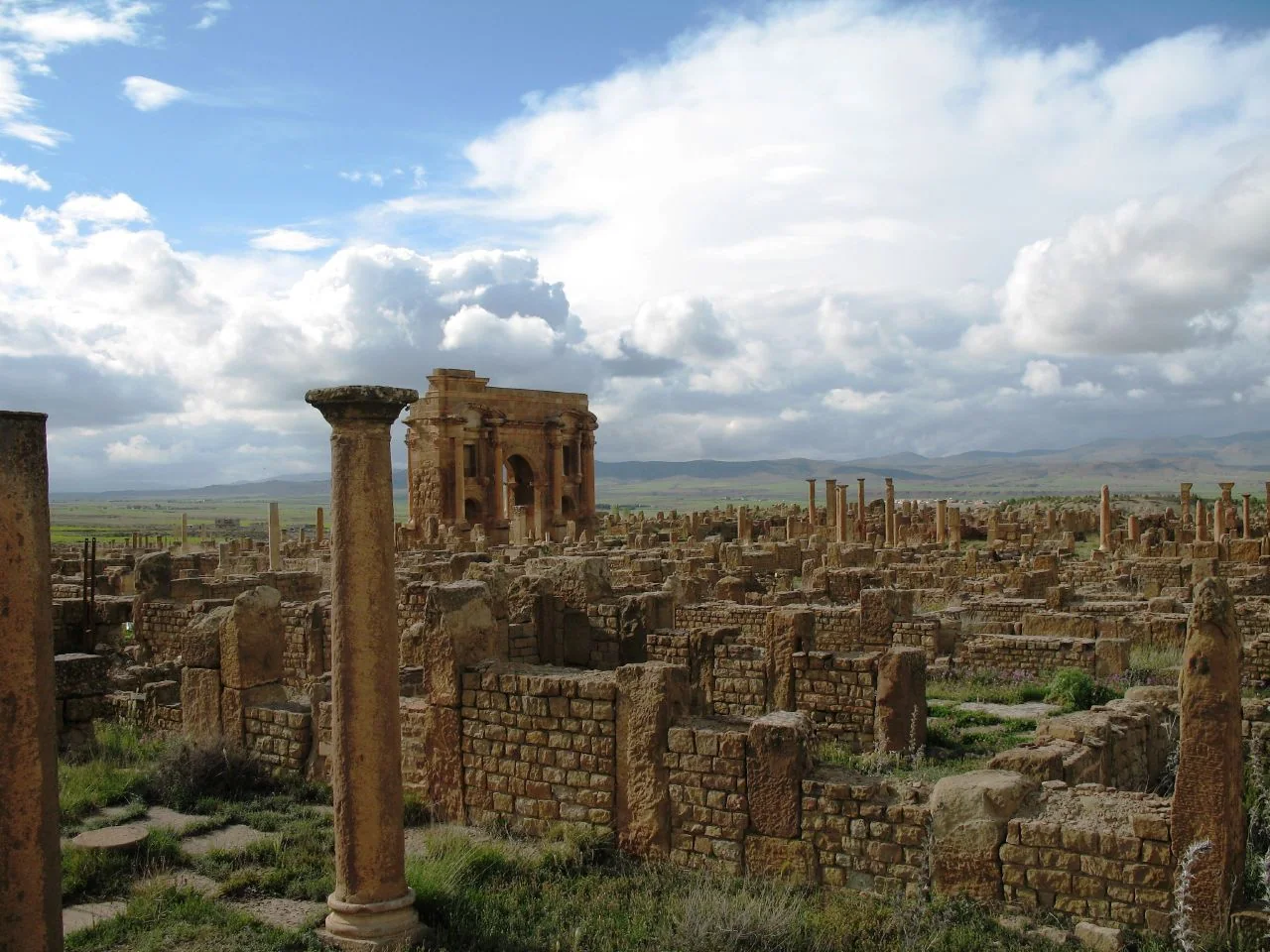
Step back in time and explore the remnants of the Phoenician, Roman, and Byzantine civilizations that have left an indelible mark on the land. Some of the most renowned archaeological sites in Algeria:
Algeria’s greatest allure lies in its Sahara—a vast, mesmerizing desert unlike anywhere else on Earth. At its center, the M’zab Valley stands out as the heart of Mozabite culture, where five fortified towns rise from the desert in a striking harmony of geometric design. Their cube-like forms inspired modern architecture and remain a vivid testament to human adaptation in a harsh land, though the charm is tempered by visible neglect and litter.
The Saharan Atlas Mountains cut a bold line across the landscape, their rugged peaks shaped by centuries of wind and sand. Farther south, the Hoggar Mountains encircle Tamanrasset , a remote desert capital alive with Tuareg traditions.
The endless dunes of the Grand Erg Oriental near El Oued shimmer under the sun, while ancient rock carvings at Djelfa and Tassili n’Ajjer reveal the Sahara’s prehistoric soul—artworks that bridge millennia and remind visitors of the desert’s deep, enduring past.
While Algeria’s great deserts and mountain regions draw much attention, its cities are equally compelling. Algiers, Oran, Constantine, and others reveal the country’s layered identity—French colonial architecture alongside Ottoman palaces, lively modern cafés beside centuries-old mosques. Far from being secondary destinations, these cities stand as living museums of Algeria’s complex history and vibrant contemporary life.
Algeria’s long Mediterranean coast has many attractive beaches, though cleanliness and upkeep can vary. Around Oran, the so-called Turquoise Coast offers some of the better stretches for swimming and relaxation. Annaba, Skikda, and Ghazaouet also have scenic spots, while Sidi Fredj near Algiers remains popular for its accessibility and calm waters.
Algeria is home to some of the world's most significant and extensive prehistoric rock art. Attractions include Tassili N'Ajjer, a world heritage-listed sandstone plateau as the largest open-air museum in the world, which features over 15,000 paintings and engravings dating from 10,000 BCE to the first centuries CE. The site includes famous depictions like the "Running Horned Woman."
Culture and food
Algerian cuisine is a mix of Mediterranean and North African flavors, with a strong French influence. Algerian cuisine is full of flavorful dishes such as tagines, couscous, and pastilla. Despite its rich flavors and vibrant ingredients, Algerian cuisine is not as widely known or appreciated as other Mediterranean or North African cuisines. Still, that shouldn't stop you from fully experiencing Algerian gastronomy.
Algeria produces a modest range of wines and beers. Once renowned for its vineyards, the country still turns out some excellent reds, while local beers are generally well-made and widely enjoyed.
Algeria is a majority Muslim country, so you do not find alcohol sold everywhere, but it is not hard to find. Wine and alcoholic drinks are sold in the few bar restaurants in the big cities, better hotels, and night clubs. Some bar/restaurants can be found in nice parks, so if you are in a nice wooded park, look for the restaurants. The fast food restaurants that are open and affordable to the public do not sell beer, and the coffee shops do not sell alcohol. If you visit Algiers or coastal cities, there are fish restaurants in almost every fishing port, the fishing is traditional and the fish sold is very fresh; usually, these restaurants sell alcohol but you have to ask (do not expect to see it, some times it is on the menu, some times not).
Planning your route
With an area of 2,381,741 square kilometres (919,595 sq mi), travelling between major cities in Algeria can take a lot of time and can be dangerous if you don't know what you're doing.
It's usual to take a taxi to travel near or in cities. The prices are pretty moderate but when travelling between bigger cities with large distances taxis are the same or more expensive as flying. Try to avoid unofficial taxis since it's very likely the driver will rip you off.
Most taxis in Algiers have meters and you should insist on using the meter. The presence of meters in other large cities such as Oran varies. Do not negotiate the price before you enter the taxi, as this will clue the driver in that you have no idea what you are doing and he will invariably scam you on the price. Instead, only negotiate the price once you enter the taxi and determine it has no meter. Tipping is not necessary but you can round up to the next DA10.
Travel guide text compiled and adapted from Wikivoyage article (contributors). Sections were selected and reordered for this guide. Text is shared under CC BY-SA 4.0. Check current arrangements with your travel consultant.
Plan the full journey
Useful for this trip
This country’s visa guidance has not been fully verified against current official requirements. Confirm the application route for your passport, residence and purpose before making travel commitments.
Review details
Algeria: Official pages were retrieved, but the complete imported guidance has not been corroborated claim by claim for Kenyan ordinary passports. Still to confirm: passport validity, tourist and business eligibility, application route, any exemptions and published processing guidance. Residents using other passports require a separate nationality check.