
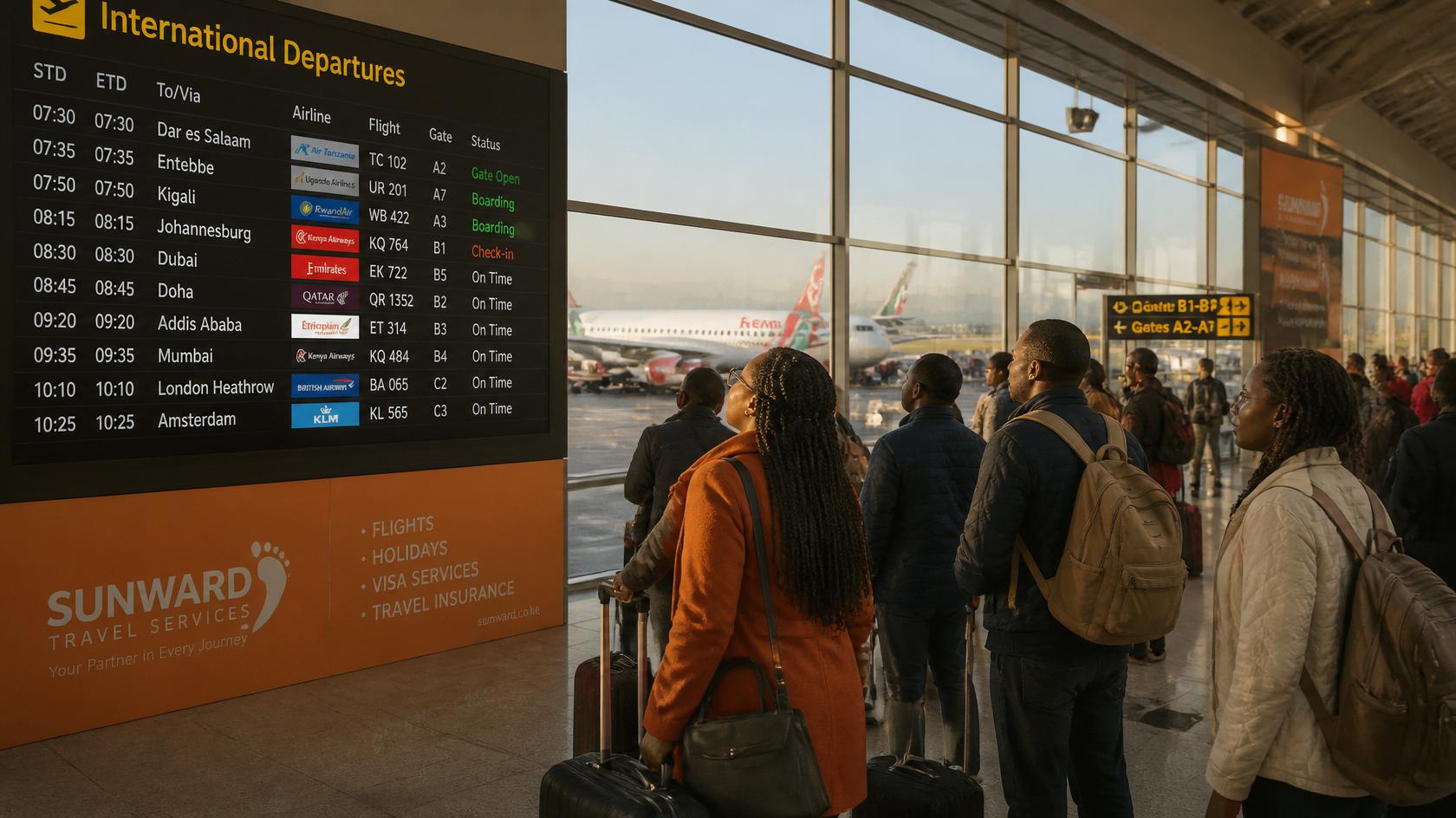
Everything You Need to Know Before Booking a Domestic or International Flight
Planning a trip starts with booking the right flight. This comprehensive Flight Booking Guide for Kenya is designed to help Kenyan travellers understand every stage of the journey—from choosing the best airline and finding affordable fares to preparing travel documents, navigating airports, and avoiding common booking mistakes. Whether you’re flying within Kenya or travelling internationally, this guide from Sunward Travel Services will help you book your flight with confidence.
For many travellers in Kenya, air ticket booking can feel overwhelming. Airline prices change frequently, baggage policies differ from one carrier to another, transit requirements vary by country, and choosing between direct and connecting flights isn’t always straightforward. A small mistake—such as entering the wrong passenger name or overlooking a transit visa requirement—can lead to unnecessary expenses, delays, or even being denied boarding.
This comprehensive guide explains everything you need to know about booking flights from Kenya. Whether you’re a first-time flyer or a seasoned traveller, you’ll learn how airline ticketing works, when to book for the best value, how to compare airlines, what travel documents you need, how baggage rules apply, and how to avoid the most common booking mistakes.
At Sunward Travel Services, we believe informed travellers make better travel decisions. As an experienced travel management company, we assist individuals, families, businesses, government institutions, and organisations with domestic and international flight bookings, visa assistance, travel insurance, hotel reservations, and tailor-made travel experiences.
By the end of this guide, you’ll have the knowledge and confidence to book your next flight with ease.
Table of Contents
- What Is Flight Booking?
- How Flight Booking Works
- Types of Flights Explained
- Domestic Flights in Kenya
- International Flights from Nairobi
- Understanding Airline Fare Classes
- How Airline Ticket Prices Work
- How to Find Affordable Flights
- Travel Documents You Need Before Flying
- Airport Check-in and Boarding Guide
- Airline Baggage Rules Explained
- Flight Delays, Cancellations and Refunds
- Corporate Travel Services
- Why Book Through Sunward Travel Services
- Frequently Asked Questions
What Is Flight Booking?

Flight booking is the process of reserving a seat on an airline for a specific journey. While the process appears simple on the surface, several systems work together behind the scenes to confirm your reservation, issue your ticket, and prepare you for travel.
A flight booking generally involves selecting your travel route, choosing your preferred airline and schedule, entering passenger details exactly as they appear on official identification documents, selecting your preferred fare, completing payment, and receiving an electronic ticket (commonly called an e-ticket).
Once your booking is confirmed, the airline creates a reservation linked to a unique reference number. This allows both you and the airline to access your travel itinerary, make eligible changes, check in for your flight, and manage your journey.
Understanding the terminology used during this process can make booking flights much easier.
Flight Reservation
A flight reservation is the initial booking of a seat on an airline. It records your intended travel itinerary and passenger information within the airline’s reservation system. Depending on the airline and fare rules, a reservation may remain on hold for a limited period before payment is required, or it may require immediate ticket issuance.
Electronic Ticket (E-Ticket)
An electronic ticket is the official proof that your flight has been purchased. Unlike paper tickets used decades ago, today’s airline tickets are stored electronically within the airline’s systems.
Your e-ticket typically includes:
- Passenger name
- Flight number
- Departure and arrival airports
- Travel dates and times
- Booking reference
- Ticket number
- Fare conditions
- Baggage allowance
It is advisable to keep a digital copy on your phone and, where possible, carry a printed copy during your journey, especially for international travel where immigration or airport officials may request supporting travel documents.
Booking Reference (PNR)
One of the most important details after booking a flight is your Passenger Name Record (PNR), also known as a booking reference.
This unique combination of letters and numbers identifies your reservation within the airline’s system. With your PNR, you can:
- View your itinerary
- Select seats (where available)
- Add baggage
- Update contact details
- Check your flight status
- Complete online check-in
- Request eligible flight changes
Always keep your booking reference secure and easily accessible throughout your trip.
Boarding Pass
A boarding pass is different from your ticket.
Your e-ticket confirms that you have purchased travel, while your boarding pass authorises you to board a specific flight after completing check-in.
A boarding pass usually displays:
- Passenger name
- Flight number
- Boarding time
- Departure gate
- Seat number
- Boarding group
- Barcode or QR code for airport scanning
Most airlines now allow passengers to receive digital boarding passes through mobile applications or email.
Online Check-in
Many airlines open online check-in between 24 and 48 hours before departure, allowing passengers to confirm their attendance, select available seats, and obtain their boarding passes before arriving at the airport.
Checking in online can reduce waiting times at the airport and provide greater flexibility when choosing seats.
Airport Check-in
If you have checked luggage or require document verification, you’ll still need to visit the airline’s check-in counter after arriving at the airport. Airport staff will verify your travel documents, weigh your baggage, issue baggage tags, and confirm your boarding pass if you have not already checked in online.
For domestic flights within Kenya, travellers are generally advised to arrive at the airport at least two hours before departure. For international flights, arriving three hours before departure is recommended to allow enough time for check-in, immigration, and security screening.
Departure Gate
After passing through security and immigration (for international travel), you’ll proceed to your designated departure gate. Airlines typically begin boarding 30 to 60 minutes before departure, depending on the aircraft and destination.
Always monitor airport information screens, as gate assignments may change.
Direct Flights, Layovers and Stopovers
Understanding these terms helps you choose the itinerary that best suits your travel needs.
A direct flight takes you from your departure city to your destination without changing aircraft, although it may occasionally make a technical stop.
A layover is a short connection between two flights, usually lasting less than 24 hours for international journeys.
A stopover is a longer break between flights—often more than 24 hours—which allows travellers to spend time exploring another city before continuing their journey.
Choosing between direct flights and connecting itineraries often depends on your budget, travel time, and destination.
Key Takeaways
- Flight booking involves reserving and purchasing a seat on an airline.
- Your e-ticket confirms payment, while your boarding pass allows you to board the aircraft.
- Your PNR (booking reference) is essential for managing your reservation.
- Online check-in can save time and improve your airport experience.
- Understanding travel terms such as layover, stopover, and direct flight helps you make better booking decisions.
- Always ensure that the passenger name on your booking matches your passport or national identification exactly.
How Flight Booking Works: From Search to Takeoff
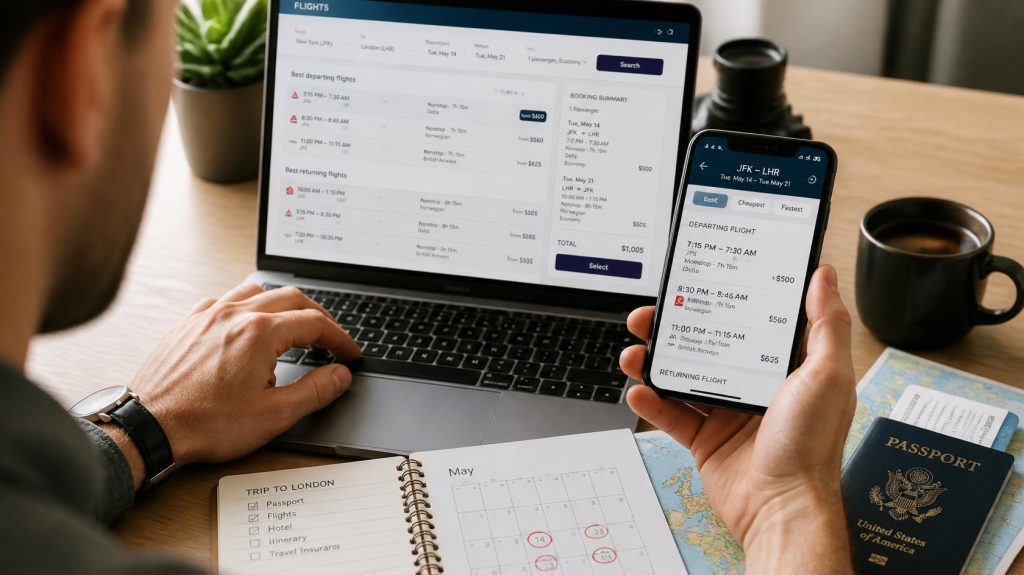
Booking a flight may take only a few minutes, but behind every successful reservation is a sophisticated global network of airlines, reservation systems, airports, and travel agencies working together in real time.
Every time you search for a flight, thousands of pieces of information are processed almost instantly. Airlines update seat availability, calculate fares, apply taxes and fees, and display the best available options based on your travel preferences.
Understanding how this process works can help you make informed booking decisions and appreciate why prices, schedules, and availability can change within minutes.
Step 1: Searching for Flights
The journey begins when you search for a flight.
You’ll typically enter:
- Departure city
- Destination
- Travel dates
- Number of passengers
- Cabin class (Economy, Premium Economy, Business, or First)
- Trip type (One-way, Return, or Multi-city)
Based on these details, airline reservation systems search for available flights that match your request.
The results you see may include:
- Non-stop flights
- Direct flights
- Connecting flights
- Multiple airlines
- Different fare options
- Various baggage allowances
Each option represents a unique combination of schedule, fare rules, and availability.
Step 2: Airlines Check Seat Availability
Every aircraft has a fixed number of seats.
For example:
- 180-seat aircraft
- 320-seat aircraft
- 500-seat aircraft
However, not every seat is available for sale at the same price.
Airlines divide seats into different fare classes, often called fare buckets. A limited number of seats are allocated to each fare class, with lower-priced fares usually selling out first.
This means two passengers sitting next to each other may have paid very different prices for their tickets because they booked at different times or purchased different fare types.
As seats in a lower fare bucket are sold, the airline automatically makes the next available fare available, which is often more expensive.
Step 3: Airline Reservation Systems
Most airlines use advanced reservation systems to manage millions of bookings worldwide.
These systems store information such as:
- Flight schedules
- Seat inventory
- Passenger reservations
- Fare rules
- Ticket status
- Baggage allowances
- Special service requests
They also communicate with airports and travel agencies to ensure everyone has access to up-to-date flight information.
This technology allows travel consultants at Sunward Travel Services to compare multiple airline options, identify suitable itineraries, and assist customers with changes or special requests efficiently.
Step 4: Ticket Pricing Happens in Real Time
One of the most common questions travellers ask is:
“Why did the price change just a few minutes after I searched?”
The answer lies in dynamic pricing.
Unlike many products with fixed prices, airline tickets are priced continuously based on changing market conditions.
Factors that influence ticket prices include:
- Number of seats remaining
- Current demand
- Time before departure
- Public holidays
- School holiday periods
- Major events
- Fuel costs
- Competition on the route
- Historical booking patterns
As demand increases or lower-priced fare classes sell out, fares generally rise.
Conversely, during periods of lower demand, airlines may introduce promotional fares to encourage bookings.
Step 5: Selecting Your Fare
Not all airline tickets offer the same flexibility.
When comparing flights, it’s important to look beyond the price.
Different fares may include different benefits, such as:
- Cabin baggage allowance
- Checked baggage allowance
- Seat selection
- Meal service
- Flight changes
- Refund eligibility
- Priority boarding
- Frequent flyer points
A lower-priced ticket may have restrictions that make it costly to change your travel plans later.
Understanding the fare conditions before booking can help you choose the option that best matches your needs.
Step 6: Passenger Information
Once you’ve chosen your flight, you’ll need to enter passenger details.
Accuracy is essential.
For international travel, the passenger name should match the passport exactly.
Depending on the destination, you may also need to provide:
- Passport details
- Date of birth
- Nationality
- Contact information
- Emergency contact
- Frequent flyer number (if applicable)
Errors in passenger information can lead to delays, correction fees, or, in some cases, the need to purchase a new ticket.
Always review your details carefully before confirming your booking.
Step 7: Payment and Ticket Issuance
After payment is successfully processed, the airline issues your electronic ticket.
At this stage, you should receive:
- Booking confirmation
- E-ticket receipt
- Booking reference (PNR)
- Flight itinerary
- Fare rules
- Baggage information
Review these documents promptly to ensure all details are correct.
If you notice an error, contact your airline or travel consultant as soon as possible, as some corrections become more difficult once the ticket has been issued.
Step 8: Managing Your Booking
After ticket issuance, many airlines allow you to manage your reservation online.
Depending on your fare conditions, you may be able to:
- Choose or change your seat
- Purchase additional baggage
- Update contact details
- Request special meals
- Add assistance services
- View itinerary updates
- Check in online
Some changes may incur additional fees, while others are complimentary.
Step 9: Online Check-in
Most airlines open online check-in between 24 and 48 hours before departure.
Checking in online allows you to:
- Confirm your flight
- Select available seats
- Receive your boarding pass
- Reduce waiting time at the airport
If you’re travelling with checked baggage, you’ll still need to visit the airline’s bag-drop or check-in counter before proceeding to security.
Step 10: At the Airport
On the day of travel, your airport journey generally follows these steps:
- Arrive at the airport.
- Check in or drop off your baggage.
- Proceed through security screening.
- Complete immigration procedures (for international flights).
- Wait at your assigned departure gate.
- Board the aircraft when called.
- Enjoy your journey.
Allow enough time for each stage, particularly during busy travel periods when queues may be longer than usual.
Why Booking Through a Travel Agency Can Make a Difference
While many travellers book flights online, working with an experienced travel agency offers additional support that can be valuable before, during, and after your trip.
A professional travel consultant can help:
- Compare multiple airlines and fare options
- Explain ticket conditions and baggage rules
- Recommend suitable itineraries
- Assist with complex or multi-city journeys
- Support flight changes or cancellations
- Provide visa and travel documentation guidance
- Arrange travel insurance
- Coordinate hotel reservations and airport transfers
- Offer assistance if disruptions occur
For business travellers, families, group tours, and travellers with specialised requirements, this personalised support can save time and reduce stress.
Key Takeaways
- Flight booking is supported by sophisticated airline reservation systems that update fares and seat availability in real time.
- Airline ticket prices change based on demand, availability, seasonality, and fare rules.
- The cheapest fare is not always the best value—consider flexibility, baggage allowances, and change policies.
- Always verify passenger details before payment to avoid costly corrections.
- Booking through an experienced travel agency can provide expert guidance, ongoing support, and assistance when travel plans change.
Types of Flights Explained
Choosing the right type of flight is just as important as choosing the right airline. Whether you’re travelling within Kenya, flying abroad for business, or planning a multi-country holiday, understanding the different types of flights can help you save money, reduce travel time, and select the itinerary that best suits your needs.
Many travellers focus only on ticket prices, but factors such as travel duration, baggage allowances, layovers, and ticket flexibility can have a significant impact on your overall travel experience.
In this section, we’ll explain the most common types of flights you’ll encounter when booking air travel from Kenya.
Domestic Flights
Domestic flights operate within the borders of a single country. In Kenya, these flights connect major cities, towns, and tourist destinations, making travel faster and more convenient than long road journeys.
Some of the busiest domestic routes include:
- Nairobi to Mombasa
- Nairobi to Kisumu
- Nairobi to Eldoret
- Nairobi to Diani (Ukunda)
- Nairobi to Malindi
- Nairobi to Lamu
- Nairobi to Lodwar
- Nairobi to Nanyuki
Domestic flights are popular among:
- Business travellers
- Government officials
- Tourists visiting Kenya’s national parks and beaches
- Families travelling during school holidays
- Conference attendees
Most domestic flights from Nairobi take between 45 minutes and 1 hour 30 minutes, depending on the destination.
International Flights
International flights travel between two or more countries.
From Nairobi, passengers can fly directly or via connecting airports to destinations across Africa, Europe, the Middle East, Asia, North America, and beyond.
Popular international destinations from Kenya include:
- Dubai
- London
- Doha
- Johannesburg
- Amsterdam
- Paris
- Mumbai
- Bangkok
- Toronto
- New York
International travel often requires additional preparation, including:
- A valid passport
- Visa or Electronic Travel Authorisation (ETA), where applicable
- Travel insurance
- Vaccination certificates for certain destinations
- Compliance with airline baggage policies
Because requirements vary by destination, it’s advisable to confirm documentation well before your departure date.
One-Way Flights
A one-way flight ticket allows you to travel from your departure point to your destination without including a return journey.
For example:
Nairobi → Mombasa
or
Nairobi → London
One-way tickets are commonly chosen by:
- Students relocating abroad
- Travellers with flexible plans
- Individuals moving for work
- Backpackers
- Long-term visitors
However, some countries may require proof of onward or return travel before allowing entry. Always check the immigration requirements of your destination before booking a one-way ticket.
Return Flights
A return flight, sometimes called a round-trip ticket, includes both your outbound and return journeys under the same booking.
Example:
- Nairobi → Dubai
- Dubai → Nairobi
Return tickets are often suitable for:
- Holidays
- Business trips
- Family visits
- Conferences
- Short-term study programmes
In many cases, booking a return ticket can be more economical than purchasing two separate one-way tickets, although this depends on the airline, route, and travel dates.
Multi-City Flights
A multi-city itinerary allows travellers to visit more than one destination under a single booking.
For example:
- Nairobi → Dubai
- Dubai → Paris
- Paris → Nairobi
Multi-city bookings are popular among:
- Business executives attending meetings in different countries
- International tourists
- Students
- Travellers combining work and leisure
- Families visiting relatives in multiple locations
Rather than purchasing several individual tickets, a multi-city itinerary can simplify travel planning and, in some cases, reduce overall costs.
Direct Flights
A direct flight takes you from your departure airport to your destination without requiring you to change aircraft.
For example:
- Nairobi → Mombasa
- Nairobi → Dubai
- Nairobi → London (when operated as a direct service)
Direct flights are often preferred because they:
- Reduce travel time
- Eliminate the need to transfer between aircraft
- Lower the risk of missed connections
- Reduce the chance of baggage delays associated with transfers
For business travellers and families with young children, direct flights can provide a more convenient travel experience.
Connecting Flights
A connecting flight requires passengers to change aircraft at an intermediate airport before continuing to their final destination.
For example:
- Nairobi → Addis Ababa → New York
- Nairobi → Doha → Tokyo
- Nairobi → Istanbul → Berlin
Connecting flights may involve one or more layovers, depending on the itinerary.
Advantages of connecting flights include:
- Access to destinations without direct services
- Greater choice of departure times
- Potentially lower fares on certain routes
However, travellers should also consider:
- Longer overall travel time
- Transit visa requirements in some countries
- The possibility of delays affecting onward connections
- Additional time needed for security or immigration procedures at transit airports
When planning a connecting itinerary, it’s important to ensure there is enough time between flights to complete all required airport procedures.
Non-Stop Flights
A non-stop flight travels directly from the departure airport to the destination without making any intermediate stops.
For example:
- Nairobi → Mombasa
Since there are no scheduled stops, non-stop flights are generally the fastest option available.
It’s worth noting that while people often use the terms “direct” and “non-stop” interchangeably, they are not always the same.
- A non-stop flight has no scheduled stops.
- A direct flight reaches the same destination without requiring passengers to change aircraft, but it may make a brief stop for operational reasons, such as refuelling or picking up additional passengers.
Understanding this distinction can help you choose the itinerary that best matches your schedule and preferences.
Charter Flights
Charter flights are arranged specifically for a group, organisation, or individual rather than operating on a regular airline schedule.
These flights are commonly used for:
- Corporate travel
- Sports teams
- Government delegations
- Humanitarian missions
- Special events
- Luxury safari experiences
Charter flights offer greater flexibility in scheduling and destination choices but are generally more expensive than scheduled commercial services.
Which Type of Flight Should You Choose?
The best option depends on your travel purpose, budget, destination, and schedule.
| Travel Need | Recommended Flight Type |
|---|---|
| Weekend getaway within Kenya | Domestic flight |
| Family holiday | Return flight |
| Business meeting | Direct or non-stop flight |
| Studying abroad | One-way flight |
| Visiting multiple countries | Multi-city flight |
| Budget-conscious traveller | Connecting flight |
| Time-sensitive travel | Non-stop flight |
| Luxury safari or private group | Charter flight |
There is no single “best” type of flight. The right choice depends on balancing convenience, flexibility, travel time, and cost.
Key Takeaways
Domestic flights connect destinations within Kenya, while international flights travel between countries.
One-way tickets are suitable for flexible or long-term travel, whereas return tickets are ideal for planned round trips.
Multi-city itineraries are convenient for travellers visiting several destinations.
Non-stop flights are the fastest option, while connecting flights can offer more route choices and competitive fares.
Charter flights provide customised travel for groups or specialised journeys.
Understanding the different flight types helps you choose an itinerary that aligns with your travel goals and budget.
Domestic Flights in Kenya: The Complete Guide

Quick Answer: Domestic flights in Kenya connect major cities, business hubs, coastal destinations, and world-famous safari regions across the country. Flying is often the fastest and most convenient way to travel, especially for business travellers, tourists, families, and anyone looking to avoid long road journeys.
Kenya has one of the most developed domestic aviation networks in East Africa. Every day, scheduled flights depart from Nairobi to destinations across the country, making it possible to travel from the capital to the coast, western Kenya, the Rift Valley, or renowned safari destinations in under two hours. For the latest information on Kenya’s airports, terminals, and passenger services, visit the Kenya Airports Authority (https://www.kaa.go.ke). To learn more about aviation regulations and air transport safety in Kenya, visit the Kenya Civil Aviation Authority (https://www.kcaa.or.ke).
Whether you’re attending a business meeting in Kisumu, relaxing on the beaches of Diani, or beginning a safari in the Maasai Mara, domestic flights offer speed, convenience, and flexibility.
If you’re new to booking flights, we recommend reading our How Flight Booking Works section earlier in this guide to understand how reservations, fare classes, ticket issuance, and airline policies work before selecting your itinerary.
Before booking your next domestic flight, you may also find these guides helpful:
- How to Find Cheap Flights from Nairobi
- Best Airlines Flying from Nairobi
- Airline Baggage Guide
- Flight Booking Mistakes Every Traveller Should Avoid
If your journey extends beyond Kenya, continue to our International Flight Booking Guide, where we explain passports, visas, travel insurance, connecting flights, and other essential information for international travellers.
Why Choose a Domestic Flight?
Travelling by air within Kenya offers several advantages over long-distance road travel.
Some of the key benefits include:
- Significantly shorter travel times.
- Multiple daily departures on popular routes.
- Convenient access to remote destinations.
- Comfortable travel for families and business professionals.
- Easy connections to international flights from Nairobi.
- Reduced travel fatigue compared to long road journeys.
For example, travelling from Nairobi to Mombasa by road can take between eight and ten hours depending on traffic and road conditions. A direct flight usually takes about one hour.
Similarly, reaching destinations such as Lamu or Diani by road and ferry can take considerably longer than flying.
Kenya’s Main Domestic Airports
Most domestic flights originate from Nairobi and connect passengers to airports across the country.
Some of Kenya’s busiest domestic airports include:
| Airport | Location | Common Routes |
|---|---|---|
| Jomo Kenyatta International Airport (JKIA) | Nairobi | Domestic and international connections |
| Wilson Airport | Nairobi | Safari destinations and regional domestic flights |
| Moi International Airport | Mombasa | Nairobi, Kisumu, Eldoret |
| Kisumu International Airport | Kisumu | Nairobi, Mombasa |
| Eldoret International Airport | Eldoret | Nairobi |
| Ukunda Airstrip | Diani | Nairobi |
| Malindi Airport | Malindi | Nairobi |
| Manda Airport | Lamu | Nairobi |
Related Reading: Our upcoming JKIA Guide will explain airport terminals, check-in procedures, parking, lounges, and how to navigate Kenya’s busiest airport with confidence.
Popular Domestic Flight Routes
Below are some of the most frequently travelled domestic routes in Kenya.
Nairobi to Mombasa
One of Kenya’s busiest air routes, this flight is popular with holidaymakers, corporate travellers, and conference attendees.
Typical flight time:
Approximately one hour.
Ideal for:
- Beach holidays
- Business meetings
- Conferences
- Family travel
Many travellers combine Mombasa with nearby destinations such as Diani, Watamu, or Malindi.
Related Reading: Coming Soon – Kenya Coast Travel Guide.
Nairobi to Kisumu
Kisumu is an important commercial centre in western Kenya and a gateway to Lake Victoria.
Typical flight time:
Approximately one hour.
Popular among:
- Business travellers
- Government officials
- Family visitors
- Conference delegates
The city also serves as a convenient base for exploring western Kenya.
Nairobi to Eldoret
Eldoret is recognised for its thriving agricultural sector, educational institutions, and sporting heritage.
Typical flight time:
Around one hour.
Travellers often fly to Eldoret for:
- Business
- University visits
- Sports events
- Family visits
Nairobi to Diani (Ukunda)
Diani Beach is consistently ranked among Africa’s top beach destinations.
Flying directly to Ukunda saves travellers the additional road journey and ferry crossing often required when arriving through Mombasa.
Typical flight time:
Approximately one hour and fifteen minutes.
Ideal for:
- Honeymooners
- Beach holidays
- Luxury travellers
- Family vacations
Nairobi to Malindi
Malindi combines beautiful beaches with rich Swahili culture and historical attractions.
Visitors enjoy:
- Marine parks
- Snorkelling
- Deep-sea fishing
- Historical sites
- Relaxed coastal atmosphere
Flying directly significantly reduces travel time.
Nairobi to Lamu
Lamu is one of Kenya’s oldest towns and a UNESCO World Heritage Site known for its rich cultural heritage and tranquil island setting.
Visitors travel to Lamu for:
- Cultural experiences
- Boutique hotels
- Beach holidays
- Festivals
- Relaxation
Since motor vehicles are limited in many parts of the island, transport is primarily by boat, walking, or donkey, adding to Lamu’s unique charm.
Nairobi to Maasai Mara
Although many travellers think of the Maasai Mara only as a road-trip destination, scheduled and charter flights provide a fast and scenic way to reach the reserve.
Flying is especially recommended during:
- The Great Migration season.
- Luxury safari itineraries.
- Short safari getaways.
- Photography expeditions.
Depending on the airstrip and operator, flights typically take about one hour.
Related Reading: Our Maasai Mara Travel Guide and Great Migration Guide will help you plan the best time to visit and choose the right safari experience.
Airlines Operating Domestic Flights in Kenya
Several airlines operate scheduled domestic services, offering travellers a range of options depending on their destination, schedule, and travel preferences.
When choosing an airline, consider:
- Flight schedules.
- Baggage allowance.
- Route network.
- On-time performance.
- Customer service.
- Fare flexibility.
Before booking, compare not only the ticket price but also the services included in each fare.
Related Reading: Our upcoming guide, Best Airlines Flying from Nairobi, compares major carriers, their route networks, and the types of travellers they best serve.
When Is the Best Time to Book Domestic Flights?
Although domestic airfare can vary depending on demand, booking in advance generally provides a wider choice of flights and fare options.
Demand often increases during:
- School holidays.
- Easter.
- Christmas and New Year.
- Public holidays.
- Long weekends.
- Major conferences and events.
If your travel dates are fixed, booking early can help secure your preferred departure time.
For more strategies on finding competitive fares, see our upcoming article How to Find Affordable Flights from Nairobi.
Tips for Flying Within Kenya
To make your journey as smooth as possible:
- Arrive at the airport at least two hours before departure.
- Carry valid identification.
- Check your airline’s baggage allowance before packing.
- Complete online check-in if it’s available.
- Keep your boarding pass and identification easily accessible.
- Monitor your flight status for any schedule changes.
If you’re connecting to an international flight, allow sufficient time between flights to accommodate baggage collection, check-in, and security procedures where applicable.
Frequently Asked Questions About Domestic Flights
Do I need a passport for domestic flights within Kenya?
Kenyan citizens can generally travel on domestic flights using accepted government-issued identification. International visitors should carry the travel documents required by their airline and immigration status.
Can I check in online for domestic flights?
Many airlines offer online check-in, although availability varies by carrier. Check directly with your airline before departure.
How early should I arrive at the airport?
For most domestic flights, arriving around two hours before departure is recommended.
Can I carry checked baggage on domestic flights?
Yes, but baggage allowances vary between airlines and fare types. Always confirm your allowance before travelling.
Planning Your Domestic Journey
Whether you’re travelling for business, visiting family, heading to the coast, or starting an unforgettable safari, domestic flights make exploring Kenya faster and more convenient.
Choosing the right route, airline, and fare can enhance your travel experience and help you avoid unnecessary stress. If you’re unsure which option is best for your itinerary, seeking professional advice before booking can save both time and money.
As you continue through this guide, we’ll expand beyond Kenya and explore international flight booking, including direct and connecting flights, long-haul travel, transit airports, and practical tips for travelling abroad with confidence.
To help you plan your journey, you may also find these Sunward Travel guides useful:
How to Find Cheap Flights from Nairobi:
Best Airlines Flying from Nairobi:
Airline Baggage Guide:
Flight Booking Mistakes Every Traveller Should Avoid:
International Flight Booking: The Complete Guide for Kenyan Travellers
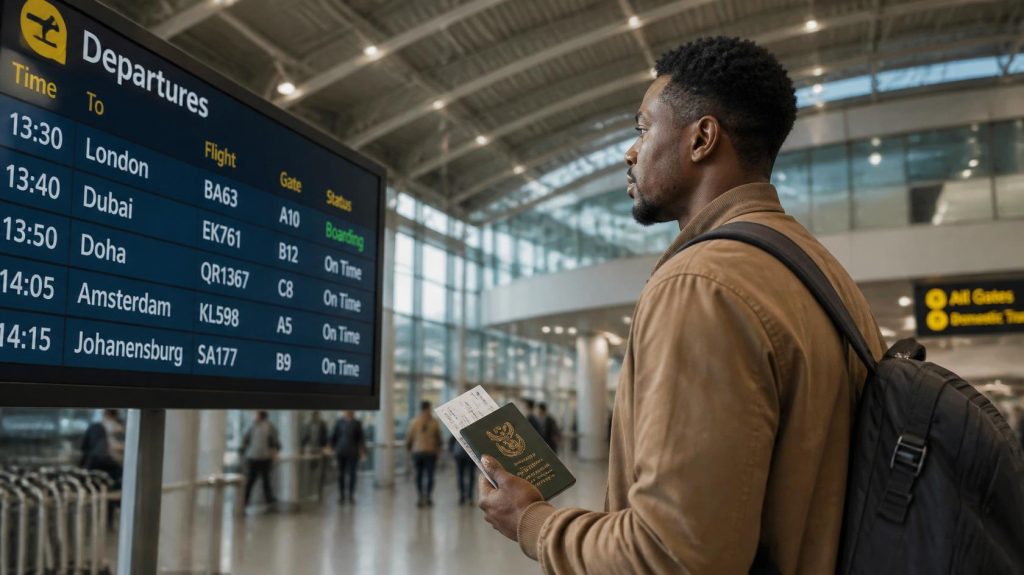
Quick Answer: International flight booking involves travelling from one country to another by air. Unlike domestic travel, international journeys usually require additional travel documents such as a valid passport, and depending on your destination, a visa or Electronic Travel Authorisation (ETA). Choosing the right airline, understanding transit requirements, and booking the appropriate fare can make your journey smoother and more cost-effective.
International travel opens the door to business opportunities, higher education, family reunions, tourism, medical travel, and cultural experiences around the world. From Nairobi, travellers can access hundreds of destinations across Africa, Europe, the Middle East, Asia, North America, South America, and Oceania through a combination of direct and connecting flights.
Whether you’re planning a short business trip to Johannesburg, a holiday in Dubai, a university placement in Canada, or a safari extension to Tanzania, understanding how international flight booking works will help you travel with confidence.
If this is your first time flying, we recommend reading the earlier sections of this guide on How Flight Booking Works and Types of Flights Explained before planning an international journey.
Why International Flight Booking Requires More Planning
Unlike domestic travel, international journeys involve several additional considerations beyond simply purchasing an airline ticket.
Before confirming your booking, you should verify:
- Passport validity.
- Visa or ETA requirements.
- Transit visa requirements.
- Vaccination requirements.
- Airline baggage policies.
- Travel insurance.
- Entry requirements for your destination.
- Return or onward travel requirements where applicable.
Missing any of these requirements could result in delays or denied boarding.
Related Reading
- Passport Guide (Coming Soon)
- Visa Guide (Coming Soon)
- Transit Visa Guide (Coming Soon)
- Travel Insurance Guide (Coming Soon)
Popular International Destinations from Nairobi
Nairobi serves as one of Africa’s leading aviation hubs, offering convenient connections to destinations across the globe.
Some of the most popular international destinations include:
Dubai, United Arab Emirates
Dubai remains one of the most frequently visited destinations from Kenya for:
- Business travel.
- Shopping.
- Tourism.
- Family holidays.
- Connecting flights to Asia and Australia.
Many travellers also use Dubai as a transit hub for onward journeys.
London, United Kingdom
London is a major destination for:
- Higher education.
- Business.
- Tourism.
- Family visits.
Depending on the airline and route, travellers may choose between direct and connecting services.
Johannesburg, South Africa
As one of Africa’s largest commercial centres, Johannesburg attracts:
- Business professionals.
- Conference delegates.
- Tourists.
- Medical travellers.
Its airport also serves as an important connection point for destinations in Southern Africa.
Doha, Qatar
Doha has become one of the world’s leading aviation hubs.
Many travellers from Kenya transit through Doha when flying to:
- Europe.
- North America.
- Asia.
- Australia.
Its modern airport and extensive global route network make it a popular choice for connecting journeys.
Amsterdam, Netherlands
Amsterdam provides convenient access to many European destinations through one of Europe’s busiest international airports.
Travellers heading to:
- Germany.
- France.
- Belgium.
- Scandinavia.
- Other European countries
often connect through Amsterdam.
Paris, France
Paris is popular for:
- Tourism.
- Business.
- Fashion.
- International conferences.
- Academic programmes.
Many itineraries combine Paris with other European cities.
Mumbai, India
Mumbai is a key destination for:
- Medical travel.
- Business.
- Education.
- Family visits.
India remains an important destination for many Kenyan travellers seeking specialised healthcare and commercial opportunities.
New York, United States
Travellers heading to the United States commonly travel for:
- Business.
- Higher education.
- Tourism.
- Family visits.
Many itineraries include connections through Europe, the Middle East, or other international hubs.
Direct Flights vs Connecting Flights
One of the first decisions you’ll make when booking an international flight is whether to choose a direct itinerary or a connecting journey.
Direct Flights
Direct flights generally offer:
- Shorter travel times.
- Fewer airport transfers.
- Reduced risk of missed connections.
- Greater convenience for families and business travellers.
Although they may sometimes cost more, the time savings can make them worthwhile.
Connecting Flights
Connecting flights require travellers to change aircraft at an intermediate airport before reaching their final destination.
Common transit hubs for travellers departing from Nairobi include airports in:
- Addis Ababa.
- Doha.
- Dubai.
- Istanbul.
- Amsterdam.
- Nairobi (for regional connections).
- Johannesburg.
Connecting flights often provide:
- More destination choices.
- Flexible schedules.
- Competitive pricing on certain routes.
However, travellers should always check whether a transit visa is required for their connection.
Related Reading
- Direct Flights vs Connecting Flights (Coming Soon)
- Transit Visa Guide (Coming Soon)
Choosing the Right Airline
The best airline isn’t necessarily the cheapest.
When comparing airlines, consider factors such as:
- Flight schedule.
- Total travel time.
- Number of stopovers.
- Baggage allowance.
- Cabin comfort.
- Customer service.
- Change and cancellation policies.
- Frequent flyer programmes.
- Airport lounge access for eligible passengers.
Selecting an airline based solely on ticket price may result in additional costs later if baggage, seat selection, or itinerary changes are not included in your fare.
Related Reading
- Best Airlines Flying from Nairobi (Coming Soon)
- Economy vs Business Class (Coming Soon)
- Premium Economy Explained (Coming Soon)
Understanding Transit Airports
A transit airport is the airport where passengers change planes during a connecting journey.
Depending on your itinerary, you may spend anywhere from one hour to several hours at a transit airport.
While in transit, you may need to:
- Pass through security screening.
- Change terminals.
- Follow airport transfer signs.
- Present travel documents if requested.
- Proceed to your next departure gate.
Some airports allow eligible passengers to leave the airport during longer stopovers, while others require travellers to remain within the international transit area.
Always confirm the rules that apply to your itinerary before departure.
Documents You Should Prepare Before Booking
Before purchasing an international ticket, confirm that you have access to the documents required for your destination.
Typical requirements may include:
- A valid passport.
- Visa or ETA (where required).
- Vaccination certificates if applicable.
- Proof of accommodation.
- Return or onward ticket if required.
- Travel insurance for destinations that recommend or require it.
Entry requirements vary between countries and can change over time. Always check the official immigration or foreign affairs website of your destination before travelling.
Tips for Booking International FlightsBefore confirming your booking:
- Compare the total journey time, not just the ticket price.
- Review baggage allowances carefully.
- Check transit visa requirements if your itinerary includes a connection.
- Verify that your passport has sufficient validity for your destination.
- Read the fare rules regarding changes and cancellations.
- Consider travel insurance for added protection against unexpected disruptions.
Taking a few extra minutes to review these details can help prevent costly surprises later.
Frequently Asked Questions
Is it better to book a direct or connecting flight?
The answer depends on your priorities. Direct flights usually reduce travel time and minimise the risk of missed connections, while connecting flights may offer lower fares or more destination options.
Do I always need a visa for international travel?
No. Visa requirements depend on your nationality and your destination. Some countries offer visa-free entry or Electronic Travel Authorisations (ETAs), while others require visas before departure.
How early should I arrive for an international flight?
Most airlines recommend arriving at the airport at least three hours before an international departure to allow enough time for check-in, security screening, and immigration procedures.
Can I book an international flight without a passport?
Many airlines and booking platforms allow you to make a reservation before entering passport details, but you must have a valid passport before travelling. Always check the airline’s requirements and ensure your passport will meet the destination country’s validity rules.
Planning Your International Journey
International travel should be exciting, not stressful. Taking the time to understand flight options, document requirements, and airline policies before booking can help you avoid common travel problems and enjoy a smoother experience from departure to arrival.
In the next section, we’ll look at one of the most confusing aspects of booking flights—airline cabin classes. You’ll learn the differences between Economy, Premium Economy, Business Class, and First Class, helping you choose the option that best fits your budget, comfort expectations, and travel goals.
Helpful External Resources
For the latest travel requirements and airline information, consult official sources:
- International Air Transport Association (IATA) Travel Centre
- Kenya Airports Authority (KAA)
- Kenya Civil Aviation Authority (KCAA)
- The official immigration website of your destination country
- The official website of your chosen airline
Planning an international trip from Kenya? Sunward Travel Services can help you compare airlines, choose suitable routes, understand baggage policies, and prepare for your journey with confidence. Whether you’re travelling for business, education, leisure, or a family visit, our experienced travel consultants are ready to assist every step of the way.
Understanding Airline Cabin Classes: Economy, Premium Economy, Business Class and First Class

Quick Answer: Airline cabin classes determine the level of comfort, services, flexibility, and pricing you’ll receive during your journey. Economy Class offers the most affordable fares, Premium Economy provides extra comfort, Business Class focuses on convenience and luxury, while First Class delivers the highest level of personalised service available on commercial airlines.
One of the biggest decisions travellers make when booking a flight is choosing the right cabin class. While many people assume the decision is simply about price, the differences extend far beyond the ticket cost. Cabin classes influence your baggage allowance, seat size, onboard dining, airport experience, flexibility to change your ticket, and even how quickly you move through the airport.
If you’ve ever wondered whether upgrading from Economy to Business Class is worth the additional cost—or what Premium Economy actually offers—this section will help you make an informed decision.
Before comparing cabin classes, ensure you understand how airline pricing works by reading the earlier sections on How Flight Booking Works and International Flight Booking, as fare availability and ticket conditions often differ between cabin classes.
What Are Airline Cabin Classes?
Airlines divide the seats on an aircraft into different cabins, each designed to meet the needs of different types of travellers.
Generally, commercial airlines offer one or more of the following:
- Economy Class
- Premium Economy
- Business Class
- First Class
Not every airline offers all four classes. For example, many regional and domestic flights within Kenya provide only Economy Class, while some long-haul international routes include Premium Economy, Business Class, and First Class.
The services and amenities available in each cabin also vary by airline, aircraft type, and route.
Expert Insight: Even within the same airline, Business Class on a short regional flight may differ significantly from Business Class on a long-haul international route. Always review the specific benefits included in your fare before booking.
Economy Class
Economy Class is the standard cabin available on almost all commercial flights and is the most popular choice for both domestic and international travellers.
It is designed to provide safe, comfortable, and affordable travel.
Typical Economy Class features include:
- Standard seating.
- Cabin baggage allowance.
- Checked baggage on eligible fares.
- In-flight entertainment on many long-haul routes.
- Complimentary or paid meals, depending on the airline and route.
- Access to standard airport check-in counters.
Economy Class is ideal for:
- Leisure travellers.
- Families.
- Students.
- Budget-conscious travellers.
- Short domestic flights.
Pros of Economy Class
- Most affordable fares.
- Widest availability.
- Suitable for most travel needs.
- Frequent promotional offers.
Considerations
- Less legroom compared to premium cabins.
- Limited seat recline.
- Longer airport queues.
- Additional charges may apply for seat selection or extra baggage on some fare types.
Travel Tip: If you’re flying on a long-haul journey, consider selecting an aisle seat if you prefer easier access during the flight, or a window seat if you want uninterrupted rest and scenic views.
Premium Economy
Premium Economy bridges the gap between Economy and Business Class.
Although not available on every airline, it has become increasingly popular on long-haul international flights.
Passengers typically enjoy:
- Wider seats.
- Additional legroom.
- Enhanced meal service.
- Greater seat recline.
- Priority boarding on some airlines.
- Increased baggage allowance.
Premium Economy is often chosen by:
- Business travellers with travel budgets below Business Class.
- Leisure travellers seeking extra comfort.
- Older travellers.
- Passengers on long-duration flights.
Did You Know? On flights lasting eight hours or more, the additional comfort of Premium Economy can make a noticeable difference to your travel experience without the cost of a Business Class ticket.
Business Class
Business Class is designed for travellers who value comfort, flexibility, efficiency, and premium service.
While Business Class is often associated with corporate travel, many leisure travellers also choose it for special occasions such as honeymoons, milestone celebrations, or long-haul holidays.
Typical Business Class benefits may include:
- Spacious seating.
- Lie-flat beds on many long-haul routes.
- Priority check-in.
- Priority security lanes at selected airports.
- Lounge access.
- Priority baggage handling.
- Premium dining.
- Larger entertainment screens.
- Greater baggage allowance.
- Flexible ticket options.
Business Class is particularly suitable for:
- Corporate executives.
- Government officials.
- Frequent international travellers.
- Luxury holidaymakers.
- Passengers attending important meetings shortly after arrival.
Expert Insight: If you’re travelling overnight on a long-haul flight, the ability to sleep comfortably in a lie-flat seat may help reduce fatigue and improve productivity upon arrival.
First Class
First Class represents the highest level of service offered by commercial airlines.
Although fewer airlines offer First Class today, it remains available on selected international routes.
Depending on the airline, passengers may enjoy:
- Private suites.
- Personal wardrobes.
- Fine dining prepared to order.
- Luxury bedding.
- Chauffeur services (on selected airlines).
- Exclusive airport lounges.
- Personalised cabin service.
- Enhanced privacy.
First Class is generally chosen by:
- Heads of state.
- Senior executives.
- Celebrities.
- High-net-worth travellers.
- Luxury tourism clients.
Not all destinations or aircraft offer First Class, and availability varies significantly between airlines.
Cabin Class Comparison
| Feature | Economy | Premium Economy | Business Class | First Class |
|---|---|---|---|---|
| Ticket Price | Lowest | Moderate | High | Highest |
| Seat Comfort | Standard | Improved | Spacious | Luxury |
| Legroom | Standard | Extra | Significant | Exceptional |
| Checked Baggage | Varies | Usually Higher | Higher | Highest |
| Priority Check-in | Usually No | Sometimes | Yes | Yes |
| Airport Lounge | No | Selected Airlines | Usually Included | Included |
| Meals | Standard | Enhanced | Premium Dining | Fine Dining |
| Ticket Flexibility | Limited | Moderate | High | Highest |
| Best For | Budget Travel | Long-Haul Comfort | Business & Luxury | Premium Luxury |
Which Cabin Class Should You Choose?
Choosing the right cabin class depends on several factors.
Consider:
- Your budget.
- Flight duration.
- Purpose of travel.
- Comfort preferences.
- Baggage requirements.
- Need for flexibility.
- Whether you’ll be working during the flight.
If you’re taking a one-hour domestic flight, Economy Class may provide excellent value.
However, for an overnight intercontinental journey lasting ten hours or more, upgrading to Premium Economy or Business Class may significantly improve your overall travel experience.
If you’re still deciding, our upcoming Economy vs Business Class Guide provides a detailed side-by-side comparison, including seat dimensions, onboard services, and value considerations for different types of travellers.
Common Mistakes When Choosing a Cabin Class
Many travellers focus solely on the advertised ticket price without considering the overall value of the fare.
Common mistakes include:
- Booking the cheapest fare without reviewing baggage allowances.
- Assuming all Business Class products are identical across airlines.
- Paying for Premium Economy on a route where the additional benefits are minimal.
- Ignoring change and cancellation policies.
- Choosing a fare that doesn’t match the purpose of the trip.
Reading the fare conditions before completing your booking can help avoid unexpected costs later.
Frequently Asked Questions
Is Business Class worth the extra cost?
It depends on your travel priorities. For long-haul flights, Business Class often offers significantly greater comfort, additional baggage, priority airport services, and more flexible ticket conditions. For shorter flights, Economy Class may provide better value.
Is Premium Economy available on every airline?
No. Availability depends on the airline, aircraft type, and route. Many domestic flights and short regional routes do not offer Premium Economy.
Does Economy Class always include checked baggage?
Not necessarily. Baggage allowances vary by airline, route, and fare type. Always confirm what is included before booking.
Can I upgrade after booking?
Many airlines allow passengers to upgrade their cabin, subject to availability and applicable fees. Upgrade options vary between carriers.
Related Reading
To continue planning your journey, explore these guides from Sunward Travel Academy:
- Economy vs Business Class: Which Offers Better Value?
- Premium Economy Explained
- Airline Baggage Guide
- How to Find Affordable Flights from Nairobi
- Best Airlines Flying from Nairobi
Official Resources
For the most accurate information about cabin features, baggage allowances, and fare conditions, consult the official website of the airline you intend to fly with before making your booking.
Moving to the Next Step
Now that you understand the differences between airline cabin classes, the next question is equally important:
Why do airline ticket prices change so frequently?
In the next section, we’ll explain how airlines use dynamic pricing, fare buckets, seasonal demand, and revenue management to determine ticket prices—and, more importantly, how you can use this knowledge to book smarter.
How Airline Ticket Prices Work: Why Flight Fares Change Every Day

Quick Answer: Airline ticket prices are not fixed. They change continuously based on factors such as demand, seat availability, travel dates, competition, operating costs, and the airline’s revenue management strategy. Understanding how airlines price tickets can help you book at the right time and avoid paying more than necessary.
One of the most common questions travellers ask is:
“Why was the flight cheaper yesterday?”
It’s a fair question—and one that often surprises first-time travellers. Unlike products sold at a fixed retail price, airline tickets are priced dynamically. This means the fare you see today may be different an hour later, tomorrow morning, or even a few minutes after your search.
For this reason, timing, flexibility, and understanding how airline pricing works can make a significant difference to the final cost of your journey.
If you’re still deciding between a domestic and international trip, or comparing different cabin classes, refer back to our earlier sections on Domestic Flights in Kenya, International Flight Booking, and Understanding Airline Cabin Classes before choosing your ticket.
What Is Dynamic Pricing?
Dynamic pricing is the system airlines use to adjust ticket prices in real time.
Instead of assigning a single price to every seat, airlines continuously analyse demand and update fares throughout the booking period.
Several factors influence these adjustments, including:
- How many seats have already been sold.
- How close the departure date is.
- Historical booking trends.
- Seasonal demand.
- Competitor pricing.
- Fuel and operational costs.
- Major events or public holidays.
- Passenger booking behaviour.
As a result, two people sitting side by side on the same flight may have paid completely different prices for their tickets.
Expert Insight: Airline pricing is designed to maximise the overall revenue from each flight, not necessarily to ensure every passenger pays the same fare.
Understanding Fare Classes (Fare Buckets)
Although an aircraft may have 180 seats, those seats are not all sold at one price.
Airlines divide seats into different fare classes, often referred to as fare buckets. Each bucket has its own price, conditions, and availability.
For example, an airline may initially release a limited number of lower-priced Economy fares. Once those seats are sold, the next available fare class becomes available at a higher price.
This process continues until departure, depending on demand.
The important point is that a higher fare does not necessarily mean a different seat. In many cases, passengers in the same cabin sit together but paid different amounts because they booked at different times or selected different fare conditions.
Why Flight Prices Increase
Many travellers assume airlines increase prices without reason, but fare changes are usually driven by demand.
Ticket prices often rise when:
- The flight is filling up quickly.
- School holidays are approaching.
- Public holidays increase travel demand.
- A major conference or sporting event is taking place.
- The departure date is getting closer.
- There are fewer flights available on the route.
For example, flights to coastal destinations such as Mombasa or Diani often experience increased demand during festive seasons and school holidays.
Similarly, international routes may become more expensive during peak travel periods such as Christmas, Easter, and the northern hemisphere summer.
Why Flight Prices Sometimes Decrease
Although fares generally increase as departure approaches, prices can also fall under certain circumstances.
This may happen when:
- Demand is lower than expected.
- Airlines launch promotional offers.
- Additional flights are introduced.
- A competitor reduces its fares.
- The airline wants to fill unsold seats.
However, waiting for a price drop is never guaranteed. If demand remains strong, fares may continue increasing until departure.
Does the Day of the Week Matter?
There is a common belief that booking flights on a specific day of the week always results in lower prices.
In reality, there is no universal rule.
Modern airline pricing systems operate continuously, meaning prices respond to demand rather than the calendar alone.
Instead of focusing on a particular day, consider:
- Booking well in advance when your travel dates are fixed.
- Comparing multiple departure dates if your schedule is flexible.
- Monitoring fare changes over time.
- Considering nearby travel dates that may offer better value.
How Far in Advance Should You Book?
The ideal booking window depends on your destination, season, and travel purpose.
As a general guideline:
| Journey Type | Suggested Booking Window |
|---|---|
| Domestic flights | 2–6 weeks before departure |
| Regional African travel | 1–3 months |
| Long-haul international travel | 2–6 months |
| Peak holiday travel | As early as possible |
These are general recommendations rather than fixed rules. Prices can vary depending on market conditions and airline promotions.
Does Searching Multiple Times Increase the Price?
This is one of the biggest myths surrounding flight booking.
Some travellers believe that repeatedly searching for the same flight automatically causes the airline to increase the fare specifically for them.
In reality, airline prices primarily change because seat availability and demand are changing for everyone—not because an individual searched several times.
If a lower fare bucket sells out while you’re comparing options, the next available fare may be higher when you return to complete your booking.
Common Factors That Affect Ticket Prices
Several elements contribute to the final price you pay.
These include:
- Cabin class.
- Route popularity.
- Travel season.
- Day and time of departure.
- Fare flexibility.
- Baggage allowance.
- Airport taxes.
- Government fees.
- Airline surcharges.
- Currency exchange rates on international routes.
Understanding these components makes it easier to compare fares accurately instead of focusing only on the headline ticket price.
Travel Tip
When comparing flights, don’t compare prices alone.
Compare the total value of each ticket.
Ask yourself:
- Does it include checked baggage?
- Can the ticket be changed?
- Is seat selection included?
- How long is the layover?
- Does the itinerary require a transit visa?
- Will arriving at a different time better suit my plans?
Sometimes paying slightly more upfront results in a smoother journey and lower overall travel costs.
Common Mistakes Travellers Make
Many travellers unintentionally spend more than necessary because they:
- Wait too long before booking.
- Ignore baggage allowances.
- Choose the cheapest fare without reading the conditions.
- Focus only on the ticket price instead of the total travel experience.
- Overlook additional costs such as seat selection or extra luggage.
Understanding fare conditions before confirming your booking can help avoid unexpected expenses later.
Frequently Asked Questions
Do airline ticket prices change every day?
Yes. Airline fares can change several times a day depending on demand, seat availability, and other commercial factors.
Is booking earlier always cheaper?
Not always, but booking earlier often provides a wider choice of flights and fare options, particularly during busy travel periods.
Why did my friend pay less for the same flight?
Your friend may have booked earlier, travelled under different fare conditions, benefited from a promotional fare, or purchased their ticket before lower-priced seats sold out.
Can a travel agency help me find better flight options?
Yes. An experienced travel agency can compare multiple airlines, explain fare conditions, identify suitable itineraries, and help you choose a ticket that offers the best overall value—not simply the lowest advertised price.
Related Reading
If you’re looking to reduce your travel costs, continue with How to Find Affordable Flights from Nairobi, where we explore practical strategies for comparing routes, understanding seasonal trends, and choosing the right booking window.
You may also find these guides helpful:
- Flight Booking Mistakes Every Traveller Should Avoid
- Airline Baggage Guide
- Direct Flights vs Connecting Flights
- Best Airlines Flying from Nairobi
Official Resources
Before booking your flight, review the fare conditions, baggage allowances, and ticket flexibility on the official website of your chosen airline. If you’re travelling internationally, it’s also important to check the latest entry and transit requirements through the official immigration authority of your destination country.
As we’ve seen, airline pricing is influenced by many moving parts, making it important to compare more than just the advertised fare. The next step is learning how to turn that knowledge into savings. In the following section, we’ll share practical, evidence-based strategies for finding affordable flights from Nairobi without compromising on convenience or value.
How to Find Cheap Flights from Nairobi: Smart Ways to Save on Airfare

Quick Answer: The best way to find affordable flights from Nairobi is to plan ahead, compare different travel dates and airlines, remain flexible where possible, understand airline fare rules, and book when the fare offers good overall value. The cheapest ticket is not always the best choice—it’s important to consider baggage allowances, layovers, ticket flexibility, and the total cost of your journey.
For many travellers, the cost of airfare is one of the biggest expenses when planning a trip. Whether you’re travelling for business, studying abroad, visiting family, or heading off on holiday, finding a reasonably priced flight can make a significant difference to your overall travel budget.
The good news is that affordable flights are not purely a matter of luck. By understanding how airlines price tickets and adopting a few smart booking strategies, you can improve your chances of securing a competitive fare without compromising on convenience or comfort.
In the previous section, we explored how airline ticket prices are determined. Now let’s look at practical ways to use that knowledge when searching for flights from Nairobi.
Start Planning Early
One of the simplest ways to improve your chances of finding a competitive fare is to begin your search well before your intended travel date.
Airlines usually release seats months in advance, giving travellers a wider choice of departure times, fare classes, and price points.
Planning early is particularly important if you’re travelling during:
- Christmas and New Year holidays.
- Easter holidays.
- School holidays.
- Major international conferences.
- Peak safari season.
- Popular summer travel periods.
Booking early also gives you more time to compare different airlines, review fare conditions, and organise travel documents without unnecessary pressure.
Travel Tip: If your travel dates are already confirmed, don’t wait until the last minute hoping for a dramatic price drop. Last-minute discounts are uncommon on high-demand routes.
Be Flexible with Your Travel Dates
If your schedule allows, changing your departure or return date by even one or two days may reveal better fare options.
Demand fluctuates throughout the year, and airlines continuously adjust prices based on booking patterns.
For example, travelling outside major holiday periods may provide:
- Greater flight availability.
- Lower demand.
- More fare choices.
- Better overall value.
Flexibility also increases your chances of selecting convenient departure times and shorter connections.
Compare More Than the Ticket Price
A lower advertised fare doesn’t always translate into a lower overall travel cost.
Before confirming your booking, compare what is actually included.
Consider:
- Checked baggage allowance.
- Cabin baggage allowance.
- Seat selection.
- Meals.
- Ticket flexibility.
- Change and cancellation fees.
- Total journey time.
- Number of stopovers.
A slightly higher fare that includes baggage and flexible changes may ultimately offer better value than the cheapest available ticket.
If you’re unsure how these fare differences work, revisit our earlier section on Understanding Airline Cabin Classes, where we explain how ticket conditions vary between fare types.
Consider Different Airlines
Different airlines serve different destinations, schedules, and traveller needs.
Rather than focusing on a single carrier, compare several options before making your decision.
When evaluating airlines, consider:
- Reliability.
- Flight schedules.
- Total travel time.
- Customer service.
- Baggage policies.
- Airport connections.
- Overall value.
Choosing the right airline involves balancing cost with convenience.
Our upcoming guide, Best Airlines Flying from Nairobi, provides a detailed comparison of major airlines serving Kenyan travellers.
Think About Your Entire Journey
When searching for flights, it’s easy to focus on the ticket price alone.
However, your overall travel experience also depends on factors such as:
- Airport transfers.
- Overnight layovers.
- Accommodation during long connections.
- Additional baggage charges.
- Visa requirements for transit countries.
For example, a slightly more expensive direct flight may save you the cost of an overnight hotel stay or reduce the likelihood of missed connections.
Looking at the complete journey—not just the airfare—often leads to better travel decisions.
Understand Connecting Flights
Connecting flights can sometimes reduce the cost of international travel.
However, they should be evaluated carefully.
Ask yourself:
- How long is the layover?
- Do I need to change terminals?
- Will I need a transit visa?
- Is there enough time between flights?
- What happens if the first flight is delayed?
A shorter fare isn’t always worth the additional stress if the connection is too tight or requires complicated airport transfers.
If you’re unfamiliar with different routing options, see our section on International Flight Booking, where we explain direct and connecting flights in greater detail.
Travel During Off-Peak Periods
Demand has a major influence on airline pricing.
Travelling outside peak seasons may provide:
- More competitive fares.
- Less crowded airports.
- Better seat availability.
- Greater accommodation choices.
While everyone’s schedule is different, avoiding the busiest travel periods where possible can often improve your travel budget.
Join Airline Loyalty Programmes
If you travel regularly, joining an airline’s frequent flyer programme may provide additional value over time.
Benefits vary between airlines but can include:
- Reward flights.
- Cabin upgrades.
- Additional baggage allowances.
- Priority services.
- Access to exclusive promotions.
Membership is often free and can be worthwhile for both business and leisure travellers who fly frequently.
Subscribe to Airline Promotions
Many airlines announce promotional fares through their official websites, email newsletters, or mobile applications.
These promotions may apply to:
- Seasonal travel.
- Newly launched routes.
- Limited-time sales.
- Selected destinations.
While promotional fares can offer attractive savings, always read the fare conditions carefully to understand any restrictions.
Check Your Travel Documents Before Booking
One of the costliest mistakes travellers make is booking a flight before confirming that they meet the entry requirements for their destination.
Before purchasing your ticket, verify:
- Passport validity.
- Visa or ETA requirements.
- Transit visa requirements.
- Vaccination requirements where applicable.
Resolving document issues after booking may result in additional costs or travel delays.
For more guidance, explore our upcoming Passport Guide, Visa Guide, and Transit Visa Guide.
Consider Working with a Professional Travel Agency
Although online booking platforms have made it easier to compare flights independently, experienced travel consultants continue to provide valuable support—especially for complex itineraries.
A professional travel agency can help you:
- Compare multiple airlines.
- Understand fare conditions.
- Recommend suitable routes.
- Identify better-value itineraries.
- Assist with flight changes.
- Explain baggage rules.
- Coordinate hotels and travel insurance.
- Provide ongoing support if your travel plans change.
This can be particularly valuable for:
- Corporate travel.
- Family holidays.
- Group travel.
- Multi-city itineraries.
- International journeys involving visas or multiple connections.
Common Mistakes That Can Increase Your Travel Costs
Even experienced travellers occasionally make booking decisions that lead to unnecessary expenses.
Some of the most common include:
- Waiting too long before booking.
- Choosing the cheapest ticket without reviewing the fare conditions.
- Ignoring baggage allowances.
- Booking flights before confirming passport or visa requirements.
- Selecting extremely short connections between flights.
- Forgetting to budget for airport transfers or additional travel expenses.
Avoiding these mistakes can save both money and unnecessary stress.
Expert Advice: Think Beyond the Lowest Fare
Finding an affordable flight isn’t simply about paying the lowest possible price.
Instead, focus on obtaining the best overall value.
A ticket that includes:
- Better flight times.
- Fewer stopovers.
- Generous baggage allowance.
- Flexible changes.
- Reliable customer support.
may represent a smarter investment than a cheaper ticket with significant restrictions.
Professional travel planning is about balancing cost, convenience, and confidence.
Frequently Asked Questions
What is the best time to book flights from Nairobi?
There is no single perfect booking day. However, booking well in advance generally provides a wider choice of flights and fare options, particularly during busy travel seasons.
Are direct flights always more expensive?
Not necessarily. While direct flights can sometimes cost more than connecting itineraries, pricing depends on the route, demand, airline, and time of booking.
Should I book directly with an airline or use a travel agency?
Both options have advantages. Booking through an experienced travel agency can provide personalised advice, assistance with complex itineraries, and ongoing support before and after your journey.
Can changing my travel dates reduce the ticket price?
Yes. Flexible travel dates may provide access to different fare levels depending on demand and seat availability.
Related Reading
Continue building your travel knowledge with these guides from Sunward Travel Academy:
- Flight Booking Mistakes Every Traveller Should Avoid
- Airline Baggage Guide
- Airport Check-in Guide
- Travel Insurance Guide
- Best Airlines Flying from Nairobi
You may also want to revisit How Airline Ticket Prices Work earlier in this guide to better understand why fares change and how that affects your booking decisions.
Official Resources
For current airline promotions, baggage policies, and fare conditions, always refer to your chosen airline’s official website before completing your booking. If your journey includes international travel, verify the latest entry requirements through the official immigration authority of your destination country.
Finding an affordable flight is only one part of planning a successful journey. Before travelling, it’s equally important to ensure you have the correct documentation. In the next section, we’ll explore the passports, visas, transit requirements, travel insurance, and health documents you may need before boarding your flight, helping you avoid one of the most common causes of travel disruption.
Travel Documents You Need Before Flying: A Complete Guide for Kenyan Travellers
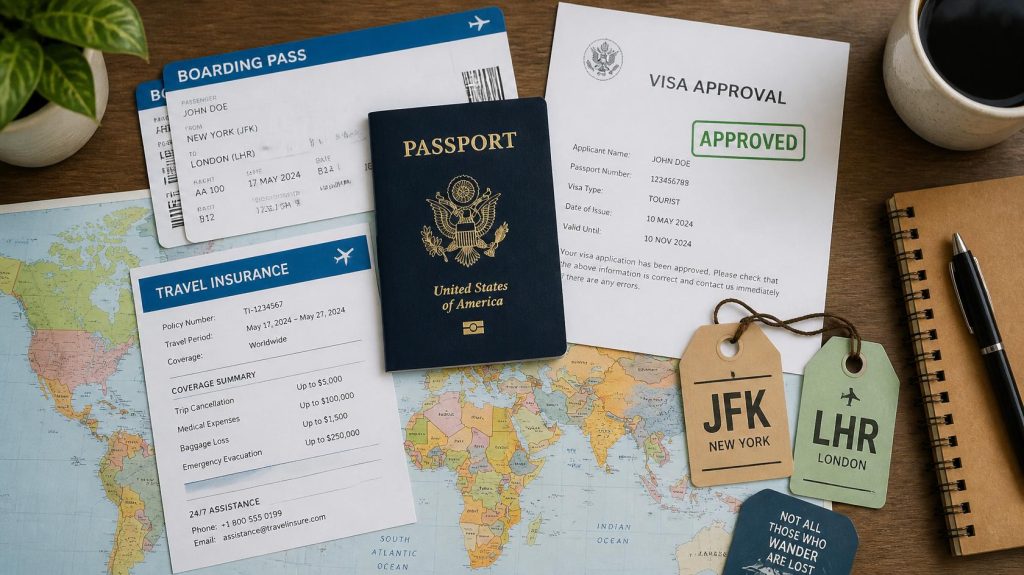
Quick Answer: Before travelling internationally, you’ll typically need a valid passport and, depending on your destination, a visa or Electronic Travel Authorisation (ETA). Some countries may also require proof of onward travel, travel insurance, vaccination certificates such as the Yellow Fever Certificate, or additional supporting documents. Requirements vary by destination, so always confirm the latest entry rules through the official immigration authority of the country you plan to visit before booking or travelling.
Booking your flight is only one part of preparing for an international journey. Even if you have a confirmed ticket, you may not be allowed to board your flight—or enter your destination country—if your travel documents are incomplete or invalid.
Every country has its own immigration requirements, and these requirements can change without notice. That’s why it’s important to verify your documents well before your departure date.
If you haven’t booked your ticket yet, you may find our earlier sections on International Flight Booking: The Complete Guide for Kenyan Travellers and How to Find Cheap Flights from Nairobi helpful before continuing.
Why Travel Documents Matter
Travel documents do more than identify you—they confirm that you’re eligible to enter another country and comply with its immigration regulations.
Depending on your destination, airline staff may ask to see your documents before issuing your boarding pass. Immigration officers at your destination may also request supporting documentation before granting entry.
Travelling without the required documents can result in:
- Being denied boarding by the airline.
- Delays during check-in.
- Refusal of entry at your destination.
- Additional travel costs.
- Missed business meetings, holidays, or family events.
Preparing your documents in advance is one of the simplest ways to avoid unnecessary travel disruptions.
Passport
Your passport is the most important document for international travel.
It confirms your identity and nationality and is required for international flights.
Before booking your journey, check:
- Your passport is valid.
- It has sufficient blank pages if required by your destination.
- It remains valid for the period required by the country you’re visiting.
Many countries require passports to remain valid for several months beyond the traveller’s intended stay. Because these requirements differ from one destination to another, always confirm the official entry requirements before travelling.
Travel Tip: If your passport is due to expire soon, consider renewing it before making non-refundable travel arrangements.
For a detailed explanation of passport validity, renewal, and common mistakes, see our Passport Guide .
Visa
A visa is official permission granted by a country allowing eligible foreign nationals to enter for purposes such as tourism, business, study, employment, or transit.
Not every destination requires a visa, and visa policies differ depending on your nationality and travel purpose.
Some visas must be obtained before travelling, while others may be issued electronically or upon arrival where permitted.
Before booking your flight, confirm:
- Whether a visa is required.
- The type of visa needed.
- The application process.
- Estimated processing times.
- Supporting documents required.
Applying early helps reduce the risk of travel delays.
Our upcoming Visa Guide explains the different visa categories, application processes, and practical tips for successful applications.
Electronic Travel Authorisation (ETA)
Many destinations now use an Electronic Travel Authorisation (ETA) instead of a traditional visa for eligible travellers.
An ETA is generally completed online before departure and, once approved, is electronically linked to your travel documents.
Processing times vary between countries, so avoid leaving your application until the last minute.
Always use the official government immigration website when applying for an ETA to ensure you’re following the correct process.
Transit Visa
If your itinerary includes a connecting flight through another country, you may need a transit visa—even if you don’t intend to leave the airport.
Transit visa requirements depend on several factors, including:
- Your nationality.
- The country where you’re connecting.
- The length of your layover.
- Whether you need to change airports or terminals.
- Whether you’ll leave the international transit area.
Never assume that a transit visa isn’t required simply because you’re connecting between flights.
Before confirming your itinerary, verify the transit requirements for every country included in your journey.
Our Transit Visa Guide will explain these requirements in greater detail.
Travel Insurance
Travel insurance provides financial protection against unexpected events that may occur before or during your trip.
Depending on your policy, travel insurance may help cover situations such as:
- Medical emergencies.
- Trip cancellations.
- Travel delays.
- Lost or delayed baggage.
- Emergency medical evacuation.
- Personal liability in certain circumstances.
Some countries require visitors to have valid travel insurance before entry.
Even where it isn’t mandatory, appropriate travel insurance can provide valuable peace of mind, particularly for international travel.
To learn more, read our Travel Insurance Guide .
Yellow Fever Certificate
Some countries require travellers arriving from or transiting through certain regions to present a valid Yellow Fever vaccination certificate.
Requirements vary depending on your travel history and destination.
If a Yellow Fever Certificate is required for your journey, ensure you receive the vaccination from an authorised vaccination centre and carry the certificate with your travel documents.
Our Yellow Fever Certificate Guide explains who may require this document and how to obtain it.
Proof of Accommodation
Immigration officers in some countries may request evidence showing where you intend to stay.
Acceptable documents often include:
- Hotel confirmations.
- Holiday rental bookings.
- Invitation letters from hosts.
- Conference accommodation confirmations.
Keeping digital and printed copies of these documents can make immigration procedures smoother.
Return or Onward Travel
Certain destinations require visitors to demonstrate that they intend to leave the country before their permitted stay expires.
Acceptable evidence may include:
- A confirmed return ticket.
- An onward flight reservation.
- Other proof of onward travel where accepted.
Before travelling, review the official entry requirements of your destination to determine whether this applies to you.
Financial Evidence
Some immigration authorities may request proof that travellers have sufficient financial resources to support themselves during their visit.
Examples may include:
- Recent bank statements.
- Sponsorship letters.
- Employment letters.
- Evidence of prepaid accommodation or organised tours.
Requirements differ by destination and travel purpose.
Organising Your Travel Documents
Keeping your documents organised reduces stress during your journey.
Before leaving for the airport, prepare:
- Passport.
- Visa or ETA confirmation where applicable.
- Flight itinerary.
- Travel insurance documents.
- Hotel confirmations.
- Vaccination certificates if required.
- Emergency contact information.
Many travellers also keep secure digital copies stored on their mobile devices or cloud storage in case originals are misplaced.
Common Document Mistakes
Travel disruptions are often caused by simple administrative errors.
Common mistakes include:
- Travelling with an expired passport.
- Applying for the wrong visa category.
- Forgetting to check passport validity requirements.
- Assuming a transit visa isn’t required.
- Leaving visa applications until the final days before departure.
- Carrying incomplete supporting documentation.
Taking time to review your paperwork before travelling can prevent unnecessary complications.
Frequently Asked Questions
Can I travel internationally without a passport?
No. A valid passport is generally required for international air travel.
Do all countries require a visa?
No. Visa requirements depend on your nationality, destination, and the purpose of your visit.
Is travel insurance compulsory?
Some countries require travel insurance as part of their entry requirements, while others recommend it. Even where it isn’t mandatory, travel insurance is strongly advisable for international travel.
How do I know if I need a transit visa?
Transit visa requirements vary depending on your nationality, destination, and the country where you’re connecting. Always verify the latest requirements through the official immigration authority of the transit country.
Related Reading
As you prepare for your journey, these guides from Sunward Travel Academy will help you plan with confidence:
- Passport Guide
- Visa Guide
- Transit Visa Guide
- Travel Insurance Guide
- Yellow Fever Certificate Guide
- Airport Check-in Guide
If you’ve already prepared your travel documents, the next step is understanding what happens when you arrive at the airport. In the following section, we’ll walk you through the complete airport check-in process—from entering the terminal to boarding your aircraft.
Official Resources
Because immigration requirements can change, always confirm the latest information through the official immigration authority of your destination country before travelling. For airline-specific document requirements, baggage rules, and check-in procedures, consult your airline’s official website.
Whether you’re travelling for business, education, leisure, or a once-in-a-lifetime safari, having the correct documentation is essential for a smooth journey. Taking a few minutes to verify your paperwork before departure can save you significant time, money, and unnecessary stress.
Airport Check-in Guide: Everything You Need to Know Before Your Flight

Quick Answer: Airport check-in is the process of confirming your presence for a scheduled flight, verifying your travel documents, checking in any baggage, and receiving your boarding pass. While many airlines offer online check-in before departure, some travellers may still need to visit the airline’s check-in counter at the airport to complete document verification or check their luggage.
For many first-time travellers, arriving at the airport can feel overwhelming. Large terminals, departure boards, security checks, and unfamiliar procedures may seem confusing at first. However, understanding the check-in process before your travel day can help you move through the airport with confidence and reduce unnecessary stress.
Whether you’re taking a short domestic flight within Kenya or embarking on an international journey, knowing what to expect at each stage of the airport experience will make your trip smoother and more enjoyable.
Before heading to the airport, ensure you’ve prepared the necessary travel documents discussed in the previous section, including your passport, visa or Electronic Travel Authorisation (ETA) where required, travel insurance documents, and any health certificates required for your destination.
What Is Airport Check-in?
Airport check-in is the process through which an airline confirms that you intend to travel on your booked flight.
During check-in, the airline may:
- Verify your identity.
- Confirm your travel documents.
- Issue your boarding pass.
- Check your baggage.
- Assign or confirm your seat.
- Verify any special travel requests.
Once you’ve completed check-in, you’ll proceed to security screening and, for international flights, immigration before heading to your departure gate.
Online Check-in vs Airport Check-in
Many airlines now offer online check-in through their websites or mobile applications.
Online check-in allows eligible passengers to:
- Confirm their flight before arriving at the airport.
- Select or change seats where available.
- Download or receive a digital boarding pass.
- Save time at the airport if travelling with cabin baggage only.
However, airport check-in may still be required if:
- You’re travelling internationally and document verification is necessary.
- You’re checking in baggage.
- You’re travelling with pets or oversized luggage.
- You’re travelling with infants or require special assistance.
- Your airline does not offer online check-in for your route.
Always check your airline’s policies before travelling.
When Should You Arrive at the Airport?
Arriving at the airport with enough time before departure is one of the simplest ways to reduce travel stress.
Although recommendations vary between airlines and airports, general guidelines are:
| Flight Type | Recommended Arrival Time |
|---|---|
| Domestic flights | At least 2 hours before departure |
| International flights | At least 3 hours before departure |
During peak travel periods such as school holidays, festive seasons, or major public holidays, allowing additional time is advisable due to increased passenger numbers.
Travel Tip: Unexpected traffic, longer security queues, or additional document checks can delay your progress through the airport. Arriving early gives you time to deal with these situations without feeling rushed.
What Happens at the Check-in Counter?
If you’re checking in at the airport, the process usually follows these steps:
- Join the queue for your airline or designated check-in area.
- Present your passport or other accepted travel identification.
- Provide any required visas or travel documents.
- Hand over checked baggage for weighing and tagging.
- Receive your boarding pass.
- Confirm your departure gate and boarding time.
If you’ve already checked in online and have no checked baggage, you may be able to proceed directly to security, depending on your airline and airport procedures.
Understanding Your Boarding Pass
Your boarding pass contains important information about your journey.
It typically includes:
- Passenger name.
- Airline.
- Flight number.
- Departure date.
- Boarding time.
- Departure gate.
- Seat number.
- Boarding group or zone.
Review your boarding pass carefully before leaving the check-in counter. If anything appears incorrect, notify the airline immediately.
Checking in Your Baggage
If your ticket includes checked baggage, you’ll hand it over during check-in.
The airline will:
- Weigh your luggage.
- Attach a baggage tag.
- Issue a baggage claim receipt.
Keep your baggage receipt in a safe place until you’ve collected your luggage at your destination.
Before travelling, review your airline’s baggage allowance and restrictions. Additional charges may apply if your luggage exceeds the permitted weight or dimensions.
Our Airline Baggage Guide explains baggage allowances, restricted items, and packing tips in greater detail.
Security Screening
After check-in, you’ll proceed to airport security.
The purpose of security screening is to help ensure the safety of all passengers and crew.
You may be asked to:
- Present your boarding pass.
- Remove electronic devices from your bag if instructed.
- Place personal belongings in security trays.
- Walk through a security scanner.
- Undergo additional screening if required.
Follow the instructions provided by airport security personnel at all times.
To make the process easier, pack liquids, electronics, and travel documents where they can be accessed quickly if requested.
Immigration (International Flights)
If you’re travelling internationally, you’ll usually proceed to immigration after security screening.
An immigration officer may ask questions about:
- Your destination.
- Purpose of travel.
- Length of stay.
- Return or onward travel.
- Accommodation arrangements.
Answer questions honestly and provide supporting documents if requested.
Once your passport has been processed, you’ll enter the international departures area.
Finding Your Departure Gate
After completing security and immigration procedures, check the airport’s flight information screens to confirm your departure gate.
Gate assignments can occasionally change, so continue monitoring airport announcements while waiting to board.
Aim to arrive at your gate before boarding begins rather than waiting until the final boarding call.
Boarding Your Flight
When boarding begins, airline staff will normally invite passengers according to boarding groups or seat zones.
Before entering the aircraft, have your:
- Boarding pass.
- Passport or travel identification.
readily available.
Once on board:
- Locate your assigned seat.
- Store your cabin baggage safely.
- Follow the cabin crew’s instructions.
- Fasten your seatbelt when instructed.
Your journey is now ready to begin.
Common Check-in Mistakes
Many travel delays can be avoided by preparing properly before arriving at the airport.
Common mistakes include:
- Arriving too late.
- Forgetting travel documents.
- Exceeding baggage limits.
- Misplacing the boarding pass.
- Going to the wrong airline counter.
- Ignoring updates to departure gates.
- Carrying prohibited items in hand luggage.
Preparing in advance can make your airport experience much smoother.
Expert Advice
Think of airport check-in as the start of your journey—not an obstacle to overcome.
Travellers who arrive early, organise their documents, and understand the airport process generally experience less stress and have more time to relax before boarding.
If you’re travelling with children, elderly family members, or a large group, arriving a little earlier than recommended can provide valuable extra time.
Frequently Asked Questions
Can I check in online for every flight?
Not always. Availability depends on the airline, route, and destination. Some international journeys still require document verification at the airport.
What happens if I miss check-in?
If you arrive after the airline’s check-in deadline, you may not be permitted to board your flight. Always confirm your airline’s check-in deadlines before travelling.
Do I need to print my boarding pass?
Many airlines accept digital boarding passes, but some destinations or airlines may still require printed copies. Confirm your airline’s requirements before travelling.
Can someone else check in my baggage?
Airlines generally require passengers to check in their own baggage because security regulations often require travellers to confirm ownership of their luggage.
Related Reading
Continue preparing for your journey with these helpful guides from Sunward Travel Academy:
- Airport Security Guide – Understand security screening procedures, prohibited items, and practical tips for moving through security quickly.
- Airline Baggage Guide – Learn about baggage allowances, cabin luggage rules, restricted items, and packing best practices.
- Flight Booking Mistakes Every Traveller Should Avoid – Discover common booking errors that can lead to unnecessary costs and travel disruptions.
- Travel Documents Guide – Review the passports, visas, travel insurance, and supporting documents required for international travel.
Once you’ve successfully checked in and received your boarding pass, your next stop is airport security. In the following section, we’ll explain exactly what happens during security screening, what you can and cannot carry, and how to prepare for a smooth and efficient security check.
Official Resources
Always review your airline’s official website before travelling for the latest information on check-in times, online check-in availability, baggage policies, and boarding procedures. If you’re travelling internationally, also check your departure airport’s official website for terminal information, security guidance, and any travel advisories that may affect your journey.
A smooth airport experience begins with good preparation. Arriving on time, organising your documents, and understanding the check-in process will help you start your journey with confidence, whether you’re travelling within Kenya or exploring destinations around the world.
Airport Security Guide: What to Expect Before Boarding Your Flight
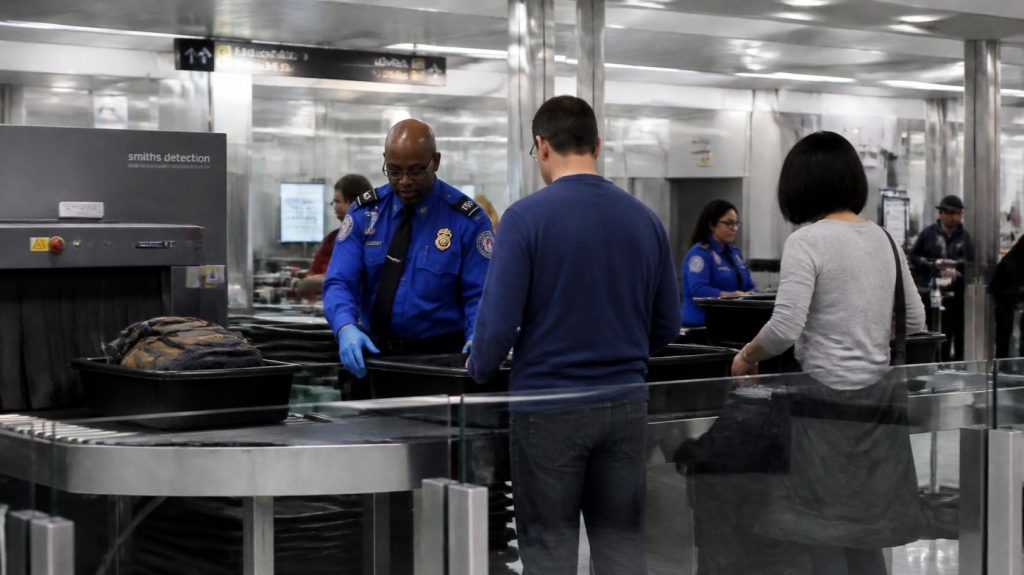
Quick Answer: Airport security screening is a mandatory process that helps protect passengers, crew, and aircraft. During screening, you and your belongings will be checked to ensure that prohibited or dangerous items are not carried onto the aircraft. Understanding the process in advance can help you pass through security quickly and with minimal stress.
After completing check-in, your next stop is the airport security checkpoint. While the process may seem intimidating for first-time travellers, it’s straightforward when you’re prepared. Airport security procedures are designed to keep everyone safe and are largely similar at airports around the world.
Arriving early, organising your belongings, and following instructions from security officers will help you move through the checkpoint efficiently.
What Happens During Security Screening?
At the security checkpoint, you’ll be asked to present your boarding pass before placing your belongings on a conveyor belt for X-ray screening.
Depending on the airport’s procedures, you may also be required to:
- Place electronic devices in a separate tray.
- Remove items from your pockets.
- Pass through a security scanner or metal detector.
- Undergo additional screening if necessary.
Security officers may inspect bags manually if an item requires further examination. This is a routine procedure and should not be a cause for concern.
Items That Are Commonly Restricted
For safety reasons, airlines and airport authorities restrict certain items in cabin baggage.
These commonly include:
- Sharp objects such as large knives or scissors.
- Flammable materials.
- Explosive substances.
- Certain tools.
- Self-defence items prohibited by law.
- Liquids that exceed the permitted limit for cabin baggage on international flights.
Restrictions may differ depending on the country and airline, so always check the latest guidance before packing.
If you’re unsure about baggage rules, our Airline Baggage Guide explains what you can pack in your cabin bag and checked luggage.
Tips for a Faster Security Check
A little preparation can save valuable time.
Before reaching the checkpoint:
- Keep your passport and boarding pass easily accessible.
- Pack electronics where they can be removed quickly if requested.
- Avoid carrying prohibited items.
- Follow instructions from security officers carefully.
- Allow extra time during busy travel periods.
Being organised not only speeds up your own screening but also helps reduce queues for other travellers.
Travelling with Special Items
Passengers travelling with medical equipment, baby supplies, or mobility aids may require additional screening.
If you have specific medical or accessibility needs, inform airline staff before travelling and notify security officers when you arrive at the checkpoint. Most airports have procedures in place to assist passengers requiring additional support.
Common Mistakes to Avoid
Security delays are often caused by simple oversights, including:
- Carrying prohibited items in hand luggage.
- Arriving at the checkpoint with documents packed away.
- Ignoring airline baggage restrictions.
- Waiting until the last minute to organise personal belongings.
Preparing before you reach the screening area can make the process much smoother.
Frequently Asked Questions
Do I have to go through airport security on every flight?
Yes. Security screening is a standard requirement for commercial air travel, although procedures may vary between airports and countries.
Can security officers open my luggage?
Yes. If an item requires inspection, security officers may open your bag in accordance with airport security procedures.
What happens if I accidentally pack a prohibited item?
The item may be confiscated, or you may be asked to remove it before continuing. In some cases, additional screening may be required.
Related Reading
To help you prepare for every stage of your journey, you may also find these guides useful:
- Airport Check-in Guide
- Airline Baggage Guide
- Travel Documents Guide
- Flight Booking Mistakes Every Traveller Should Avoid
Understanding airport security is an important part of travelling with confidence. Next, we’ll look at one of the topics that causes the most confusion for travellers—airline baggage allowances, cabin luggage, checked baggage, and how to avoid excess baggage charges.
Airline Baggage Guide: Cabin Baggage, Checked Luggage and Smart Packing Tips

Quick Answer: Every airline has its own baggage policy, including limits on the size, weight, and number of bags you can carry. Before travelling, always check your airline’s baggage allowance to avoid unexpected fees or delays at the airport.
Packing for a trip involves more than simply fitting everything into a suitcase. Understanding your airline’s baggage rules can help you avoid excess baggage charges, pack more efficiently, and enjoy a smoother airport experience.
Whether you’re travelling on a domestic flight within Kenya or an international journey abroad, taking a few minutes to review your baggage allowance before departure can save both time and money.
Cabin Baggage
Cabin baggage, sometimes referred to as hand luggage or carry-on luggage, is the bag you take with you into the aircraft cabin.
Most airlines allow passengers to carry at least one piece of cabin baggage, although the permitted size and weight vary by airline and fare type.
Cabin baggage is ideal for items you may need during your journey, such as:
- Travel documents.
- Electronic devices.
- Medications.
- Valuables.
- A change of clothing for longer trips.
Always keep important documents and valuable items with you rather than placing them in checked baggage.
Checked Baggage
Checked baggage is luggage handed over to the airline during check-in and transported in the aircraft’s cargo hold.
The number of bags and total weight allowed depend on:
- The airline.
- Your destination.
- The cabin class you’ve booked.
- Your fare conditions.
If your luggage exceeds the permitted allowance, excess baggage charges may apply.
Reviewing your baggage allowance before packing can help you avoid unexpected costs at the airport.
Restricted and Prohibited Items
Certain items cannot be carried in cabin baggage, while others may be prohibited entirely.
Examples include:
- Explosive or flammable materials.
- Sharp objects restricted by aviation security regulations.
- Hazardous chemicals.
- Certain batteries and electronic devices, depending on airline policies.
- Items prohibited by the laws of your departure or destination country.
Security regulations are designed to protect all passengers and may differ between countries. Always check your airline’s guidance before travelling.
Smart Packing Tips
Packing efficiently helps you stay within your baggage allowance and makes your journey more comfortable.
Some practical tips include:
- Check your airline’s baggage policy before packing.
- Weigh your luggage at home if possible.
- Roll clothing to maximise space.
- Keep travel documents and valuables in your cabin bag.
- Label all checked luggage with your name and contact details.
- Leave a little extra space for items you may purchase during your trip.
If you’re travelling with fragile items, ensure they are packed securely according to your airline’s recommendations.
What Happens If Your Baggage Is Delayed?
Although most checked luggage arrives on the same flight as its owner, delays can occasionally occur.
If your baggage doesn’t arrive:
- Report the issue to your airline’s baggage services desk before leaving the airport.
- Keep your baggage claim receipt and boarding pass.
- Provide accurate contact information.
- Follow the airline’s instructions regarding baggage tracking and delivery.
Prompt reporting helps the airline locate and return your luggage as quickly as possible.
Common Baggage Mistakes
Many baggage-related problems can be avoided with proper preparation.
Common mistakes include:
- Exceeding the baggage weight limit.
- Packing prohibited items in cabin baggage.
- Forgetting to label checked luggage.
- Placing important documents in checked bags.
- Assuming every airline has the same baggage allowance.
Taking a few minutes to review the airline’s baggage policy before departure can prevent unnecessary delays and additional charges.
Frequently Asked Questions
Can I carry liquids in my cabin baggage?
Many international airports place limits on liquids carried in cabin baggage. Requirements vary by airport and country, so check the latest regulations before travelling.
What happens if my bag is overweight?
If your baggage exceeds the permitted allowance, the airline may charge an excess baggage fee or ask you to redistribute your belongings before check-in.
Should I lock my checked luggage?
Using an appropriate luggage lock can provide additional security for your belongings. However, ensure your luggage can still be inspected if required by airport security authorities.
Related Reading
To help you prepare for a stress-free journey, explore these additional guides from Sunward Travel Academy:
- Airport Check-in Guide
- Airport Security Guide
- Travel Documents Guide
- How to Find Cheap Flights from Nairobi
- Flight Booking Mistakes Every Traveller Should Avoid
Packing wisely is an important part of every successful trip. In the next section, we’ll explore some of the most common flight booking mistakes travellers make—and, more importantly, how you can avoid them to save time, money, and unnecessary stress.
Flight Booking Mistakes Every Traveller Should Avoid

Quick Answer: Many travel problems can be avoided by planning ahead, reviewing your booking carefully, and understanding your airline’s policies before payment. Small mistakes—such as entering incorrect passenger details or ignoring baggage rules—can result in unnecessary costs, delays, or even missed flights.
Booking a flight has never been easier, but it’s also easier than ever to make costly mistakes. Whether you’re travelling for business, a family holiday, higher education, or a safari adventure, taking a few extra minutes to review your booking can save you significant time, money, and stress later.
Below are some of the most common flight booking mistakes and practical ways to avoid them.
Waiting Until the Last Minute
While last-minute deals occasionally exist, they are not common—especially on popular domestic and international routes.
Booking early generally provides:
- A wider selection of flights.
- Better departure times.
- More fare options.
- Greater availability during peak travel seasons.
If your travel dates are fixed, it’s usually better to book once you’ve found a fare that offers good overall value.
Entering Incorrect Passenger Information
One of the most common booking errors is entering incorrect personal details.
Before completing your reservation, double-check:
- Full name exactly as it appears on your passport or identification document.
- Date of birth.
- Passport number (if required).
- Contact information.
- Email address.
Correcting errors after a ticket has been issued may involve additional fees or delays.
Ignoring Visa and Entry Requirements
Some travellers book flights before confirming whether they meet the entry requirements for their destination.
Before paying for your ticket, confirm:
- Passport validity.
- Visa or ETA requirements.
- Transit visa requirements.
- Vaccination requirements where applicable.
Preparing your documents early reduces the risk of travel disruptions.
Choosing the Cheapest Fare Without Reading the Conditions
The lowest advertised fare isn’t always the best value.
Some discounted tickets may have restrictions such as:
- Limited or no checked baggage.
- Change fees.
- Cancellation penalties.
- Non-refundable conditions.
- Paid seat selection.
Always compare what is included before making your final decision.
Overlooking Baggage Allowances
Baggage policies differ between airlines and fare types.
Assuming every ticket includes checked baggage can lead to unexpected charges at the airport.
Before travelling, confirm:
- Cabin baggage allowance.
- Checked baggage allowance.
- Weight limits.
- Size restrictions.
Our Airline Baggage Guide provides more detailed information on packing and baggage policies.
Booking Flights with Tight Connections
When booking connecting flights, allow enough time between flights.
Short layovers may increase the risk of:
- Missing your next flight.
- Additional stress during airport transfers.
- Problems if your first flight is delayed.
If you’re unfamiliar with the airport, a slightly longer connection often provides a more comfortable travel experience.
Forgetting Travel Insurance
Unexpected events such as illness, flight disruptions, or lost baggage can affect even the most carefully planned trip.
Travel insurance may help protect you against certain unforeseen circumstances and is worth considering for most international journeys.
Not Checking Airport Details
Some cities are served by more than one airport.
Before confirming your booking, check:
- Departure airport.
- Arrival airport.
- Terminal information where available.
- Ground transport options.
This is especially important for international journeys involving connecting flights.
Ignoring Flight Schedule Changes
Airlines occasionally adjust departure times or flight schedules.
Before travelling:
- Check your booking regularly.
- Review emails from your airline or travel agency.
- Confirm your departure time a day before travelling.
Staying informed helps prevent unpleasant surprises at the airport.
Not Using a Trusted Travel Partner
Complex itineraries involving multiple destinations, group travel, or international journeys can benefit from professional assistance.
An experienced travel agency can help you:
- Compare airline options.
- Understand fare rules.
- Coordinate flights with accommodation and travel insurance.
- Provide support if your plans change.
For many travellers, expert guidance offers peace of mind as well as value.
Quick Pre-Booking Checklist
Before clicking “Confirm Booking,” ask yourself:
- Are my personal details correct?
- Have I checked passport validity?
- Do I need a visa or ETA?
- Does the fare include baggage?
- Have I reviewed the ticket conditions?
- Are the flight dates and times correct?
- Have I confirmed the departure and arrival airports?
Taking a few minutes to answer these questions can prevent many common travel problems.
Frequently Asked Questions
Can I change my name after booking a flight?
Policies vary between airlines. Some carriers allow minor corrections, while others may charge a fee or require a new ticket for significant changes.
Should I buy travel insurance before I travel?
Travel insurance is strongly recommended for international travel and may also be beneficial for certain domestic journeys.
Is it safe to book flights online?
Yes, provided you use trusted booking platforms, reputable travel agencies, or the airline’s official website.
Related Reading
Continue planning your journey with these helpful guides:
- How to Find Cheap Flights from Nairobi
- Travel Documents Guide
- Airport Check-in Guide
- Airport Security Guide
- Airline Baggage Guide
By avoiding these common mistakes, you’ll be better prepared for a smooth and enjoyable journey from the moment you book your ticket until you reach your destination.
The next section answers some of the most frequently asked questions about flight booking, helping you quickly find answers to the concerns many travellers have before they fly for the first time.
Frequently Asked Questions About Flight Booking

Whether you’re booking your first flight or you’re a frequent traveller, questions often arise before making a reservation. Below are answers to some of the most common questions we receive from travellers planning domestic and international trips.
When is the best time to book a flight?
There is no single “best” day to book a flight. However, booking several weeks or months in advance generally provides more flight choices and better fare availability, especially during school holidays, festive seasons, and other peak travel periods.
How early should I arrive at the airport?
As a general guideline:
- Domestic flights: Arrive at least 2 hours before departure.
- International flights: Arrive at least 3 hours before departure.
During busy travel periods, allowing additional time is always advisable.
What documents do I need for international travel?
The documents required depend on your destination, but they commonly include:
- A valid passport.
- A visa or Electronic Travel Authorisation (ETA), where required.
- Travel insurance for destinations that require or recommend it.
- Vaccination certificates if applicable.
- Return or onward travel confirmation where required.
Always check the official immigration requirements of your destination before travelling.
Can I change or cancel my flight after booking?
Many airlines allow changes or cancellations, but the rules depend on the fare conditions attached to your ticket. Some fares are flexible, while others may include change fees or be non-refundable.
Always review the fare conditions before confirming your booking.
What happens if my flight is delayed or cancelled?
If your flight is disrupted, your airline will normally provide information on the available options, which may include rebooking you on another flight. The assistance offered depends on the airline’s policies, the reason for the disruption, and the regulations that apply in the country where you’re travelling.
Do I need travel insurance?
While travel insurance is not mandatory for every destination, it is highly recommended for international travel. It can provide financial protection against unexpected events such as medical emergencies, trip cancellations, lost baggage, or travel delays.
Can I travel with only cabin baggage?
Yes. Many travellers choose to travel with cabin baggage only, particularly for short trips. However, ensure your bag complies with your airline’s size and weight restrictions before arriving at the airport.
What should I do if I miss my flight?
If you think you’re going to miss your flight, contact your airline or travel agency as soon as possible. Depending on your ticket conditions, you may be able to rebook your journey, although additional charges may apply.
Are direct flights better than connecting flights?
It depends on your priorities.
Direct flights are generally faster and more convenient, while connecting flights may provide greater route options or more competitive fares. Consider the total travel time, layover duration, and overall convenience before making your decision.
Can I book a flight for someone else?
Yes. You can book a flight on behalf of another person, provided you enter their personal details exactly as they appear on their passport or official identification.
Is it cheaper to book a return ticket?
Not always. In some cases, return tickets offer better value, while in others, booking two one-way tickets may be more economical. Comparing both options before booking is a good practice.
Can I choose my seat?
Many airlines allow passengers to choose their seats during booking or online check-in. Depending on the airline and fare type, seat selection may be complimentary or available for an additional fee.
What is the difference between cabin baggage and checked baggage?
Cabin baggage travels with you inside the aircraft, while checked baggage is handed over to the airline during check-in and transported in the aircraft’s cargo hold.
Your airline’s baggage policy will specify the permitted size, weight, and number of bags allowed.
Why should I book through a travel agency?
An experienced travel agency can help you compare airlines, explain fare conditions, recommend suitable itineraries, assist with complex bookings, and provide support before and during your journey.
This can be especially valuable for corporate travel, family holidays, group bookings, multi-city itineraries, and international trips requiring visas or multiple flight connections.
Your Journey Starts with the Right Travel Partner
Booking a flight is more than choosing the lowest fare. It’s about selecting the right itinerary, understanding airline policies, preparing the necessary travel documents, and ensuring every part of your journey runs smoothly.
Whether you’re travelling within Kenya, across Africa, or to destinations around the world, careful planning can help you save time, reduce stress, and travel with confidence.
At Sunward Travel Services, we are committed to making travel simple, convenient, and reliable. From comparing flight options and securing competitive fares to assisting with visas, travel insurance, hotel reservations, and complete travel planning, our experienced team is here to support you every step of the way.
Plan Your Next Journey with Sunward Travel Services

Whether you’re travelling for business, leisure, education, a family visit, or a once-in-a-lifetime holiday, we’re ready to help you find the right flight at the right value.
Our Services Include:
- Domestic and international flight bookings.
- Corporate travel management.
- Visa assistance.
- Travel insurance.
- Hotel reservations.
- Holiday and safari packages.
- Group and conference travel.
- Travel advice and itinerary planning.
Visit our website to learn more about our services, request a personalised quotation, or speak with one of our travel consultants. We look forward to helping you plan your next journey with confidence.
References and Official Resources
To ensure you have the most accurate and up-to-date travel information, always consult official sources before booking or travelling. Entry requirements, airline policies, and health regulations can change at any time.
Airlines
- Kenya Airways
- Ethiopian Airlines
- Qatar Airways
- Emirates
- Turkish Airlines
- KLM Royal Dutch Airlines
- Air France
- British Airways
Government and Aviation Authorities
- Kenya Civil Aviation Authority (KCAA)
- Kenya Airports Authority (KAA)
- International Air Transport Association (IATA)
- International Civil Aviation Organization (ICAO)
Immigration Authorities
Always check the official immigration website of your destination country for the latest information regarding:
- Passport validity requirements
- Visa and Electronic Travel Authorisation (ETA) requirements
- Transit visa requirements
- Customs regulations
- Entry restrictions
- Health documentation requirements
Health Information
For vaccination requirements and international travel health guidance, consult your country’s public health authority or the relevant international health organisations before departure.
About Sunward Travel Services
Sunward Travel Services is a Kenyan travel management company providing professional travel solutions for individuals, families, corporate organisations, government institutions, NGOs, and international travellers.
Our services include:
- Domestic and international air ticketing
- Corporate travel management
- Visa assistance
- Travel insurance
- Hotel reservations
- Holiday packages
- Kenya and East Africa safaris
- Conference and group travel
- Travel consultation and itinerary planning
Our experienced travel consultants work closely with every client to recommend suitable travel options based on budget, destination, schedule, and individual travel requirements.
Whether you’re planning a weekend getaway within Kenya, a business trip across Africa, or an international holiday, we’re committed to making your journey smooth from planning to arrival.
Why Trust Sunward Travel Services?
Choosing the right travel partner can make a significant difference to your overall travel experience.
When you book with Sunward Travel Services, you benefit from:
- Professional travel advice
- Access to multiple airline options
- Competitive flight solutions
- Personalised customer service
- Support before, during, and after your journey
- Assistance with visas, travel insurance, and accommodation
- Reliable travel planning for both leisure and corporate clients
We believe every journey should begin with confidence, and our team is dedicated to helping travellers make informed decisions every step of the way.
Final Thoughts
Booking a flight is about much more than selecting a destination. Understanding airline pricing, comparing travel options, preparing the correct documents, arriving at the airport with confidence, and knowing what to expect throughout your journey all contribute to a successful travel experience.
We hope this guide has answered your questions and provided practical insights to help you travel smarter.
As the travel industry continues to evolve, we’ll keep this guide updated with the latest information, ensuring it remains a valuable resource for travellers in Kenya and beyond.
Wherever your next destination may be, Sunward Travel Services looks forward to helping you get there safely, comfortably, and confidently.